Artemis astronauts head toward Moon after key engine burn
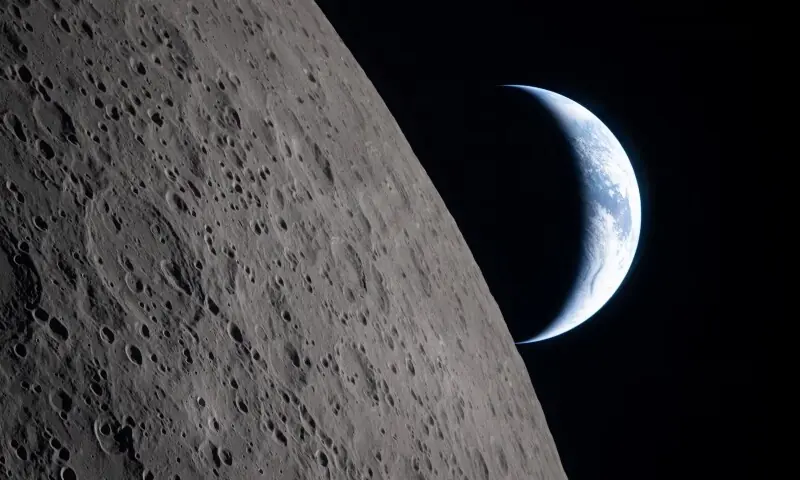
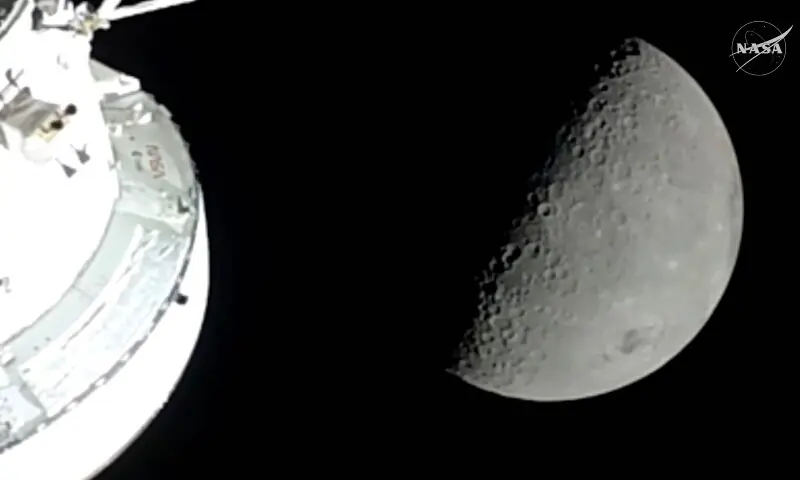
NASA’s Artemis II crew is on course for a lunar flyby after a key engine burn placed Orion on a free-return trajectory. The 10-day mission is the first crewed Moon flyby in more than half a century.

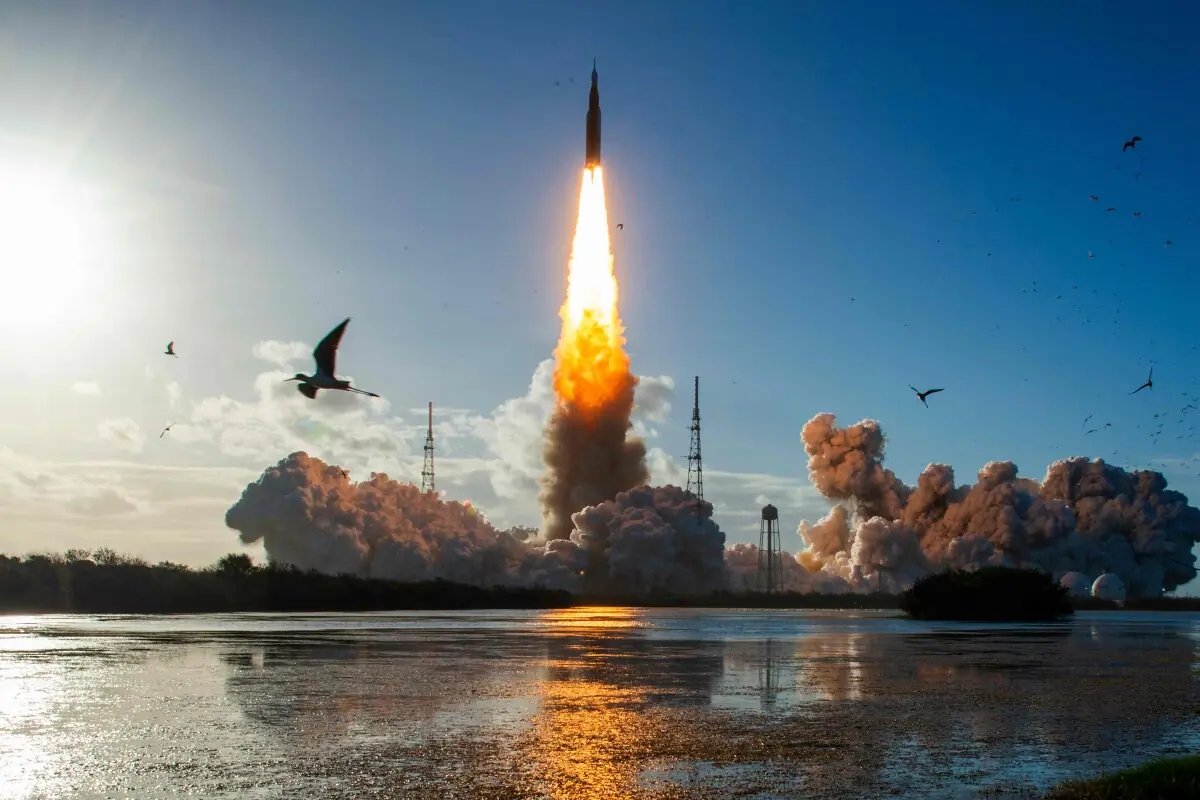
Washington: Four astronauts aboard NASA’s Artemis II mission were travelling toward the Moon on Friday after a major engine firing placed the Orion capsule on its planned path for a lunar flyby, marking a significant step in the first crewed mission around the Moon in more than 50 years.
NASA said the burn lasted just under six minutes and described it as flawless. The firing sent the spacecraft onto a route that will take it around the Moon and back to Earth as part of the 10-day mission. The engine generated enough thrust to accelerate a stationary car to highway speed in less than three seconds.
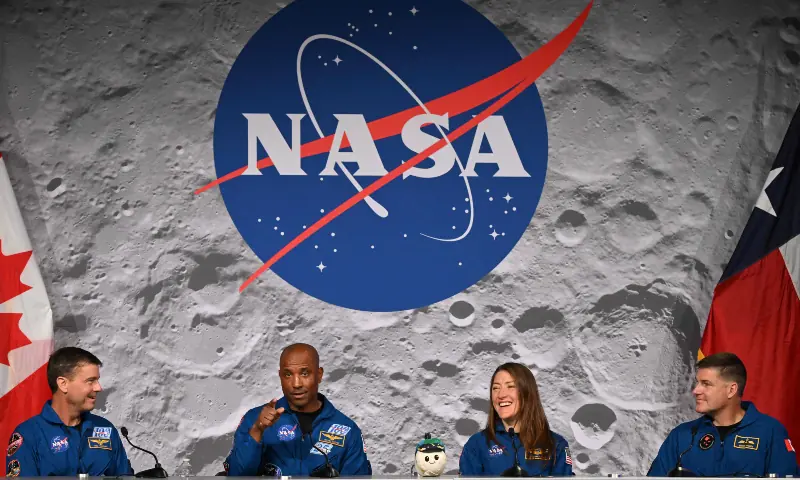
In remarks after the manoeuvre, astronaut Jeremy Hansen said that humanity has once again shown what we are capable of. The crew later spoke to US television networks, saying they had been glued to the window taking photographs. They also said the spacecraft felt a little cold and that they were still settling into life aboard Orion.
There’s nothing that prepares you for the breathtaking aspect of seeing your home planet both lit up bright as day, and also the Moon glow on it at night with the beautiful beam of the sunset, said Christina Koch.
The engine burn came a day after the orange-and-white Space Launch System rocket carrying Orion lifted off from the Kennedy Space Center in Florida for the long-awaited mission. NASA official Lori Glaze said the astronauts were now on a free-return trajectory, using the Moon’s gravity to swing around it and return to Earth without further propulsion.
From this point forward, the laws of orbital mechanics are going to carry our crew to the Moon, around the far side and back to Earth, Glaze said.
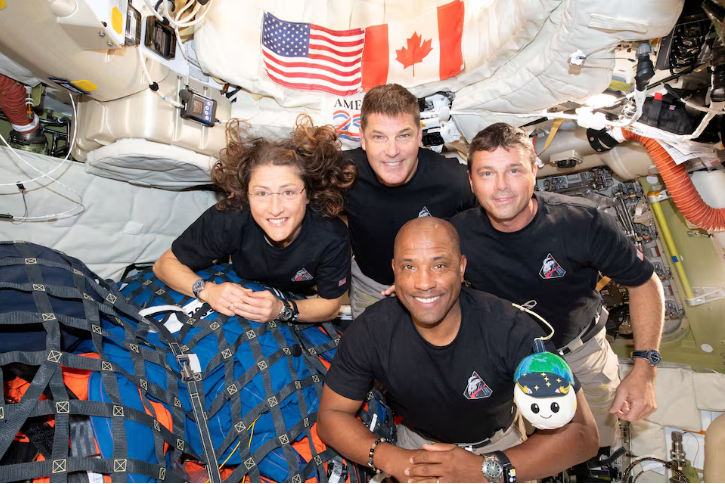
The crew consists of Americans Reid Wiseman, Victor Glover and Christina Koch, along with Canadian astronaut Jeremy Hansen. The mission is intended to help prepare for a Moon landing in 2028. It also marks several firsts for a lunar mission, including the first person of color, the first woman and the first non-American to take part.
During their first hours in space, the astronauts carried out checks and worked through minor issues on the spacecraft, which had not previously flown with humans. These included a communications problem and a toilet malfunction. Koch said she was proud to call herself the space plumber and described the toilet as probably the most important piece of equipment on board. She added that the crew was relieved when it turned out to be just fine.
The astronauts are wearing suits designed to function as survival systems in the event of cabin depressurization or a leak, providing oxygen, temperature control and pressure for up to six days. They also completed their first exercise session using the spacecraft’s flywheel exercise device. Each crew member is expected to spend 30 minutes a day exercising to reduce muscle and bone loss in microgravity.
If the mission proceeds as planned, the astronauts could travel farther from Earth than any humans before. Wiseman said there is nothing normal about the mission and called sending four humans 250,000 miles away a Herculean effort.
You look amazing. You look beautiful, Glover said when asked what message he had for Americans. From up here, you also look like one thing. We’re all one people.
Artemis II is part of NASA’s broader plan to return repeatedly to the Moon and eventually establish a permanent base to support deeper space exploration. The current US push to the Moon has often been framed as part of a wider competition with China, which aims to land humans on the Moon by 2030.
Comments
No comments yet. Be the first to join the discussion!