Fuel prices held back as govt absorbs Rs125b hit amid global oil crisis: PM
In a televised address, PM Shehbaz Sharif reveals the government's decision to absorb Rs125 billion in fuel price hikes, emphasizing austerity and public support amid a global oil crisis.

Premier Shehbaz turns down Rs95/litre petrol, Rs203/litre HSD increase, saying Rs100b development cut, austerity helped ease public burden
Describes global situation as ‘extraordinary and extremely challenging,’ saying major economies struggling to cope
Highlights Pakistan had anticipated the crisis and taken difficult but timely decisions
Reiterates despite recommendation for steep increases, govt had chosen to bear the burden itself
Federal government will absorb Rs56b this week alone so that people do not have to shoulder it, says PM
Notes based on international prices, petrol should have currently cost Rs544 per litre, but was being provided at Rs322
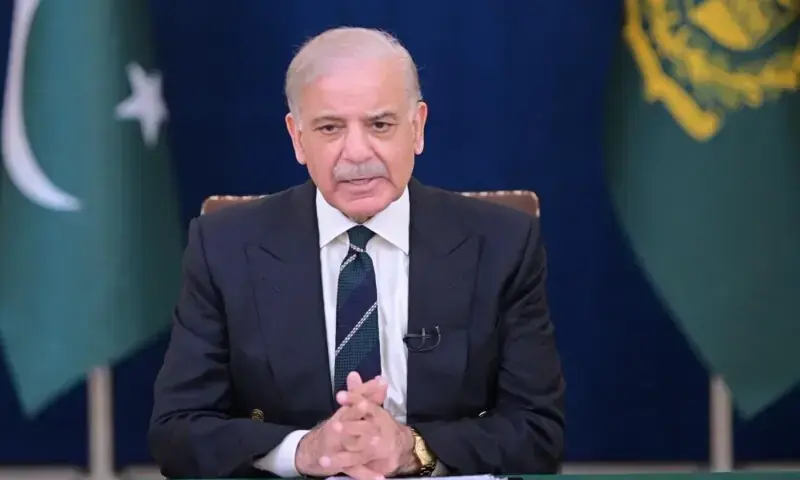
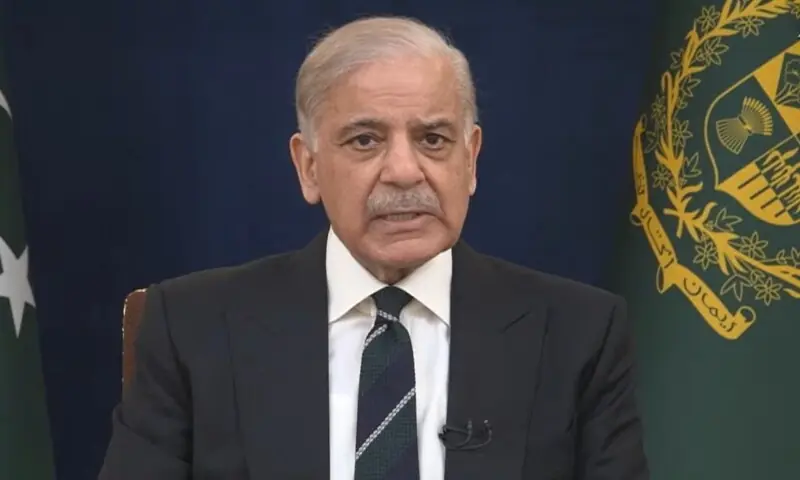
ISLAMABAD: Prime Minister Shehbaz Sharif on Friday announced that he had once again rejected a proposal to sharply increase the prices of petrol and high-speed diesel (HSD), saying the government was absorbing the burden through a Rs100 billion cut in the development budget and strict austerity measures to shield the public from rising costs, state media reported.
Addressing the nation in a televised speech, the premier said he had received a summary recommending an increase of Rs95 per litre in petrol and Rs203 per litre in HSD.
“It must be clear to you that every litre of petrol you fill reflects the government’s policy of austerity and its sense of responsibility,” he emphasized.
However, he added, he had rejected the proposal in view of the global fuel crisis triggered by the ongoing US-Israeli war on Iran, which began on February 28, according to a statement from the Prime Minister’s Office.
لاہور: 27 مارچ 2026.
وزیرِ اعظم محمد شہباز شریف کا قوم سے خطاب. pic.twitter.com/Ckh0uUAFzK— Prime Minister's Office (@PakPMO) March 27, 2026
The move comes just a week after the premier turned down a similar recommendation to raise petrol prices by Rs76 per litre and HSD by Rs177 per litre. He had also earlier rejected another increase following a surge in global oil prices on March 13.
In the wake of the Middle East conflict, the government had already announced unprecedented austerity measures on March 9, alongside earlier hikes in petroleum prices as part of its initial response to the crisis.
Describing the global situation as “extraordinary and extremely challenging,” PM Shehbaz said even major economies were struggling to cope.
“Even developed countries, with abundant resources, are facing severe economic pressures,” he noted, adding that Pakistan had anticipated the crisis and taken difficult but timely decisions.
He reiterated that despite the recommendation for steep increases, the government had chosen to bear the burden itself.
وزیراعظم محمد شہباز شریف نے ایک اہم اقدام کے طور پر پٹرولیم مصنوعات کی قیمتوں میں اضافے کی سمری کو ایک بار پھر مسترد کردیا۔ وزیراعظم نے کہا کہ حالیہ بحران کے باوجود عوامی فلاح کے لیے حکومت نے پٹرول کی قیمت پر 95 روپے فی لیٹر اور ڈیزل پر 203 روپے فی لیٹر اضافے کی تجویز کو رد کیا۔… pic.twitter.com/gHGs1k5pDG
— PTV News (@PTVNewsOfficial) March 27, 2026
“The federal government will absorb Rs56 billion this week alone so that the people do not have to shoulder it,” he said.
Highlighting the scale of the subsidy, the premier said that based on international prices, petrol should currently cost Rs544 per litre in Pakistan, but was being provided at Rs322.
Similarly, HSD should be priced at Rs790 per litre, but was being sold at Rs335 to ease public hardship.
“These may seem like numbers, but over the past three weeks, the government has borne a historic burden of Rs125 billion so that you do not have to,” he said.
PM Shehbaz acknowledged that the same funds could have been used for development projects, but stressed that “nothing is more important at this moment than your economic security.”
He urged citizens to adopt responsible consumption habits, calling for a “revolutionary change” in daily life.
“Before travelling, ask whether it is necessary — whether every trip by car or motorcycle is essential,” he said, stressing that austerity was no longer optional but a collective national responsibility.
He also noted that while many countries were facing fuel shortages, long queues, and skyrocketing prices, Pakistan had managed to stabilise supply and cushion the impact of inflation through timely interventions.
“But the government cannot do this alone,” he said. “I request your full cooperation as we finalise a comprehensive plan to deal with this challenging situation, which will be announced soon.”
Diplomatic push for Middle East de-escalation
The prime minister began his address by highlighting Pakistan’s diplomatic efforts to restore peace in the Middle East.
“Pakistan is making sincere and full-fledged mediatory efforts for an end to this war, so that the region and brotherly Muslim countries are spared its destructive consequences,” he said, adding that the objective was to achieve lasting peace through “collective wisdom and consultation.”
He described these efforts as not only a diplomatic responsibility but also aligned with the broader interests of the Muslim Ummah.
PM Shehbaz said he had held multiple discussions with leaders of Iran and Gulf countries, while Deputy Prime Minister and Foreign Minister Ishaq Dar was actively engaged in diplomatic outreach.
He added that Chief of Army Staff Field Marshal Asim Munir was also playing an “active and key role” in advancing rapprochement efforts.
“I appeal to you to pray for the success of these efforts,” he said.
Targeted fuel subsidy system in the works
In a related development, the federal and provincial governments agreed on Friday to introduce a mobile application-based quota system for fuel distribution aimed at delivering targeted subsidies to low-income users of two- and three-wheelers while minimising leakages.
The decision was taken at a high-level consultative meeting chaired by Finance Minister Muhammad Aurangzeb, where participants emphasised the need to fast-track a transparent, technology-driven subsidy mechanism.
According to the Ministry of Finance, close coordination between federal and provincial authorities will ensure early implementation of the system.
Officials also expressed satisfaction over the country’s stable fuel supply following a detailed briefing by the Petroleum Division.
A key presentation by the Ministry of Information Technology and Telecommunication outlined the proposed digital framework, focusing on automation, transparency, and precise targeting to ensure subsidies reach deserving segments, particularly motorcycle and rickshaw users.
Sindh Chief Minister Murad Ali Shah appreciated federal efforts to maintain uninterrupted supply, while also calling for behavioural changes to promote fuel conservation.
Punjab Senior Minister Marriyum Aurangzeb stressed the need for flexible policy responses to fluctuating global oil prices, emphasising that any relief from declining international rates should be passed on to consumers.
Meanwhile, KP Financial Adviser Muzzammil Aslam commended the government’s management of petroleum supplies, noting that Pakistan’s performance remained comparatively better than several regional countries.
Comments
No comments yet. Be the first to join the discussion!