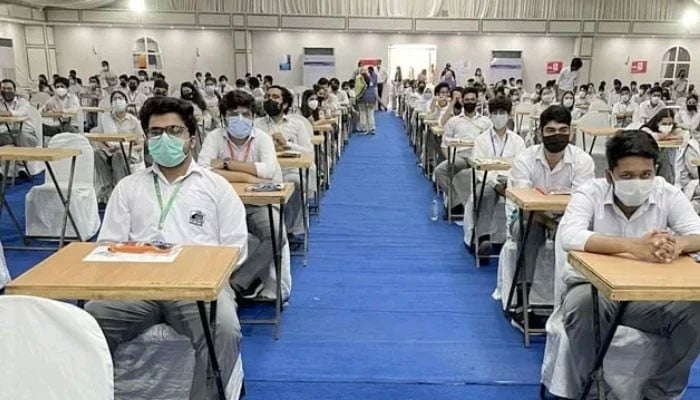
Will CIEs be postponed amid Middle East conflict?
As tensions rise in the Middle East, uncertainty looms over the scheduling of Cambridge International Examinations (CIE). While some boards have postponed exams, CIE maintains that most exams will proceed as planned, with localized adjustments possible.

As tensions escalate across parts of the Middle East, concern is spreading among students, parents, and schools about whether Cambridge International Examinations (CIE) will proceed as scheduled. With other education boards already postponing or cancelling exams in affected regions, uncertainty around Cambridge exams is growing, but a clear answer has yet to emerge.
Recent actions by national boards such as India’s CBSE and CISCE show how seriously the situation is being taken. In several Gulf countries, exams have been postponed or cancelled altogether, with authorities citing safety risks and logistical challenges. Some schools have shifted toward internal assessments or alternative grading methods to ensure students are not academically disadvantaged.
In contrast, Cambridge Assessment International Education has not announced any blanket postponement or cancellation of its May/June exam series. Instead, it appears to be following a more cautious and localized approach. There have already been adjustments in the region, including extended deadlines for coursework submissions, indicating that the board is monitoring developments closely.
Historically, Cambridge has avoided global cancellations unless absolutely necessary. During the COVID-19 pandemic, exams were cancelled worldwide and replaced with predicted grades, but in more localized crises—such as political unrest or security threats—decisions have typically been made on a country-by-country basis. This pattern suggests that while students in high-risk areas may face disruptions, those in relatively stable regions are likely to sit exams as planned.
For countries like Pakistan, where exams are conducted under strict coordination with local authorities, there is currently no indication of widespread disruption. However, the situation remains fluid, and any escalation in regional instability could prompt last-minute changes.
At present, the most realistic outlook is that CIE exams will proceed on schedule in most parts of the world, with exceptions made only where safety cannot be guaranteed. Students in the Middle East may face delays, special consideration, or alternative assessment methods if conditions worsen.
For now, the message from Cambridge appears consistent: prepare as normal, but remain alert for updates.
Manal Jaffery is a news editor at Pakistan Today with extensive experience in journalism, reporting, newsroom editing and digital content production. Her work covers national and international news, with a focus on accuracy, clarity and timely reporting.
View all articles →2 Comments
No comments yet. Be the first to join the discussion!