Pakistan, 7 UNSC members condemn ‘escalating’ Israeli settlers’ attacks in West Bank
Pakistan, alongside seven UNSC members, condemns the rising violence by Israeli settlers against Palestinians in the West Bank, demanding accountability and an end to illegal settlement activities.

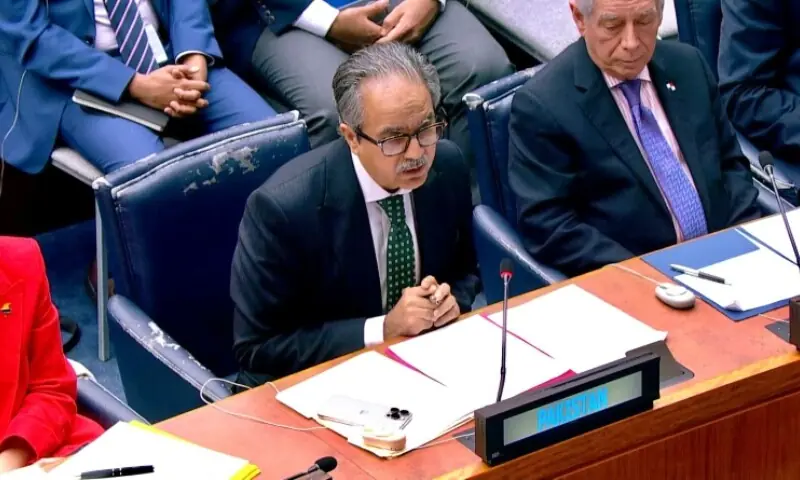
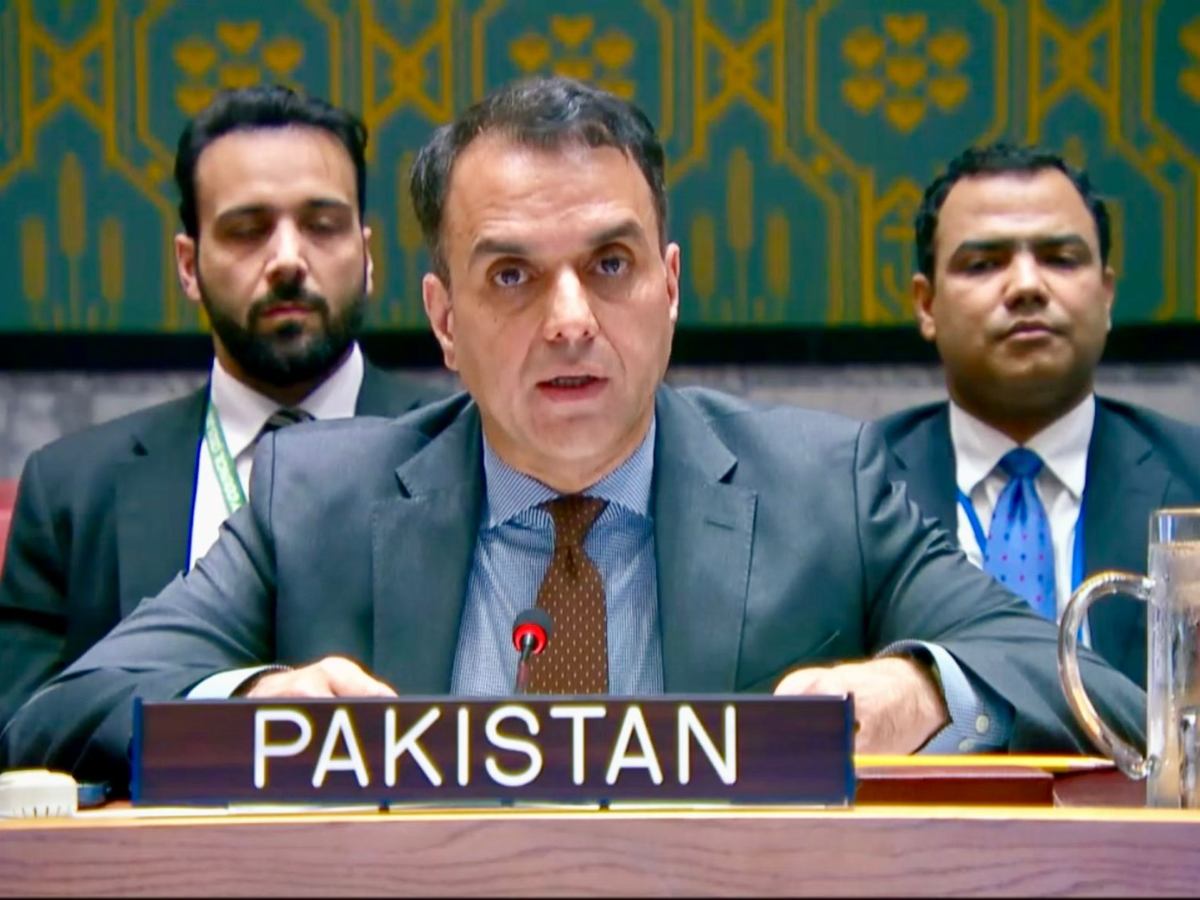
Ambassador Asim Iftikhar delivers part of a joint statement sponsored by Arab, OIC and EU members of 15-member UNSC
Terms settlers violence against Palestinians ‘unacceptable,’ demanding accountability, prosecution of those responsible
Joint statement sponsored by Bahrain, Denmark, France, Greece, Latvia, Somalia and the UK focuses on rejecting annexation and forcible displacement
UNITED NATIONS: Pakistan, along with seven other members of the UN Security Council, on Tuesday strongly condemned the “escalating” attacks by Israeli settlers against Palestinians in the occupied West Bank as “unacceptable,” demanding accountability and the prosecution of those responsible amid growing international concern over the deteriorating situation.
Delivering part of a joint statement sponsored by Arab, OIC and European members of the 15-member Council, Pakistan’s Permanent Representative to the UN Asim Iftikhar Ahmad reaffirmed the group’s firm opposition to the annexation of any part of the Occupied Palestinian Territory and to any forcible displacement of the Palestinian people.
The portion read out by the Pakistani envoy—on behalf of Pakistan as well as Bahrain, Denmark, France, Greece, Latvia, Somalia and the United Kingdom—focused on rejecting annexation and forcible displacement.
“We recall that the Security Council has condemned all measures aimed at altering the demographic composition, character and status of the Palestinian Territory occupied since 1967, including East Jerusalem. Such measures violate international law, undermine ongoing peace efforts, run counter to the comprehensive plan and jeopardize the prospect of achieving a just and lasting peace,” Ambassador Asim Ahmad said.
He further noted that the Council had demanded that Israel “immediately and completely cease all settlement activities” in the occupied Palestinian territory, including East Jerusalem, and fully comply with its legal obligations, reaffirming its determination to ensure implementation of relevant resolutions.
Describing Israel’s settlement policy and the continued violence by settlers as deeply alarming, he said: “This illegal settlement policy and Israeli settlers’ continuous and escalating attacks against the Palestinian civilian population, as well as violence against Palestinian communities—including the recent killing of Palestinian children by Israeli forces—are unacceptable and must be brought to an immediate end, and we call for those responsible to be held to account.”
The section addressing the historic status quo of Jerusalem, as well as the economic and humanitarian situation and the New York Declaration on the peaceful settlement of the Palestinian question, was delivered by France’s UN Ambassador Jerome Bonnafont.
“We also reaffirm the Council’s call for the preservation of the historic status quo at the holy sites in Jerusalem,” he said.
Expressing deep concern over the worsening humanitarian and economic conditions in the Occupied Palestinian Territory, the French envoy highlighted severe restrictions on movement and access, as well as the withholding of Palestinian tax revenues by Israel, urging that these issues be addressed urgently.
He further reaffirmed the collective commitment reflected in the New York Declaration to take concrete measures, in accordance with international law and relevant UN resolutions—including the July 19, 2024 advisory opinion of the International Court of Justice—to realize the Palestinian people’s right to self-determination and counter policies of annexation and forcible displacement.
The segment on ending occupation and advancing a two-state solution was delivered by Bahrain’s UN Ambassador Jamal Fares Alrowaiei, who emphasized that a sovereign and independent Palestinian state remains central to lasting peace.
“We reiterate our commitment to achieving a just and lasting peace on the basis of relevant United Nations resolutions, the Madrid terms of reference—including the principle of land for peace—and the Arab Peace Initiative,” he said.
He stressed that ending the Israeli occupation and implementing a two-state solution—where an independent and sovereign Palestine and Israel live side by side in peace and security within secure and recognized borders based on the 1967 lines, including with regard to Jerusalem—remains the only viable path to ensuring long-term stability and sustainable peace in the region.

Comments
No comments yet. Be the first to join the discussion!