Russia offers uninterrupted oil supply to Pakistan, condemns US-Israel strikes on Iran
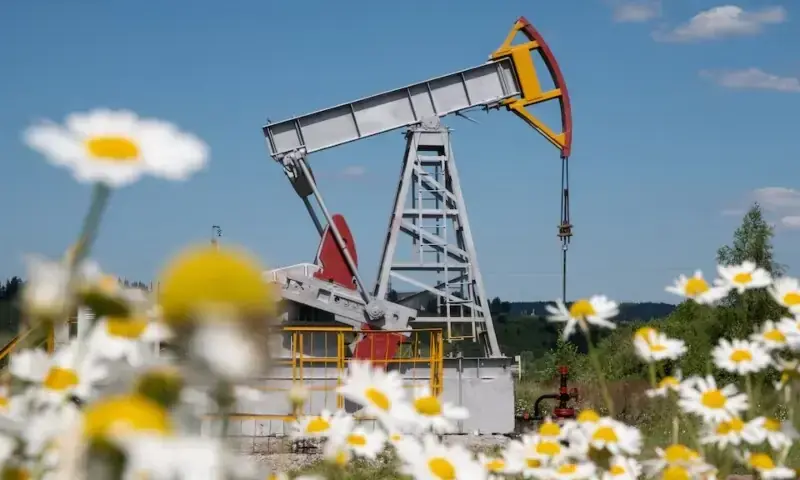
Russia has proposed supplying discounted oil to Pakistan to alleviate rising fuel prices amid escalating Middle East tensions. The offer comes as global supply chains face disruptions.

ISLAMABAD: Russia has offered to provide an uninterrupted oil supply to Pakistan amid rising fuel prices caused by the ongoing Middle East conflict, with Moscow urging Islamabad to formally request the supplies, Russia’s Ambassador to Pakistan, Albert Khorev, said on Tuesday.
Addressing a press conference in Islamabad, Khorev emphasized that the energy sector remains a cornerstone of Pakistan-Russia cooperation. “Moscow is ready to provide an uninterrupted oil supply to Pakistan if Islamabad approaches us formally,” he said during a media briefing here. However, he noted that no official contact had yet been made regarding the offer.
The announcement comes as Pakistan, like many countries worldwide, grapples with soaring fuel costs following disruptions in global supply chains. Shipping through the Strait of Hormuz — a critical route for oil transport — has been halted after Iran blocked the passage in retaliation against joint strikes by the United States and Israel. In response, Pakistan has raised petrol and diesel prices by 20%, with federal ministers assuring that the increase is temporary and will be reversed once tensions ease.
Ambassador Khorev condemned the US and Israeli military actions in the region, describing the strikes on Iranian targets as escalatory and destabilizing. He labeled the attack on a girls’ school in Minab, where 170 children were killed, as “highly deplorable,” and called on all parties to exercise restraint and resolve disputes through political and diplomatic channels under the UN Charter.
Khorev said the Iranian response targeted US military installations in Gulf waters, emphasizing the need to distinguish military operations from civilian harm. He added that the current situation was “complex and unpredictable,” making it difficult to forecast how or when the conflict would conclude.
Beyond the Middle East, the Russian envoy addressed developments in Ukraine, highlighting that Russia is actively engaged in humanitarian measures, including prisoner exchanges and the repatriation of children separated from their families during the conflict. He rejected Western allegations of mass forced transfers of Ukrainian children to Russia, noting that, as of early March 2026, only 13 children had been safely returned and that the process is reciprocal, with children also being returned from Ukraine.
Khorev stressed that any negotiated settlement must address the root causes of conflicts, including NATO’s eastward expansion and the treatment of Russian-speaking populations in Ukraine. He reiterated Moscow’s readiness for dialogue, emphasizing that long-term stability requires respect for sovereignty, security concerns, and regional cooperation.
On Iran, Khorev underscored that the International Atomic Energy Agency (IAEA) had found no evidence of nuclear weapons development, countering claims used to justify military strikes. He strongly condemned the assassination of Iran’s Supreme Leader, Ayatollah Ali Khamenei, as well as attacks on civilian targets, describing them as violations of international law with the potential to further destabilize the region.
“The only path to stability is dialogue, diplomacy, and respect for the sovereignty of all Gulf states and neighboring countries,” Khorev said, urging restraint from all sides.
The ambassador’s remarks highlight Russia’s dual approach of offering practical support — such as discounted oil supplies to Pakistan — while calling for international restraint and emphasizing humanitarian concerns amid multiple regional crises.
Comments
No comments yet. Be the first to join the discussion!