

China enacts new ethnic minority law emphasizing Mandarin and national unity
China has passed a new law promoting a 'shared' national identity among ethnic minorities, emphasizing Mandarin and national unity. Critics warn it may erode minority identities and criminalize dissent.

Beijing — China has approved a new law aimed at fostering a “shared” national identity among its 55 officially recognized ethnic minority groups, with a strong emphasis on the use of Mandarin, the country’s official language.
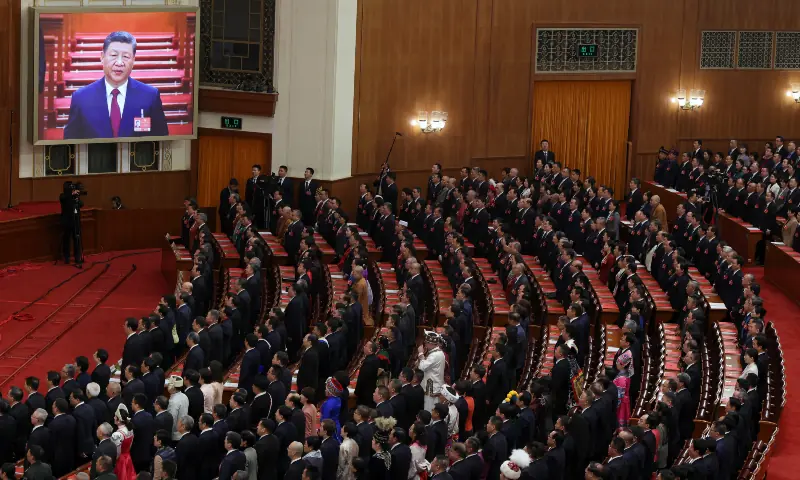
The legislation, titled “Promoting Ethnic Unity and Progress,” was passed during the closing session of the annual National People’s Congress, China’s top legislative body. According to a witness, the law was adopted with 2,756 votes in favor, three against, and three abstentions. State media reported that the law will take effect on July 1 this year.
The new law seeks to promote national unity and the rejuvenation of the Chinese nation, with the Chinese Communist Party (CCP) described as being at the core of these efforts, according to a draft version of the law. Officially, China recognizes 56 ethnic groups, with the Han Chinese comprising more than 91 percent of the country’s 1.4 billion population. The remaining population is made up of various ethnic minorities.
Critics have expressed concerns that the law could further diminish the distinct identities of non-Han ethnic groups and potentially criminalize those who challenge the concept of national unity as separatists. The legislation prioritizes the use of Mandarin, which some observers say may come at the expense of minority languages and cultures.
Delegates representing ethnic minorities, some dressed in traditional attire, were seen leaving the Great Hall of the People following the legislative session, as reported by international media.
The law’s passage is seen as part of broader efforts by Chinese authorities to strengthen national cohesion and centralize the role of the CCP in shaping the country’s identity. The move has drawn attention from rights advocates and international observers, who warn that it may further restrict cultural and linguistic diversity within China’s borders.
Comments
No comments yet. Be the first to join the discussion!


