

Iran defiant amid US‑Israel strikes as Trump demands ‘unconditional surrender’
The conflict in Iran intensifies as US and Israeli strikes claim over 1,300 lives. Trump demands unconditional surrender, while Iran vows to defend its nation. Explore the latest updates.

At least 1,332 killed in US and Israeli attacks, with schools hit near Tehran as war enters 7th day
IRG launches 23rd round of strikes towards Israel, keeps on targeting military installations in Gulf countries
Israel bombs western Iran to assist Kurdish groups in controlling border towns, claiming over 400 targets destroyed
Qatar expects all Gulf energy producers to shut down exports within weeks if Iran conflict continues
TEHRAN/WASHINGTON/TEL AVIV: Massive explosions rocked multiple locations across Iran on Friday as the conflict entered its seventh day, with the Islamic Revolutionary Guard Corps claiming it has launched a fresh round of strikes, while US President Donald Trump demanded “unconditional surrender” from Tehran, warning that no deal would be reached without it.
The Revolutionary Guard announced the latest strikes in a statement carried by Tasnim News Agency, according to Al Jazeera.
Israel targeting western Iran to aid Kurdish groups
Reuters, citing unnamed sources, reported that Israel is conducting airstrikes on western Iran to assist Iranian Kurdish groups in taking control of border towns. Both the US and Israel have reportedly been encouraging Kurdish factions to launch an insurrection against the Iranian state.
Israeli jets have also bombed southern and eastern Lebanese towns, including the southern suburbs of Beirut, as tensions escalate further.
The Israeli military confirmed that missiles were launched from Iran toward Israel, while Iran continued to target Gulf countries from the UAE to Qatar and Bahrain. Late Thursday night, Tel Aviv itself came under combined drone and missile attacks.
Casualties and damage
At least 1,332 people have been killed in US and Israeli attacks on Iran since Saturday. The semi-official Fars News Agency reported that two schools were hit by missiles in Parand, southwest of Tehran.
Iranian forces also claimed responsibility for an attack on a US base in Bahrain, reportedly causing deaths and injuries, according to Tasnim News Agency, citing the Khatam al-Anbiya Central Headquarters, which oversees Iran’s armed forces during wartime. Al Jazeera could not independently verify the report, and the US has yet to comment.
Israel claims over 400 targets hit
The Israeli military stated it struck more than 400 targets in Iran, including ballistic missile launchers and unmanned aerial vehicle storage facilities, according to Al Jazeera.
In Shahroud, western Iran, Israeli forces said they destroyed a truck transporting air defense systems. The army released an aerial photo showing a truck on an unidentified road. Iran has not immediately responded to the claim.
Diplomacy appears stalled
Officials say it is evident that neither the US nor Iran is ready for negotiations.
Iranian President Masoud Pezeshkian stated that mediators should first speak to those who initiated the war. “Our priority now is to preserve our beloved nation and defend the country,” he said.
Iranian Foreign Minister also reiterated a deep lack of trust in US promises and initiatives, noting that previous negotiations ended as the US launched attacks on Iran. The Iranian leadership has therefore made it clear that they are not seeking a ceasefire or mediation at this stage, viewing current US efforts as tactical manoeuvring rather than genuine diplomacy.
US looking at potential leaders for Iran, says White House
Speaking to reporters, White House press secretary Karoline Leavitt said Washington was looking at potential candidates to lead Iran, a day after President Trump said the US must be involved in choosing the next leader of Iran.
“I know there’s a number of people that our intelligence agencies and the United States government are looking at, but I won’t get any further on that,” she added.
Earlier we reported Trump saying there would be no deal struck with Iran except “unconditional surrender”.
“What the President means is that when he, as Commander in Chief of the US Armed Forces, determines that Iran no longer poses a threat to the United States of America, and the goals of Operation Epic Fury has been fully realised, then Iran will essentially be in a place of unconditional surrender, whether they say it themselves or not,” Leavitt said.
The United States is well on its way toward controlling Iranian airspace, White House press secretary Karoline Leavitt has told reporters, adding that Washington expects the achievable US objectives to be completed in four to six weeks.
We will bring you more shortly.
Iranians, not ‘Epstein’s gang’, will determine nation’s fate: Speaker Ghalibaf
“Trump still doesn’t realise what calamity he has brought upon himself and the American soldiers by martyring our Imam, and he wants to dictate terms to a nation,” Mohammad-Bagher Ghalibaf, the speaker of Iran’s parliament, has said, Al Jazeera reports.
The US, he said, would now understand that “the fate of dear Iran, which is more precious than life, will be determined solely by the proud Iranian nation, not by Epstein’s gang.”
Iranian Red Crescent facilities damaged in war: IRC head
Several Iranian Red Crescent facilities, including “relief posts and warehouses”, have sustained significant damage since the war on Iran began a week ago, Jagan Chapagain of the International Federation of Red Cross and Red Crescent Societies (IFRC), has said.
“Communities on all sides are already paying a heavy price, with deaths and injuries, and damage to homes, schools, hospitals, and other vital civilian infrastructure,” he said in a post on X.
“These and all Red Cross Red Crescent personnel and infrastructures must be protected during this challenging time.”
France’s Macron expresses ‘full solidarity’ with Iraqi PM
French President Emmanuel Macron says he spoke directly with Iraqi Prime Minister Mohammed Shia al-Sudani.
“I expressed to him France’s full solidarity with Iraq in the face of the ongoing escalation in the Middle East”, Macron wrote in a social media statement in French and Arabic. “I reiterated my support for his resolute action to ensure that Iraq is not drawn into the conflict.”
Iraq’s stability is “essential for the entire region”, the president added.
US warns Iran-linked fighters may target hotels in Iraqi Kurdistan
The US has warned that Iranian-backed fighters may target hotels in Iraqi Kurdistan frequented by foreigners as Washington again urges Americans to leave, AFP reports.
“US citizens are strongly encouraged to depart as soon as they are safely able to do so, and reconsider lodging options if choosing not to depart,” the US embassy in Baghdad said in a security notice.
Israel claims it hit Hezbollah command centres in Beirut’s Dahiyeh
The Israeli military says its air force has carried out another wave of strikes on targets in Beirut’s southern suburbs.
In a statement, the army claimed it attacked Hezbollah and Iranian-linked command centres in Dahiyeh.
According to the Israeli military, the targets included a command centre used by the Islamic Revolutionary Guard Corps Air Force, a command centre used by Hezbollah’s naval unit, a command centre linked to Hezbollah’s financial unit, and a site used by the group’s operating council.
Hezbollah has not commented on these claims.
Israel called for the mass evacuation of Dahiyeh yesterday, displacing hundreds of thousands of residents.
It comes after Israel’s far-right minister Smotrich warned that the Dahiyeh area would soon look “like Khan Younis”, a city in southern Gaza that has been decimated in Israel’s genocidal war against Palestinians in the enclave.
Germany withdraws more troops from Middle East
Germany has pulled additional Bundeswehr troops out of the Middle East as tensions rise during the seventh day of the US–Israeli war on Iran, according to a German military spokesperson.
The spokesperson told Reuters that soldiers deployed with the United Nations Interim Force in Lebanon (UNIFIL) are being withdrawn because of the security situation. Germany had already sharply reduced its military presence in Erbil in northern Iraq.
German media outlet RND reported that troops stationed in Bahrain have already returned to Germany and that preparations for withdrawals from Kuwait are under way.
RND also said soldiers and staff from the German embassy in Baghdad were being relocated to Jordan. Germany’s foreign ministry did not immediately respond to a request for comment.
About 500 German soldiers are deployed across the region, mainly in Iraq and Jordan, though officials have recently moved personnel out of some camps and reduced contingents amid rising security risks.
Canada says 3,500 nationals seek assistance to leave Middle East, Gulf regions
Canada’s Foreign Minister Anita Anand says that approximately 3,500 nationals requested to leave the Middle East and Gulf regions.
“As of this morning, more than 108,000 Canadians in the region have registered with Global Affairs. Of these, approximately 3,500 Canadians have contacted Global Affairs to request assistance in departing”, Anand told a virtual briefing on the latest situation of Canadians in the region.
“At this time, our government continues to provide three types of departure options: first, charter flights, second, block bookings and third, ground transportation, when and where it is safe to do so.”
Describing the situation in the region as “volatile and unpredictable”, the minister stressed that Ottawa has “no intention to participate in Operation Epic Fury”.
“We were not consulted on this military operation and have not participated,” she said.
Saudi Arabia says its fiscal position is strong amid Iran war
Saudi Arabia’s finance ministry says the kingdom’s fiscal position is strong and it has access to multiple export routes, including the Red Sea, a week into the US-Israeli war on Iran, Al Jazeera reports.
“Economic activity across Saudi Arabia continues to operate normally,” the finance ministry’s spokesperson has said in a statement that referred to “recent developments” but did not directly mention the conflict.
“We continue to assess economic and fiscal indicators on an ongoing basis, and current data confirm that our fiscal position and medium-term outlook remain solid,” the statement adds.
Iranian Kurdish group denies attack plans but say they would join US invasion
Kurdish Iranian dissident fighters based in northern Iraq say they are not planning an imminent cross-border attack on Iran, but would join a US-led ground invasion if one were launched.
Officials from the Kurdistan Freedom Party PAK told The Associated Press that their forces would fight alongside coalition forces in the event of a US ground operation, though they said Kurdish groups should not act as the “spearhead” of such an attack.
Khalil Nadiri, an official with the Kurdistan Freedom Party PAK, said the group also has armed members already inside Iran who could potentially take part in an uprising.
The officials added that Kurdish groups have been in contact with the United States and Israel but denied receiving any material support from them.
The comments come after Kurdish officials reportedly said earlier this week that Iranian Kurdish dissident groups based in Iraq could be preparing for a possible cross-border operation against Iran.
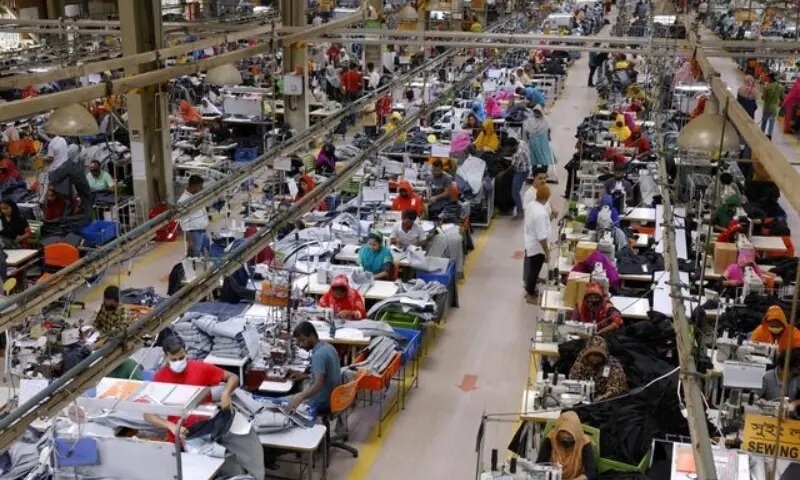
Fast fashion garments pile up in South Asia as Middle East conflict grounds planes
Shipments of garments for Zara owner Inditex and other major clothing retailers are stranded at airports in Bangladesh and India, according to three manufacturers, as the conflict in the Middle East forces airlines such as Emirates and Qatar Airways to cancel flights, Reuters reports.
South Asia is a clothes manufacturing powerhouse and fast fashion brands around the world rely on factories in Bangladesh, India and Pakistan for a constant stream of new T-shirts, dresses and jeans.
“Some of my apparel consignments are currently stuck at Dhaka airport,” says Shovon Islam, managing director of manufacturer Sparrow Group, whose European clients include Inditex, M&S, Next, and Primark.
“They were supposed to be flown to the UK via Dubai, but with operations at Dubai airport suspended, we are now in a very difficult position. We’re trying to figure out alternative routes, but none of them are simple or cost-effective,” Islam adds.
US moving ‘thousands’ of citizens out of Middle East: Trump
In his latest Truth Social post, US President Donald Trump has claimed that the Department of State is “moving thousands of people out of various Countries throughout the Middle East”.
“It is being done quietly, but seamlessly”, the president said, praising Secretary of State Marco Rubio for “doing a great job!”
The State Department said yesterday that 20,000 Americans had returned home and that it was ramping up chartered flights, without providing more details.
The Trump administration has received criticism over evacuations after urging Americans to leave more than a dozen countries in the Middle East on Tuesday.
Qatar warns Iran war will force Gulf to halt energy exports within weeks: report
Qatar expects all Gulf energy producers to shut down exports within weeks if the Iran conflict continues and drives oil to $150 a barrel, the country’s Energy Minister Saad al-Kaabi told the Financial Times in an interview published on Friday.
Qatar halted its production of liquefied natural gas on Monday, as Iran continued to strike Gulf countries in retaliation for Israeli and US attacks.
The country’s LNG production is equivalent to about 20 per cent of global supply and plays a major role in balancing both Asian and European markets’ demand for the fuel.
“Everybody who has not called for force majeure we expect will do so in the next few days if this continues. All exporters in the Gulf region will have to call a force majeure,” Kaabi told the FT.
“If this war continues for a few weeks, GDP growth around the world will be impacted,” he said.
“Everybody’s energy price is going to go higher. There will be shortages of some products and there will be a chain reaction of factories that cannot supply,” Kaabi said.
Kaabi said even if the war ended immediately, it would take Qatar “weeks to months” to return to a normal cycle of deliveries.
Analysts and economists have highlighted the potential impact of the war on economies globally.
Kaabi, who is also the CEO of QatarEnergy, one of the world’s biggest liquefied natural gas producers, told FT that the company’s North Field expansion project would delay first production.
“It will delay all our expansion plans for sure,” Kaabi said. “If we come back in a week, perhaps the effect is minimal; if it’s a month or two, it is different.”
The project was scheduled to begin production in mid-2026.
He forecast that crude prices could hit $150 a barrel in two to three weeks if ships and tankers were unable to pass through the Strait of Hormuz, which is the world’s most vital oil export route, connecting the biggest Gulf oil producers with the Gulf of Oman and the Arabian Sea.
Kaabi also expects gas prices to rise to $40 per million British thermal units.
Comments
No comments yet. Be the first to join the discussion!


