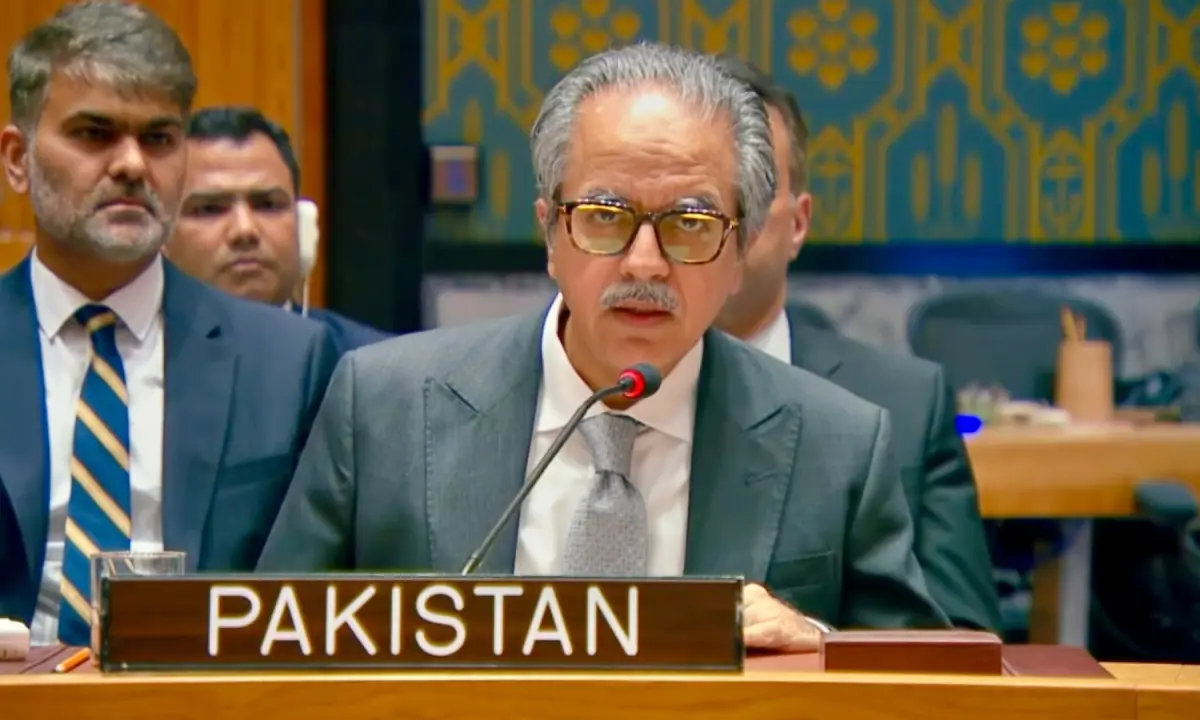
Pakistan, Indonesia, Malaysia push for ‘maximum restraint’ amid escalating Middle East Crisis
Pakistan, Indonesia, and Malaysia have united to urge maximum restraint amid escalating tensions in the Middle East, emphasizing the need for dialogue and diplomacy.

PM Shehbaz holds telephonic talks with Indonesian President Prabowo Subianto and Malaysian PM Anwar Ibrahim
Leaders agree to jointly urge restraint, dialogue and diplomacy to defuse tensions
PM briefs regional leaders on security situation in Afghanistan and Pakistan’s counterterror efforts
Condemns Israeli strikes on Iran and attacks affecting Gulf states
Dar stresses urgent de-escalation in talks with UK and Canadian diplomats
ISLAMABAD: Pakistan, Indonesia and Malaysia on Thursday agreed to jointly urge “maximum restraint” by all parties and stakeholders involved in the intensifying crisis in the Middle East, as Islamabad stepped up diplomatic outreach to help defuse rising regional tensions.
According to the Prime Minister’s Office (PMO), Prime Minister Shehbaz Sharif held separate telephone conversations with Indonesian President Prabowo Subianto and Malaysian Prime Minister Anwar Ibrahim, during which they discussed the rapidly escalating situation in the Middle East and broader regional developments.
Prime Minister Muhammad Shehbaz Sharif held a telephone conversation today with H.E. Prabowo Subianto, President of Indonesia.
The two leaders expressed their deep concern over the escalating crisis in the Middle East. The Prime Minister strongly condemned Israel’s attacks on… pic.twitter.com/8y8Aojelwx— PTV News (@PTVNewsOfficial) March 5, 2026
During his conversation with President Subianto, the prime minister expressed deep concern over the deteriorating security situation in the Middle East.
“Both leaders agreed to work together to urge all parties to exercise maximum restraint, while pursuing sincere and serious initiatives to resolve all outstanding differences through constructive dialogue and diplomacy,” the PMO said.
Premier Shehbaz also strongly condemned Israel’s attacks on Iran, as well as the subsequent attacks targeting other brotherly Gulf countries.
He further briefed the Indonesian president on Pakistan’s ongoing diplomatic outreach to Gulf nations aimed at easing tensions and preventing further escalation of the crisis.
The prime minister also informed President Subianto about recent developments concerning Afghanistan, where Pakistan is currently conducting Operation Ghazab Lil Haq against the Afghan Taliban regime and terrorist groups.
The two leaders agreed to remain in close contact in the coming days to coordinate their positions on the evolving situation.
Escalation in the Middle East
Tensions in the Middle East escalated sharply after United States and Israeli air strikes last week assassinated Iran’s Supreme Leader Ali Khamenei along with several senior Iranian officials, triggering a wave of retaliation from Iran and widening the conflict across the region.
In response to the strikes, Iran launched retaliatory attacks on US military bases in several Gulf countries, significantly expanding the scope of the confrontation.
Iran’s strikes across the Gulf caused the most widespread disruption to business activity in the region since the COVID-19 pandemic, forcing the closure of airports, halting operations at key ports and sending shockwaves through regional financial markets.
The attacks landed across major Gulf states — a region that has spent decades cultivating its reputation as one of the world’s most stable global business hubs.
The escalation also marked an unprecedented development for cities such as Dubai, whose modern economic model has largely depended on maintaining stability and remaining insulated from conflicts in the wider Middle East.
Pakistan’s leadership has since intensified diplomatic efforts to play its role in managing tensions, particularly between Iran and Gulf states.
Talks with Malaysian premier
Prime Minister Shehbaz Sharif expressed similar concerns during his telephone conversation with Malaysian Prime Minister Anwar Ibrahim.
“The two leaders agreed that restoration of peace and a swift return to normalcy was essential, but this could only be achieved through the exercise of maximum restraint by all parties involved,” the PMO said.
Prime Minister Muhammad Shehbaz Sharif and Prime Minister Dato Seri Anwar Ibrahim of Malaysia, spoke on telephone.
The two leaders agreed that restoration of peace and a swift return to normalcy was essential, but this could be achieved only through exercise of maximum restraint… pic.twitter.com/iuTqDY479G— Government of Pakistan (@GovtofPakistan) March 5, 2026
They also agreed to work together and coordinate their positions on a regular basis to support efforts aimed at restoring stability in the region.
The prime minister emphasised the importance of respecting the sovereignty and territorial integrity of all states in accordance with the United Nations Charter and international law.
He urged all sides to demonstrate restraint, halt hostilities and resolve their differences through dialogue and diplomatic engagement.
Prime Minister Shehbaz also briefed the Malaysian premier on the situation in Afghanistan, particularly Pakistan’s efforts to counter terrorist elements and strengthen regional security.
“Both leaders agreed to maintain close coordination on all issues of mutual interest,” the PMO said.
Dar stresses de-escalation
Separately, Deputy Prime Minister and Foreign Minister Ishaq Dar held discussions on regional developments with British High Commissioner Jane Marriott and Canadian Foreign Minister Anita Anand.
Deputy Prime Minister/Foreign Minister Senator Mohammad Ishaq Dar @MIshaqDar50 received the British High Commissioner, Jane Marriott @JaneMarriottUK at the Ministry of Foreign Affairs today.
While appreciating Commonwealth’s close engagement with Pakistan, DPM/FM conveyed that… pic.twitter.com/1U1iOO5nF1— Ministry of Foreign Affairs - Pakistan (@ForeignOfficePk) March 5, 2026
According to a statement issued by the Foreign Office of Pakistan, Dar emphasised the urgent need for restraint and de-escalation to ensure peace and stability in the Middle East and the wider region.
Deputy Prime Minister / Foreign Minister Senator Mohammad Ishaq Dar @MIshaqDar50 held a telephone conversation this evening with Canada’s Minister of Foreign Affairs, Anita Anand @AnitaAnandMP.
The two leaders discussed bilateral relations and agreed to further enhance economic… pic.twitter.com/x6lxkmiKHy— Ministry of Foreign Affairs - Pakistan (@ForeignOfficePk) March 5, 2026
He also underscored the importance of dialogue, diplomacy and adherence to international law to promote stability and prevent further escalation.
Comments
No comments yet. Be the first to join the discussion!