Return without reintegration
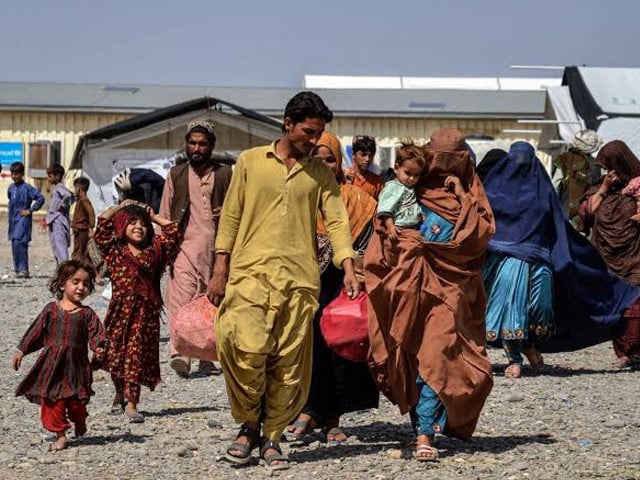
As of October 2023, Afghanistan is experiencing a significant reverse migration crisis, with over five million Afghans returning from Pakistan and Iran, straining an already fragile economy and infrastructure.

As of October 2023, Afghanistan has seen one of the largest recent reverse migrations in the rest of the world. According to UN data, over five point five million Afghans have been returning to Pakistan and Iran during a period of two and half years or longer. Almost three million returns were registered in 2025 alone, one of the highest annual totals in recent UNHCR records and tens of thousands more continue to cross back in early 2026, alone. This is not a peripheral fluctuation; it is an immigration in the form of a demographic shock of about a tenth of the Afghan population falling on a nation already experiencing economic decline, constrained fiscal room, pressure on the environment and a diminished level of foreign aid.
The wave is directly related to the policy changes in Pakistan and Iran since the end of 2023, tightening in Pakistan to enforce illegal immigration laws and deportation and limitation of illegal measures in Iran. It is a national right of states to control migration, but the practical issue is whether a vulnerable receiving nation can take up returns at such rate and magnitude without catastrophic effect. Evidence that is available indicates that the absorption capacity of Afghanistan is low. The Afghan economy in the aftermath of 2021 has been marked by declining GDPs, liquidity crises, decreased funding of development, and low labour markets. Foreign aid, which used to be a significant portion of state expenditure, reduced drastically, and external finances became limited. These are structural vulnerabilities that add to the strain: regular drought, ecological destruction and poor rural infrastructures. The employment is still very informal and low-productivity making it very vulnerable to unexpected labour-supply disruptions. Returnees also flood the local job markets when they come in large numbers reducing wages and increasing underemployment. Humanitarian evaluations repeatedly identify high destitution amongst the families of returnees with numerous people making ends meet on low everyday incomes without consistent jobs. The re-integration is then not just a humanitarian issue; but it is a macro-economic issue.
There is also poor service delivery. Better provinces have bigger caseloads in the health facilities. Students of foreign schools have frequent problems with interrupted education, the curriculum mismatch, and language adaptation problem. The lack of houses has increased the informal settlements on the urban edges. The existing infrastructure of the public services in Afghanistan was already in poor conditions prior to the influx; millions of people within a relatively short period strains the water networks, local health systems, municipal governments and community support systems. Even the middle-income nations find it difficult to accommodate population growth of 10-12 percent within two years; in the case of an aid-reliant low-income state, the pressure is even much higher. UN agencies have appealed hundreds of millions of dollars to shelter, cash, protection and reintegration assistance but by the beginning of 2026 funding has been raised to cover only a portion of the estimated demand. Emergencies can also be stabilised by means of border assistance, restricted transfers, transport and basic relief packages but not by medium-term economic integration. Devoid of job creation, documentation services and local development investment, help is palliative and not transformative. Experience of displacement in the past reveals that being able to have livelihoods within the first year of returning is pivotal in ensuring lasting reintegration failure to which, the chances of secondary migration, either internal or cross-border, is increased.
They do not make a homogeneous group of returnees. Children, elderly people and disabled women and children are at different risk. Women and girls revisiting Afghanistan face a challenge of limitation to education, working and moving around than was the case in many places they lived in their new countries and curtails household income and development of human capital over time. The families which do not have the civil documentation face administrative obstacles to services and support. These are not single cases; these cases are repeated in the humanitarian assessment of the various provinces. The issue of regional migration governance is also important. The Afghans have been in Pakistan and Iran, living there over the past 40 years, and the choices of the host countries are influenced by domestic economic needs and political discourse. However, fast and widespread returns can change instead of alleviating regional pressures. Without any reintegration, the driving forces behind further irregular migration may increase, increasing the routes and informal patterns of labour movement. Sustainable returns are therefore not necessarily an Afghanistan issue; but are an issue that concerns the wider stability of the region.
A trade-off between policy is developing. Quick implementation can meet the short-term domestic politics in the host states, however, destabilisation of Afghanistan can create longer term regional expenses. On the other hand, non-burden sharing indefinite hosting subjects Pakistan and Iran to actual social and fiscal burdens. The indications lean towards a regionally organized strategy that phases the returns and matches them with the international burden-sharing and development-related investment. The history of repatriation indicates that gradual and aided repatriation has more lasting effects than sudden repatriation of mass.
There are five million plus returns are not merely a statistic of a migration process, but the shift in the demographics that have measurable economic, social and political implications. The paucity of the absorptive capacity in Afghanistan, evidenced funding shortfalls, registered poverty among the returnees, and the apparent service pressures do not favor laziness. It is a question of whether the policy reactions will be evidence based - coordinated returns, strategic economic investment and long-term international involvement or short-term calculation, the impact on a region over the long run.
Comments
No comments yet. Be the first to join the discussion!