

June 29, 2026
Afghan returnees in Afghanistan struggle to rebuild homes, livelihoods
Afghans returning from Pakistan say they are rebuilding their lives with temporary aid, land promises and limited job opportunities. UN agencies and Afghan officials say housing, employment and support for vulnerable groups remain major challenges.

June 29, 2026
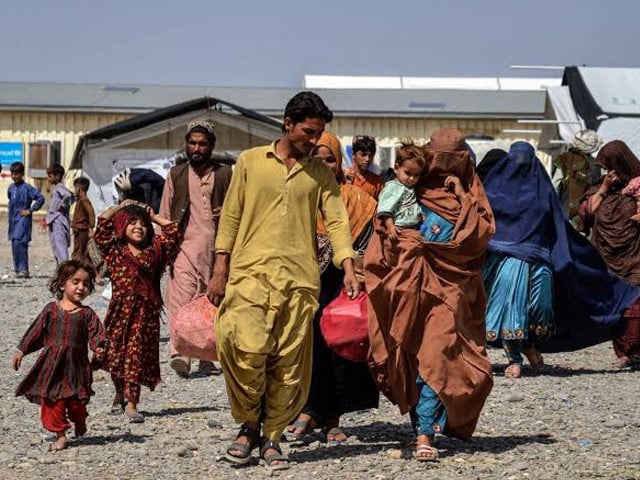
KABUL: Large numbers of Afghans returning from Pakistan are attempting to restart their lives in Afghanistan after leaving behind homes, work and long-established communities, according to accounts from returnees, aid workers and officials cited in a report by Express Tribune.
Noor Mohammad, who returned with his family through the Torkham border crossing from Pakistan to Afghanistan, said they arrived with limited belongings and uncertainty about what lay ahead. Originally from Logar province, he said Afghan authorities gave his family temporary shelter in a tent, food supplies and registration for assistance soon after arrival.
Speaking about the support his family received, Noor Mohammad said:
"We have received tents and food, and officials have assured us that permanent land will soon be allocated"
His experience reflects that of many Afghan families returning from Pakistan and facing the task of rebuilding housing, income sources and local ties from the beginning.
Scale of returns since 2023
According to the United Nations High Commissioner for Refugees, nearly 2.5 million Afghans have returned since 2023. The International Organization for Migration said more than 1.9 million returned voluntarily or through other means, about 335,000 under voluntary repatriation programmes, and around 253,000 were deported.
The pace increased markedly after April 2025, with over 1.6 million Afghans returning in that period, including more than one million during 2025 alone. Many returnees said fear of arrest over invalid or expired documents was a main reason for leaving Pakistan. Some holders of Afghan Citizenship Cards also expressed similar concerns.
Departures were reported mainly from Quetta, Peshawar, Nowshera, Haripur, Islamabad, Rawalpindi and Attock. Those returning were said to be settling largely in Nangarhar, Kabul, Logar, Kandahar, Balkh, Kunduz, Baghlan and Paktia provinces.
Relief at the border and housing pressures
At Omari Camp near Torkham, hundreds of people are arriving each day and receiving emergency assistance from Afghan authorities and international aid agencies. Social worker Ehsanullah Afghan said organisations including UN refugee bodies, Wadan Afghanistan and Shapul are providing food, drinking water, hygiene supplies and, in some cases, cash support. Families are also being assessed for eligibility for longer-term assistance.
On the Pakistani side, UNHCR voluntary repatriation centres in Nowshera and Quetta are continuing to help process departures, while documentation and related procedures are being handled at the Landi Kotal Holding Camp and Naser Bagh.
Housing remains one of the biggest long-term difficulties for returnees despite the immediate aid being provided. Ibrahim Haqqani, a member of Afghanistan’s interim administration, said a formal land distribution scheme has been launched for returning families. Under the system, households found eligible after verification by local elders and officials are allotted land, while some of the most vulnerable families are being given completed houses.
Ehsanullah Afghan estimated that close to half of returning families have already received land, while surveys for others are still underway. He said the scale of the return flow has created major strain for state institutions and humanitarian agencies.
"Pakistan hosted our citizens for many years, and we appreciate that support. It is now our responsibility to ensure they are resettled with dignity," Haqqani said.
Jobs and vulnerable groups
Alongside housing, employment has emerged as a central issue in reintegration. Imran, who had run a mobile phone business in Abbottabad before returning, said he has resumed that trade in Afghanistan. He and several other returnees have set up a mobile phone market and are seeing business conditions improve gradually.
Describing the difficulties of starting over, Imran said: "We have started again despite many difficulties. There are challenges, but opportunities are increasing and people are trying to rebuild their lives."
UNHCR spokesperson Qaiser Afridi said lasting job opportunities are necessary to reduce poverty, social instability and frustration among unemployed young people.
Prospects differ widely among returnees. Fouzia Bibi of the Pakistan International Human Rights Organization said Afghan asylum seekers, women, and families who had to leave businesses behind in Pakistan are among the most at risk. She said many are still waiting for decisions on asylum applications and remain fearful of return because of security concerns and restrictions affecting women, particularly in education and employment.
0 Comments
No comments yet. Be the first to join the discussion!


