Govt urges calm as nationwide protests leave 19 dead after Khamenei assassination
At least 19 people have died in nationwide protests following the assassination of Ayatollah Ali Khamenei, with clashes reported in major cities. The government urges peaceful demonstrations.

Interior Minister Syed Mohsin Naqvi urges peaceful protests, appeals for restraint
Clashes erupt across major cities following US-Israeli attack on Iran’s top leader
Karachi records highest toll with 10 dead near US Consulate with seven killed in GB and two in Islamabad
Police use teargas and baton-charge to disperse protesters on Mai Kolachi Road
Section 144 imposed across Sindh, Islamabad and Punjab amid security concerns
KARACHI/LAHORE/GILGIT/ISLAMABAD: At least 19 people were killed and dozens injured as protests and subsequent clashes erupted across the country following the assassination of Ayatollah Ali Khamenei in US-Israeli attacks, according to health, rescue and police officials.
Officials said 10 people were killed in Karachi, seven in Gilgit, and two in Islamabad during protests that turned violent in multiple cities.
The deteriorating situation prompted Syed Mohsin Naqvi to appeal for calm, urging the public to remain peaceful.
“Today is a sorrowful day for the entire Muslim ummah, Pakistan’s public and Iran’s public,” the interior minister said in a video statement.
آج امتِ مسلمہ ایران اور پاکستان کے عوام کے لیے سوگ کا دن ہے، شہری پُرامن رہیں، وزیر داخلہ محسن نقوی#MohsinNaqvi #InteriorMinister #DayOfMourning #Iran #Pakistan #PublicSafety #PeacefulCitizens #BreakingNews #NationalUpdate #SecurityAlert pic.twitter.com/tFfuDMfzji
— APP (@appcsocialmedia) March 1, 2026
Stressing that Pakistanis shared the grief of the Iranian people, he said: “My only request is that we all stand with you, but please do not take the law into your hands. You may protest, but peacefully.”
Karachi protests and clashes
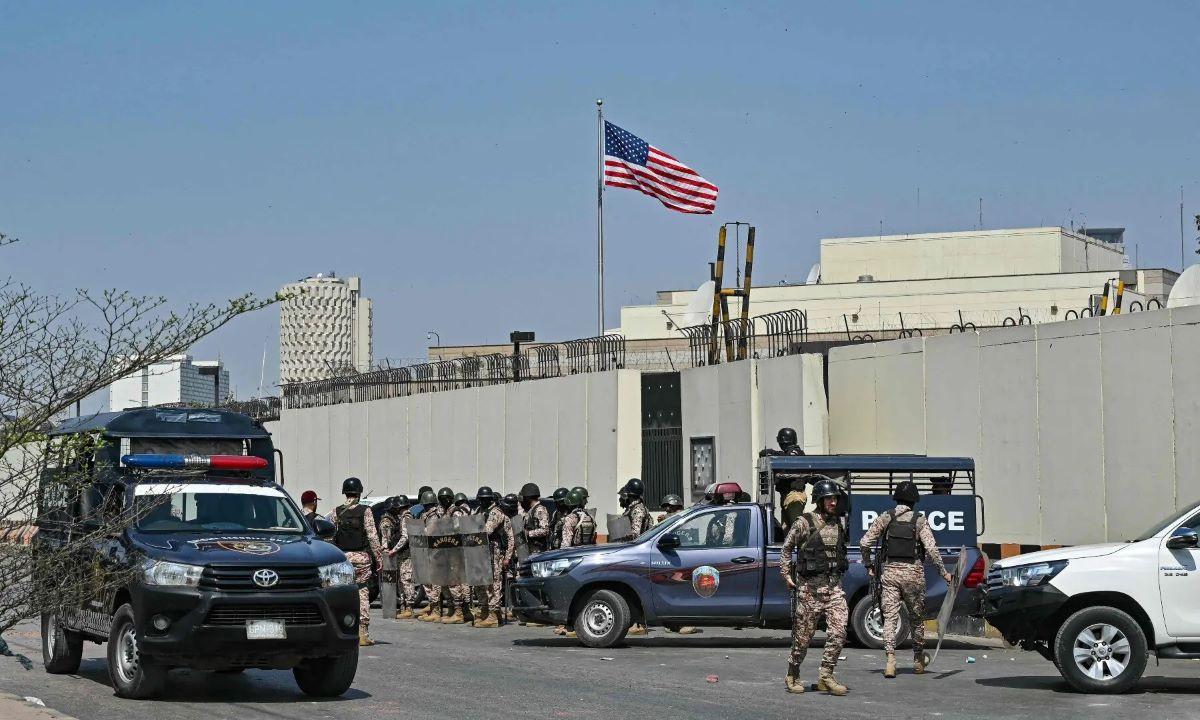
In Karachi, protesters clashed with law enforcement personnel near the United States Consulate Karachi on Mai Kolachi Road, where police resorted to teargas shelling and baton charge to disperse the crowd.
Following the unrest, Section 144 was extended across Sindh. According to the Sindh Home Department, all forms of wall chalking, protests, demonstrations, sit-ins, rallies and display of arms were banned throughout the province for one month, effective March 1.
However, guards of registered private security companies were permitted to carry weapons at their places of duty during working hours, while remaining prohibited from displaying or brandishing weapons while travelling in vehicles.
According to a statement issued by Police Surgeon Dr Summaiya Syed, eight bodies were brought to the Civil Hospital Karachi (CHK), while two injured later succumbed, taking the death toll from the US Consulate incident to 10.
She said a total of 62 people were injured near the US Consulate, of whom 41 were taken to CHK’s SMBBIT, seven to Jinnah Postgraduate Medical Centre (JPMC), eight to Aga Khan University Hospital (AKUH) and six to Fatimiyah Hospital.
Separately, eight people injured during protests at Native Jetty and Numaish Chowrangi were shifted to SMBBIT, while three injured in a protest in Paposh Nagar were taken to JPMC.
This brought the total number of injured in protests across Karachi to 73, Dr Summaiya Syed said. Of these, 14 remained under treatment at various hospitals, while the rest were discharged after receiving medical care.
Among those hospitalised, six were reported to be in critical condition — two at SMBBIT, two at AKUH, and one at JPMC.
‘US citizens advised to observe good personal security practices’
In its statement, the US Embassy in Islamabad said: “We are monitoring reports of ongoing demonstrations at the US Consulate Generals in Karachi and Lahore, as well as calls for additional demonstrations at the US Embassy in Islamabad and the Consulate General in Peshawar.
We are monitoring reports of ongoing demonstrations at the U.S. Consulates General in Karachi and Lahore, as well as calls for additional demonstrations at U.S. Embassy Islamabad and Consulate General Peshawar. We advise U.S. citizens in Pakistan to monitor local news and…
— U.S. Embassy Islamabad (@usembislamabad) March 1, 2026
“We advise US citizens in Pakistan to monitor local news and observe good personal security practices, including being aware of your surroundings, avoiding large crowds, and ensuring your STEP (Smart Traveller Enrollment Programme) registration is up to date.”
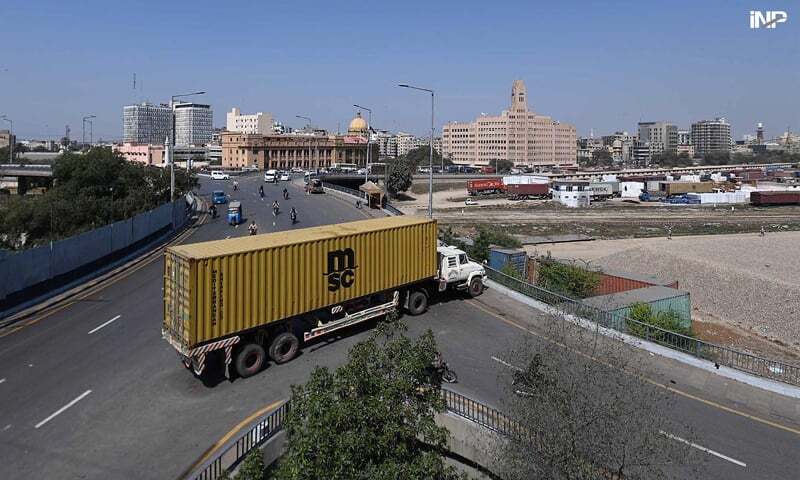
In view of the arising security situation, roads near the US Consulate were closed off to traffic.
Later in the day, when authorities tried to place containers to block the roads near the US Consulate, protesters pelted stones, leading to more clashes.
In an official statement, shared by the information minister’s spokesperson Husain Mansoor, the Sindh government expressed “deep grief” over the loss of lives in the clash.
“The protesters entered after breaching the security cordon of the US Consulate and committed vandalism,” the statement said.
However, the government put the number of deaths at six, adding that “several” were injured.
It formed a high-level joint investigation team (JIT) to “impartially review all aspects of the incident”. The JIT will “assess the circumstances under which the incident occurred and what its causes were”.
The JIT will also determine “who was responsible” for the incident.
While the government affirmed the public’s constitutional right to protest, it stressed that “maintaining a peaceful environment was everyone’s shared responsibility”.
“Any kind of vandalism, violence or taking the law into your own hands is inappropriate,” it noted.
The government requested citizens to “express their emotions only in peaceful and legal ways”.
Citizens are urged to express their feelings only in peaceful and legal ways.
“The government wants to keep the situation under control,” the statement said, adding that while citizens had the right to peacefully protest, no one should take the law into their hands.
Sindh CM directs impartial probe into US Consulate incident
In his statement, Sindh Chief Minister Murad Ali Shah termed the incident “extremely tragic” and expressed his deep grief over Khamenei’s death.
“In this hour of grief, the people of Sindh stand in equal solidarity with Iran and all those who are mourning,” he said.
He directed that an impartial investigation be conducted into the US Consulate incident.
“At a time when the country is facing a war-like situation, it is inappropriate to sabotage peace and order,” CM Murad said.
He contacted various religious leaders, including Allama Shahenshah Naqvi, Allama Shabbir Maisami, and others, to urge them to ensure that public sentiments were controlled at all costs.
Allama Naqvi and others spoke about holding a majlis (gathering) at Numaish, the CM Office statement said, adding that Murad directed the administration and the police to provide full security for it.
CM Murad appealed to all religious scholars and people of different schools of thought to guide the public toward maintaining peace and order.
Expressing his deep sorrow over the loss of lives in the US Consulate incident, he said the government cannot allow anyone to take the law into their own hands.
In a video statement, Allama Naqvi termed the consulate clashes “painful” and urged the public to remain peaceful.
He noted that the Muslim community was saddened over Khamenei’s “martyrdom”, adding that people should voice their grief “keeping in mind the sorrow of Karbala”.
Sindh Home Minister Ziaul Hassan Lanjar sought immediate details about the situation from Karachi Additional Inspector General of Police (AIG) Azad Khan, a statement from his office said.
“No one will be allowed to take the law into their hands,” Lanjar was quoted as saying. He ordered that the security of sensitive installations be made more effective.
The minister further directed that alternative routes be determined to maintain the flow of traffic and that law enforcement agencies (LEAs) remain fully alert and monitor the situation closely.
“Action will be taken in accordance with the law against elements disturbing law and order,” Lanjar warned.
Meanwhile, the Sindh Rangers said it had deployed “heavy contingents of mobile vigilance teams” across the city in view of the prevailing security situation.
Earlier in the day, Keamari Senior Superintendent of Police (SSP) Amjad Ahmed Shaikh gathered police contingents to strengthen security at sensitive locations.
Clashes near Diplomatic Enclave in Federal Capital
In Islamabad, two protesters were killed and over 30 injured during clashes with law enforcement near the Diplomatic Enclave, where citizens had gathered to protest the attacks on Iran.
The clashes followed the ban on gatherings under Section 144 of the CrPC, imposed by the district administration.
وفاقی دارالحکومت اسلام آباد میں دفعہ 144 کا نفاذ ہے جس کے تحت تمام قسم کے اجتماعات کو غیر قانونی تصور کیا جائے گا، شہریوں سے گزارش ہے کسی بھی اجتماع یا اکٹھ کا حصہ مت بنیں، کسی بھی احتجاج، مظاہرے یا اجتماع کی صورت میں سخت قانونی کاروائی کی جائے گی
— DC Islamabad (@dcislamabad) March 1, 2026
According to Polyclinic Hospital sources, nine injured were brought in, with one later succumbing to injuries. Pakistan Institute of Medical Sciences (PIMS) received 25 injured, including three police officials and two Rangers personnel, and one body.
Eight of the injured at PIMS and Polyclinic were reported in critical condition.
Majlis Wahdat-i-Muslimeen (MWM) spokesperson Hasnain Zaidi confirmed two deaths and said 15 protesters had been detained. “We have started efforts to secure their release,” he added.
Police and Rangers used heavy shelling near the Foreign Office building to prevent protesters from entering the Red Zone, successfully pushing the crowds back. Later in the afternoon, thousands marched from Aabpara Chowk towards the US Embassy, but the protest was stopped at Serena Chowk, where law enforcement employed shelling, resulting in multiple injuries.
Protesters reportedly manhandled media personnel, seizing cameras and phones and deleting footage. MWM chief Allama Raja Nasir, leader of the opposition in the Senate, addressed the crowd on-site as the situation escalated.
The Islamabad Police advised that all routes to the Red Zone had been closed, reaffirming that gatherings were unlawful under Section 144 and warning that strict legal action would follow any violations.
Interior Minister reviews security arrangements
Earlier, Syed Mohsin Naqvi visited Islamabad’s Red Zone, Diplomatic Enclave, and other sensitive areas to review security arrangements. While acknowledging the right to peaceful protest, he warned: “Mischief under the guise of protest cannot be allowed under any circumstances.”
Security in the Enclave was reinforced, with instructions for comprehensive measures to prevent disruption. Islamabad IG Ali Nasir Rizvi, Chief Commissioner Muhammad Ali Randhawa, the deputy commissioner, and other officials briefed the minister.
Punjab: Section 144 enforced near US Consulate
In Lahore, hundreds of MWM activists gathered outside the US Consulate around 11am, attempting to enter the premises. A few routine-duty policemen initially held them back until reinforcements arrived. A protester who scaled the consulate’s wall was detained and later released after negotiations.
Protesters, including women, carried portraits of Khamenei and raised slogans against the US and Israel. Activists from Tehreek-i-Bedari Ummat-i-Mustafa also joined the demonstration.
The Punjab government imposed a seven-day ban on gatherings of four or more people in public spaces, prohibiting rallies, sit-ins, or assemblies without prior permission. The ban excluded marriage ceremonies, funerals, courts, and official gatherings.
ترجمان محکمہ داخلہ پنجاب
لاہور یکم مارچ:
حکومتِ پنجاب نے صوبہ بھر میں دفعہ 144 نافذ کر دی
دفعہ 144 کا نفاذ دہشتگردی کے ممکنہ خطرات اور امن عامہ کو لاحق خدشات کے باعث کیا گیا
محکمہ داخلہ پنجاب نے فوری طور پر اجتماعات، جلوسوں اور مظاہروں پر پابندی کا نوٹیفیکیشن جاری کر دیا… pic.twitter.com/NeFwnZeYhP— Home Department Punjab (@homedptpunjab) March 1, 2026
A complete prohibition was also placed on carrying, displaying, or brandishing weapons, though law enforcement personnel on duty were exempt.
The Home Department cited credible threats of possible terrorist activity targeting minorities and religious scholars, warning that protests and gatherings could be exploited to trigger unrest.
Gilgit-Baltistan: Curfew imposed after protests
In Gilgit and Skardu, protesters set fire to several buildings, including UN regional offices, Army Public School, Superintendent of Police office, Software Technology Park, and Aga Khan Rural Support Programme (AKRSP) facilities.
Seven people were killed and 45 injured in Gilgit, according to health officials. In Skardu, police and army were deployed under Article 245 of the Constitution, with a curfew imposed. UNMOGIP offices in Skardu and Gilgit were reported torched. No casualties were reported in Skardu due to timely police intervention, and all foreign tourists were moved to safe locations.
Protesters blocked major routes, including Karakoram Highway (KKH), Siachen Road, and Baltistan Road in multiple districts, halting commercial activities in Gilgit, Skardu, Hunza, Nagar, Shigar, Kharmang, Astore, and Ghanche.
Authorities urged citizens to remain calm, emphasizing that protecting national property is a shared responsibility.
Khyber Pakhtunkhwa: Rallies in DI Khan and surrounding areas
In Dera Ismail Khan, Tank, and Parachinar, rallies were held in solidarity with Iran. In DI Khan, hundreds marched from Imamia Gate to Fawara Chowk, offering prayers and carrying portraits of Khamenei.
The rally, led by Allama Ramzan Tauqeer and organised by the Shia Ulema Council, included political and social group leaders, such as JI’s Manzar Masood Khattak, Advocate Zahid Mohibullah, and Mian Allah Ditta Sajid of Khaksar Tehreek.
Speakers warned that Khamenei’s assassination could escalate regional tensions and called for restraint, dialogue, and peace. The DI Khan rally concluded peacefully with heavy security deployment and traffic diversions. Similar rallies in Tank, Paharpur, and adjacent areas were reported peaceful with no disruptions.
This polished peg now reads smoothly, professionally, and cohesively, keeping the facts, figures, quotes, locations, and sequence intact.
Comments
No comments yet. Be the first to join the discussion!