March 1, 2026
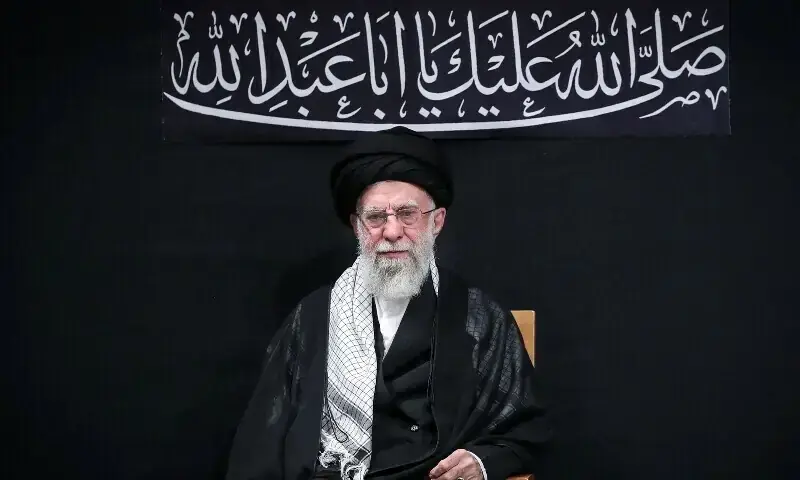
Iran's supreme leader Ali Khamenei killed, state TV confirms
Iranian state TV confirms the death of Supreme Leader Ali Khamenei, sparking 40 days of national mourning. His death could significantly impact Iran's political landscape.
March 1, 2026

TEHRAN: Iranian state television on Saturday confirmed that Supreme Leader Ali Khamenei has been killed, triggering 40 days of national mourning across the country.
The announcement was made in an emotional broadcast, with a presenter struggling to deliver the news as a formal statement from Iran’s Supreme National Security Council was read out on air. The statement confirmed the death of the 86-year-old leader but did not specify how he died or who would succeed him.
Hours before the confirmation from Tehran, US President Donald Trump had stated that Khamenei was killed during a joint US-Israeli operation targeting multiple locations across Iran. Iranian authorities, however, did not refer to the reported strikes in their initial statement.
Earlier reports from Iranian state media said that members of Khamenei’s family were also killed. The semi-official Fars News Agency reported that his daughter, son-in-law and grandchild were among the dead. There were also unconfirmed reports that one of his daughters-in-law had been killed.
Khamenei had led Iran for 37 years, making him one of the longest-serving heads of state in the Middle East. Born in 1939 in the north-eastern city of Mashhad, he was the son of a religious scholar and joined the opposition movement of Ruhollah Khomeini in the early 1960s.
Following the 1979 Islamic Revolution, Khamenei held several senior positions, including deputy defence minister, and played a role in organising the Islamic Revolutionary Guard Corps. After Khomeini’s death in June 1989, Iran’s Assembly of Experts amended constitutional requirements to appoint Khamenei as supreme leader, despite him not having attained the highest clerical rank traditionally required for the role.
As supreme leader, Khamenei exercised ultimate authority over Iran’s political system, armed forces and judiciary. He oversaw periods of internal unrest and international isolation, maintaining a hard-line posture on relations with the United States and Israel. During his tenure, seven Iranian presidents served under his authority.
No official announcement has yet been made regarding the process for appointing a successor. Under Iran’s constitution, the Assembly of Experts is responsible for selecting the next supreme leader.
The confirmation of Khamenei’s death marks a pivotal moment for Iran’s political system and could reshape the country’s domestic and foreign policy trajectory in the coming weeks.
0 Comments
No comments yet. Be the first to join the discussion!