










American economist Thomas Sowell wrote that “the first lesson of economics is scarcity. There is never enough of anything to satisfy all those who want it. The first lesson of politics is to disregard the first lesson of economics”.
In public debate, politics and economics are often treated as distinct spheres, politicians handle governance while economists tackle markets and fiscal matters. Yet in reality, the two are inseparably intertwined. Politics shapes economic outcomes, and economic conditions transform political landscapes. Their relationship is sometimes cyclical, reinforcing, and at times destabilizing for countries. Understanding this interdependence is indispensable for any society seeking stability, prosperity, and democratic resilience.
At its core, economics concerns the allocation of resources, while politics determines who has the authority to allocate them. Political structures that include constitutions, legal systems, electoral rules, and state institutions form the scaffolding upon which an economy operates. They establish the rules of property, contract, taxation, competition, trade, and labour. They define the incentives for investment and innovation, and set boundaries for market conduct.
Consider one of the most basic economic indicators, investor confidence. It rises and falls not only with corporate earnings or macroeconomic data but with political predictability. Stable democracies with transparent and accountable institutions tend to attract capital whereas fragile states or authoritarian regimes that govern by decree often repel it. Political risk becomes an economic variable. When a government suddenly nationalizes assets, reverses tax policy overnight, or weakens judicial independence, it sends shockwaves through markets.
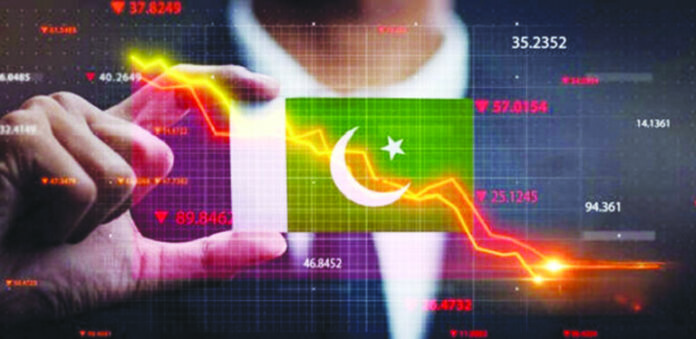
Politics and economics are not merely adjacent fields, they are mutually constitutive forces shaping the trajectory of societies. Politics sets the rules of the game, and economics determines the stakes. Economic conditions can uphold or upend political orders, while political choices can nurture or stifle economic growth. In Pakistan, politics and economics are not separate spheres, they are mutually constitutive forces, each continuously shaping and reshaping the other. Political decisions influence economic outcomes, while economic realities, in turn, constrain or empower political action
Regulation is another crucial intersection. Environmental laws, labour protections, antitrust measures, and financial oversight all originate in political processes. These decisions are not merely technical, they reflect values about fairness, sustainability, and social welfare. When politicians champion deregulation, they influence corporate behaviour and market concentration. When they expand social safety nets, they shape consumer demand and labour market participation. Policies surrounding education, healthcare, infrastructure, and technology not only support social development but also determine long term economic competitiveness.
Moreover, fiscal and monetary policies though often presented as neutral or technocratic are inherently political. Governments choose which sectors to subsidize, which industries to tax, and how to finance spending. Central banks, even when independent, are creatures of political design. Their mandates, leadership selection, and legitimacy are shaped within political negotiation. Politics can expand or restrain the money supply, determine interest rates indirectly, and control the levers of inflation.
Different political ideologies promote different economic systems. Social democracies emphasize redistribution, public goods, and worker protections. Classical liberalism propagates market freedom and limited government intervention. Nationalist or populist governments may adopt protectionist trade policies and state led industrial strategies. This ideological orientation is not abstract, it produces materially different outcomes in inequality levels, market structure, social mobility, and growth pattern.
Even international trade agreements which are often viewed through purely economic lenses can be profoundly political. They involve negotiations about sovereignty, labour rights, environmental standards, and strategic alliances. Decisions about tariffs, intellectual property, and cross border investment can reshape entire industries. Political shifts in one country can alter global supply chains, as seen in debates over decoupling, reshoring, and the future of globalization.
Just as political structures guide economic behaviour, economic conditions fundamentally mould political dynamics. Prosperity or stagnation, inequality or broadly shared growth each creates distinct pressures on political institutions. Periods of economic expansion often stabilize political systems. When employment is high and incomes are rising, voters tend to reward incumbents and trust in institutions. Economic success acts as a validation of governing models. The post war boom in Western democracies, for instance, underpinned decades of political stability and the expansion of welfare states.
But when economic conditions deteriorate, political landscapes can change dramatically. Economic crises undermine public faith in established political parties and technocratic expertise. High unemployment or inflation breeds frustration and fuels narratives of elite failure. Populist movements often arise from such conditions, promising to represent “the people” against economic injustice or external threats. The global financial crisis of 2008 triggered waves of political upheaval including austerity protests, the rise of anti-establishment parties, and a questioning of globalization itself.
Inequality is perhaps the most potent economic force shaping politics today. As wealth concentrates, political power follows. Campaign financing, lobbying, and media influence become tools for protecting economic privilege, often entrenching a cycle where economic disparities translate into political inequalities and vice versa. Public resentment grows when economic mobility stagnates, fuelling support for radical changes that are sometimes constructive, sometimes disruptive.
Demographics also matter. Ageing populations, shrinking workforces, and social welfare burdens influence political debates on taxes, immigration, pensions, and public spending. Economically informed anxieties about job security or automation drive political rhetoric and policy responses.
Recognizing the interdependence of politics and economics is not simply an academic exercise, it is a prerequisite for sound governance. Too often, economic policy is framed as technocratic and insulated from the messy world of politics. But decisions about budget priorities or industrial strategy are ultimately political choices reflecting societal values. Conversely, democratic debate that ignores economic reality risks creating expectations no policy can fulfil.
A more integrated approach requires transparency, robust public institutions, and a political culture that respects evidence while acknowledging competing values. Policymakers must be honest about trade-offs, and economists must be more attuned to political feasibility. Citizens, too, must understand that economic grievances do not automatically justify political extremes, nor can political aspirations be realized without acknowledging economic constraints.
Politics and economics in Pakistan are not merely connected; they are inseparable forces that constantly shape, distort, and undermine each other. The country’s economic instability cannot
be understood without examining its political structures, which for decades have remained fragile, personalized, and resistant to reform.
At the heart of Pakistan’s economic challenges lies a cyclical political pattern, weak civilian governments, periods of direct or indirect military influence, and a governance culture built around patronage rather than policy. Instead of functioning as institutions that produce long term economic planning, political parties often operate as electoral machines dependent on loyalty networks. As a result, economic decisions are frequently made for short term political gain, subsidies before elections, unsustainable borrowing to maintain artificial stability, and appointments based on allegiance rather than expertise. Military governments have been no different. This structural flaw creates a chronic policy inconsistency that scares off investors, both domestic and foreign. Every change in government brings changes in tax regimes, trade policies, and development priorities. No economy can grow when its direction shifts every few years based on political expediency rather than national interest.
Moreover, the politicization of state institutions from regulatory bodies to public enterprises erodes efficiency and accountability. When positions in power companies, revenue boards, or development authorities are filled through patronage, mismanagement becomes inevitable, and corruption thrives. The economic cost of this institutional decay is staggering, energy circular debt, tax evasion, capital flight, and an ever expanding informal economy that the state can neither regulate nor benefit from.
Pakistan’s political instability also carries a security dimension, and markets respond immediately to tensions between constitutional authorities, protests, or delayed elections. Stability is not merely a political issue, it is an economic necessity. If Pakistan is to break this vicious cycle, it must strengthen institutional autonomy, reform all state institutions, and shift from personality driven politics to policy driven governance. Without restructuring the political foundation, even the best economic reforms will remain temporary patches on a deeply flawed system.
In an era of rapid technological change, rising inequality, and geopolitical uncertainty, the need for a holistic understanding of this relationship has never been greater. It is time to stop treating politics and economics as separate silos and recognize their deep, inevitable interdependence. Only then can nations craft policies that are both economically sound and democratically legitimate, ensuring stability and prosperity for generations to come.
Politics and economics are not merely adjacent fields, they are mutually constitutive forces shaping the trajectory of societies. Politics sets the rules of the game, and economics determines the stakes. Economic conditions can uphold or upend political orders, while political choices can nurture or stifle economic growth. In Pakistan, politics and economics are not separate spheres, they are mutually constitutive forces, each continuously shaping and reshaping the other. Political decisions influence economic outcomes, while economic realities, in turn, constrain or empower political action.



QQ88 là nền tảng giải trí trực tuyến uy tín, tối ưu trải nghiệm với tốc độ truy cập nhanh và giao diện thân thiện.
6o3jnf