











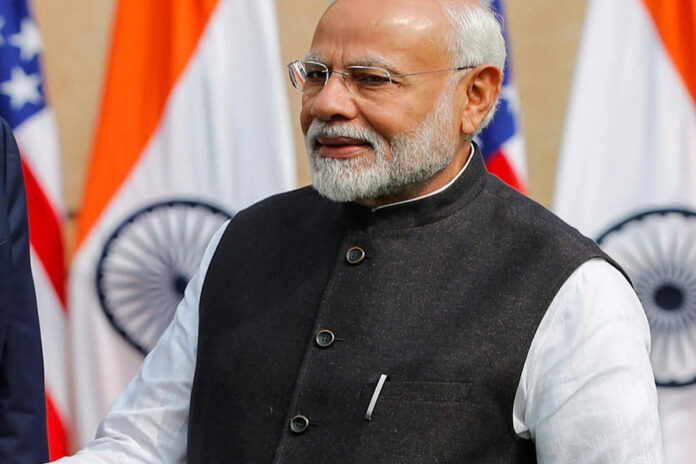
During the previous weeks India finalized two trade deals with entities which matter in its trade map. A deal was finalized with India which was unprecedented form the standpoint of both the trading partners. Many political economy experts argued that the erratic US trade wars with EU and India separately pushed the later entities to finalize the trade deal which has been through a series of bureaucratic review for quite a long.
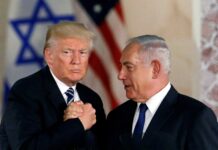
The trade deal between India and EU finalized January 27, later pushed the US government to close the chapter of the trade deal with India, by offering a drop in tariff from 50 percent to 18 percent and at the same time negotiating a much greater market access to US products in the Indian market. The trade deal also ensures that India increases its purchase of tech equipment, defence equipment and a variety of other product ranges to balance out benefits for both the trading partners.
The zero rated tariffs on EU-based auto sector products can play havoc with the Indian auto industry. Coupled with another dominating trading partner, the USA, the Indian free trade honeymoon might be short-lived. India has accrued a lot with its stable foreign policy stances, and its economic policy has been punctuated by regular and gradual steps, very much like the Chinese experience of opening up to the world after a closed-door policy. The current collapse of the house of cards, to say it proverbially, can be the beginning of an end
The biggest takeaway for the US government is that India will completely halt its purchase of petroleum products from Russia and restrict itself from sources okayed by the USA. In other words, it means going forward the Indian oil needs will be satisfied via USA from the recently annexed Venezuelan oil fields. The Indian acceptance of exploiting an occupied country’s resources also puts a question mark on its decades-old moralistic foreign policy stances.
The two trade deals, whose bulleted salient features displayed in news wires create an image of an unprecedented surrender to both the EU and the USA was purely guided by the trading instincts of the Indian business houses, and is a radical shift from an India which jealously guarded its freedom of action to one which has capitulated so easily to the pressures from the developed world. A cursory look at the items India is supposed to procure from the USA under a one-sided trade deal forces one to reminisce about the tied foreign assistance deals the USA had with the military-led Pakistan government in the 1960s. At that time the tied aid compelled the Pakistani industry to buy US-made steel billets while the same could be procured from the then East Bloc heavy industry infrastructures.
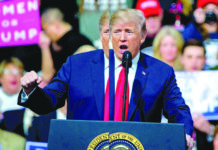
Similarly, the clause about defence procurements from the US sources under the trade deal confirms that the Trump doctrine of Make America Great Again includes trade deals coercive enough to make other party buy under duress.
In the terms of a simple assessment of the battle line up of Pakistani and Indian forces in a real or war gaming scenario, the Pakistani forces line-up as was the case in May 7 to 10 last year would be more of anything other than US-b,uilt, while the Indian weapon system purchases during the 1965-71 period, which were diverse from Soviet Migs to French Mystere jets, but noe it might be a complete US-built lineup, from Lockheed C-17s to upgraded Hercules military transports.
The EU deal, though it allows unprecedented access to the Indian products in the EU market, which it has been struggling to realize for quite a long time, the tariff wall demolition at the Indian side for the EU looks less like a reciprocal deal, but a deal where if the EU states have their way, can cause a serious dent to the Indian industry, especially the auto sector. The tariff wall demolition promises of 0 percent from 110 percent at present means that the leading European automobile brands will be purchased by the Indian middle class, with increasingly high personal disposable income, much to the disadvantage of the Indian industry.
In the annals of history and literature much has been written about how the unsuspecting Mughal monarchs of India allowed the East India Company the initial benign foothold in the Indian sub-continent. For the chroniclers of the future history of India, it would not be out of context to pinpoint an awed nationalist political dispensation in New Delhi as the architect of the new military and economic capitulation of the largest democracy in the region.
Going forward, the shift precipitated by the Indian political leadership strongly suggests the emergence of a new India. It is not India which has always tried to balance out between the warring partners, much to its advantages. The emerging India seems to be one which has decided once and for all that it stands with the crumbling western order. The western order as the word goes is at war with itself. The Five Eyes Intelligence Consortium is in shambles, the EU and USA are not agreed on the issue of Greenland; the tariff wars unleashed by the US government have the ability to sow much chaos, in front of which issues like whether Iran should go nuclear look trivial.
Indian political and security pundits seem to have invested politically on the ‘Rising America’ doctrine and there seems to be a feeling out there that putting all the eggs in the American basket can yield profitable results. Here it may be pointed out that as a result of the virtual takeover of the middle income jobs by the Indian diaspora, the progressive emergence of Indian origin upwardly mobile professionals in techie companies in the United States, the proliferation of many Indian-origin personnel in the corridors of power and in the officialdom, there has been a false sense of ownership among the Indian crowd that taking over the USA in terms of economy as well as the system.
With that mindset they feel that the virtual surrender of the mainland India will not harm the position Indian leaders of the independence era had so jealously guarded. Gone are the days of parliament proceedings recorded in the Julian Assange WikiLeaks; of Lok Sabha in 1974 when the Congress government’d Foreign Minister would be observed protesting over the staging of ‘Mid Link’ naval and air force exercises in the Arabian Sea in November 1974 involving the USAF, RAF and the PAF along the Karachi coastline. Recent cozying up of the relations can nowhich w mean that it can be the other way round, and i6 might be Pakistan, despite being in an allied state with the Pentagon, had to protest with the USA.
Going forward, the trade scenario, if on one hand means a new geopolitical standing for India, with more integration with the developed West, apparently in the form of separate agreements with the USA and with the EU, the actual trade benefits are subject to what Indians have to offer to the EU and US market. Despite the fact that Indians have done painstaking homework for market access into the EU market, the quality of the merchandise and its acceptability will be the determinants.
Likewise, the lopsided agreement with EU, which very openly favors the EU as against the Indian trading interests, would make it hard for the Indian industry to resist the flood of EU access to the Indian market. The Indian market will have to live with the danger of what Pakistan experienced in the case of China, where the Chinese influx into the Pakistani market swept away many brands for the benefit of the Chinese goods.
The zero rated tariffs on EU-based auto sector products can play havoc with the Indian auto industry. Coupled with another dominating trading partner, the USA, the Indian free trade honeymoon might be short-lived. India has accrued a lot with its stable foreign policy stances, and its economic policy has been punctuated by regular and gradual steps, very much like the Chinese experience of opening up to the world after a closed-door policy. The current collapse of the house of cards, to say it proverbially, can be the beginning of an end.



i enjoy reading your article, such a great piece, keep up the good work, webdesign freelancer deutschland is the best webdesign freelacing service in Germany, you can check it out. Thank you
this is the output of terrorists madarsa output. with full of jealousy without basic knowledge of economics proves how pathetic pakistan is where as Indi ascending as superpower
in 5 years there will be no country called pakistan, in that place new Baluchistan and Sindudesh
What i don’t understood is in truth how you’re not actually a lot more neatly-liked than you may be now. You’re very intelligent. You recognize thus considerably on the subject of this matter, produced me individually consider it from a lot of various angles. Its like women and men are not involved except it’s something to accomplish with Girl gaga! Your personal stuffs great. All the time handle it up!