The New Trump Doctrine

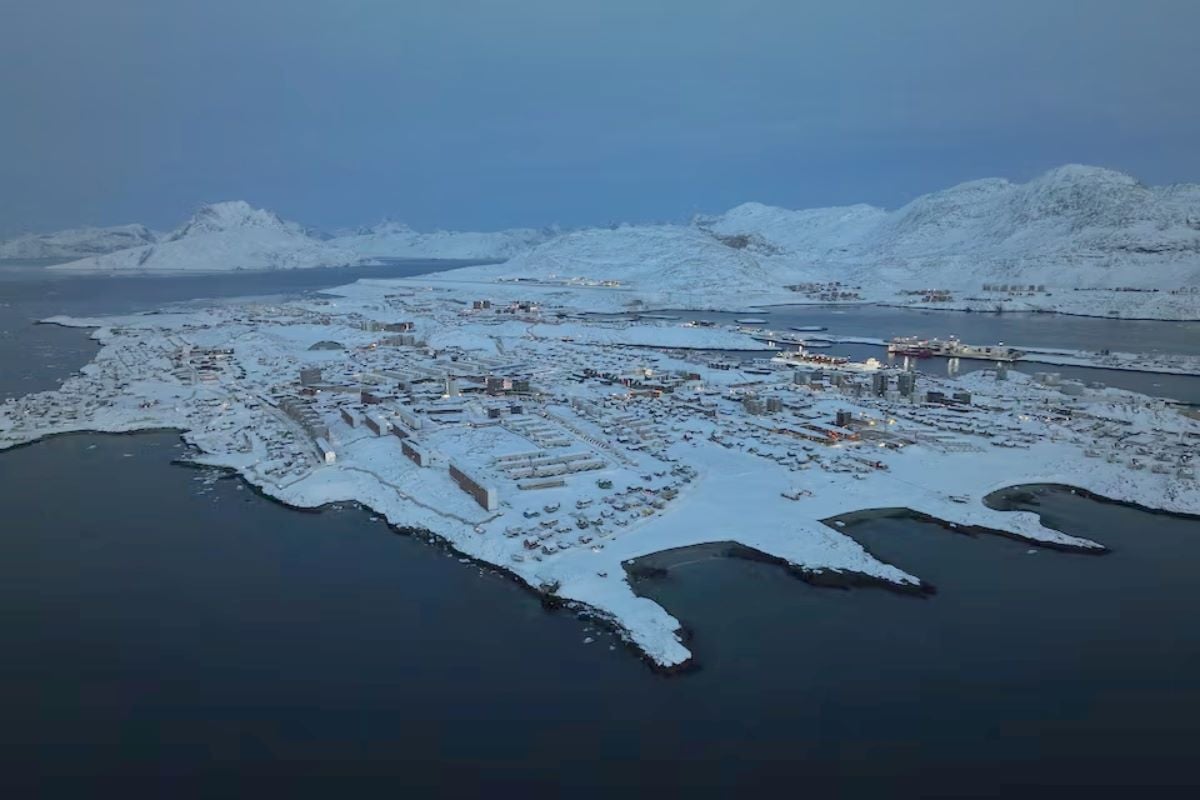
Donald Trump has ignited a geopolitical storm by openly declaring that Denmark has no rightful historical, legal, political, or moral authority over Greenland, the massive Arctic territory with barely 30,000 inhabitants but immense strategic and mineral value. According to Trump, Greenland is practically uninhabited land, poorly governed and inadequately protected, where Chinese and Russian vessels now freely operate in Arctic waters because Denmark lacks the military strength, strategic will, or appetite to defend it.
He went further, suggesting that Greenland is essential for the security and survival of the USA in the modern era, as it needs the territory to establish forward-operating bases, secure northern sea routes, and push the Chinese and Russian presence away from US borders. When asked whether the USA intended to invade Denmark or seize Greenland by force, Trump scoffed at the idea, saying that Denmark was powerless to resist and possessed neither a capable military nor nuclear deterrent. He laughed that when Denmark heard of his Greenland intentions, the only enhanced security measure introduced was dog-sled patrols. The implication was unmistakable— a superpower could, if it chose, simply take what it wanted.
The intellectual and ideological defence of this approach was later reinforced by senior White House adviser Stephen Miller, who appeared on CNN and argued aggressively with anchor Jake Tapper. Miller said that under what he described as the “Trump Doctrine,” the USA would unapologetically deploy military force anywhere it deemed necessary to protect US interests, declaring that US power and the “future of the free world” were one and the same. He stated bluntly that the USA is a superpower, and under President Trump it intended to act like one. When challenged over the arrest and removal of Venezuelan President Nicolás Maduro, Miller was unapologetic, interjecting sharply that “Damn straight we did!” before insisting the USA would not allow hostile or communist governments to threaten its borders, export drugs or weapons into its cities, or fall into the hands of rival powers.
On Greenland, he struck the same defiant chord. He questioned what right Denmark had to govern a territory so strategic to US security, arguing that no nation on earth would dare challenge the USA militarily over the Arctic. In other words, Greenland was too important to be left in the hands of a country lacking the power to defend it. His earlier social media commentary had already hinted that the Western world had been naive to relinquish its empires after World War II. Now, that thinking appeared to be migrating from fringe rhetoric into governing doctrine.
The Greenland narrative, however, is not simply about Arctic ice sheets or buried rare-earth minerals. It reflects a deeper transformation in how the USA now sees itself in the global hierarchy. Once, US leadership rested on economic dominance, trade reach, investment appeal, technological leadership, alliance cohesion, and moral influence. But increasingly, those pillars are weakening. The USA is being challenged by China in trade, manufacturing, and global infrastructure development. Its soft image has been battered by wars, sanctions, unilateral interventions, and political polarization. Many European allies are now openly questioning US reliability, while regions that once depended heavily on U.S. investment are now turning to China, Russia, or regional blocs.
In such a climate, hard power becomes the primary remaining tool. It is the one arena where the USA remains unquestionably formidable. Greenland therefore becomes symbolic— not only as a military and resource prize but as proof that the USA can still impose its will when it chooses. Stephen Miller’s comments strip away diplomatic language and reveal the raw calculation beneath. If Denmark cannot protect Greenland, and if China and Russia are already moving into the Arctic, then the USA will move more aggressively still. And if force is required, force will be used.
Yet this approach also represents a departure from the moral language traditionally associated with US power. In Venezuela, the justification narrative focused on dictatorship, corruption, and human rights violations. But Denmark cannot be painted as a tyrannical state. It is one of the world’s strongest democracies, consistently ranked among the happiest, freest, most just, and most socially equitable nations. Greenland, too, is a democratic autonomous territory whose people repeatedly affirm their partnership within the Danish realm. So the doctrine must shift from moral rescue to strategic entitlement. That shift is profound— and profoundly dangerous.
Because once a superpower declares that territory can be seized on the basis of strategic need, the entire post-war global security architecture fractures. NATO unity collapses. European trust evaporates. International law is discarded. The message received globally is that sovereignty is conditional and survival depends only on military strength. In that world, every nation becomes more paranoid, more armed, more volatile. The rule-based order dissolves into the law of the jungle.
But superpower status is not measured only by the ability to occupy territory. True power is earned by respect, stability, restraint, partnership, and legitimacy. If the USA chooses instead to move toward annexation rhetoric and gunboat doctrine, then Greenland is unlikely to be the end. It will simply be the opening act in a broader unraveling— one in which the USA asserts dominance even as its foundations quietly erode beneath it. And history has shown again and again that superpowers fall fastest not when they are challenged from outside— but when they begin to devour the very principles that once made them strong.
And yet, Russia and China may not rush to intervene. They may instead sit back and allow the USA to bleed its credibility, erode its alliances, and expose its desperation. Because beneath the chest-beating lies a quieter truth— the USA is losing its global economic primacy, losing trade leverage, losing investment dominance, losing moral authority, and losing its aura as a stabilizer rather than a disruptor. As these softer forms of power weaken, military force becomes the last remaining marker of superpower identity. So the temptation grows to use it— loudly, defiantly, repeatedly— to prove that America still commands the world stage.
But superpower status is not measured only by the ability to occupy territory. True power is earned by respect, stability, restraint, partnership, and legitimacy. If the USA chooses instead to move toward annexation rhetoric and gunboat doctrine, then Greenland is unlikely to be the end. It will simply be the opening act in a broader unraveling— one in which the USA asserts dominance even as its foundations quietly erode beneath it. And history has shown again and again that superpowers fall fastest not when they are challenged from outside— but when they begin to devour the very principles that once made them strong.
The writer retired as Press Secretary the President, and is former Press Minister at Embassy of Pakistan to France and former MD, Shalimar Recording & Broadcasting Company Limited
View all articles →Comments
No comments yet. Be the first to join the discussion!