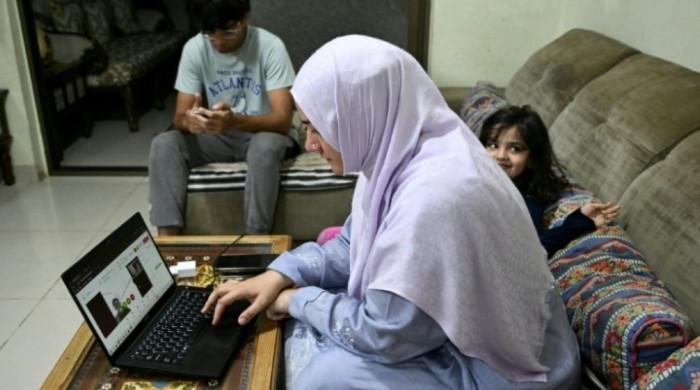
Telehealth in Pakistan

There are always certain unsurmountable upheavals, opportunities, incidents and happenings that shape our lens and perspectives to look onward. Flipping the pages of past decades we see it was thought technology would advance in a way that a mile of distance would no longer be any barrier in terms of connectivity.
With each passing day we have seen advances in innovation that have boggled the minds of mankind the most. And having said that, at the same time, technological advances in medicine no longer lag behind, rather it reigns supreme amid all the chaos and turmoil around. Among such advances, telehealth is one among such transformative changes. The one which is not confined to waiting rooms, rather powered by modern technology for ensuring adequate diagnoses and counselling via electronic methods of communication to ease affliction of the care recipient.
Further, the way covid-19 wreaked havoc, is no longer a mystery but a glaring reality about how fragile human life and limb can be in the midst of urgent health agony. The way the world’s mightiest economies were brought to their knees and the world’s robust healthcare infrastructures were pushed to their breaking point, telehealth emerged as one of the critical interventions for easing the burden of physicians and a vast plethora of hea;thvare organizations. It offered remote patient monitoring, assured patient communication and counselling and promised vigorous health-related consultation in the quagmire of difficulty and crises.
Today, with the passage of time, the world is witnessing a new era in healthcare delivery that offers a myriad of possibilities for expanding the access to healthcare to each nook and cranny around the globe. First and foremost, telemedicine’s potential to cut down the geographical barriers is relevant to numerous settings where accessibility to healthcare facilities is largely unavailable but the disease burden is staggering. Hence, in this context, the provision of telehealth in those areas saves the patient from long-distance travel which significantly reduces the time and costs associated with access to healthcare.
Apart from this, there are several other characteristics that are relevant to cite in the context of telehealth, such as its critical role in managing chronic diseases and bettering overall health outcomes through the ease and flexibility it provides through scheduled consultations and perpetual monitoring. Since the rural and indigenous communities bear the heavy brunt of it. Thus, this invention overcomes the geographical barriers while improving patient access and satisfaction intact.
In addition, there are other several promising results which are derived from the apt availability of this very innovation. For instance, it has been instrumental in the management of hypertension as it ensures regular remote monitoring and consistent virtual engagement between a patient and a healthcare provider. And, what is more intriguing about this aspect of dealing remotely with mental health peril is the elimination of stigma associated with in-person visits of the affectee. This brings the composure and lessens the hesitation of the sufferer to seek appropriate telepsychiatry.
Undoubtedly, there are various platforms such as Sehat Kahani, Sindh Integrated Emergency and Medical Services (SIEHS); Tele Tabeeb Services that remotely provide round the clock patient counselling. But what largely remains to be seen is the evaluation of all these services as a sustainable model. Indeed, for digital health to advance, it is imperative to keep evaluating what works and what needs adjustment to acquire measurable and improved health outcomes.
Today, the World Health Organization (WHO) also evaluates digital health as one of the pertinent tools in obtaining Universal Health Coverage (UHC), particularly in the context of low and middle-income countries, where access to healthcare is limited, poverty looms large and the strain caused by diseases is worrisome. According to its 2023 report on digital health, it is estimated that 78 percent of its member countries have policies or strategies that address telehealth that signifies its necessity. However, despite these key aspects, its adaptability and deployment remain inconsistent. There are also certain factors that largely contribute in determining the effectiveness of telehealth services, such as digital literacy, socio-economic status and access towards technology. Telehealth can be essential to democratize access to healthcare but it can also be liable to intensifying existing disparities to the penurious segments of populations.
Having said that all, gradually Pakistan also appears to have embraced digitalization in its healthcare landscape. But, there are still several lacunae which if uniformly addressed, can surely fill the void to tackling the healthcare challenges to come. Since the country does not have a national law regulating telemedicine, the Sindh Telemedicine and Telehealth Act of 2021 appears to be the only binding legislation. It places strong emphasis on patient consent and privacy, and it holds providers accountable for malpractice and misconduct. Thus, for its robust integration and implementation within our healthcare system, a legal framework is inevitable.
Undoubtedly, there are various platforms such as Sehat Kahani, Sindh Integrated Emergency and Medical Services (SIEHS); Tele Tabeeb Services that remotely provide round the clock patient counselling. But what largely remains to be seen is the evaluation of all these services as a sustainable model. Indeed, for digital health to advance, it is imperative to keep evaluating what works and what needs adjustment to acquire measurable and improved health outcomes.
Comments
No comments yet. Be the first to join the discussion!