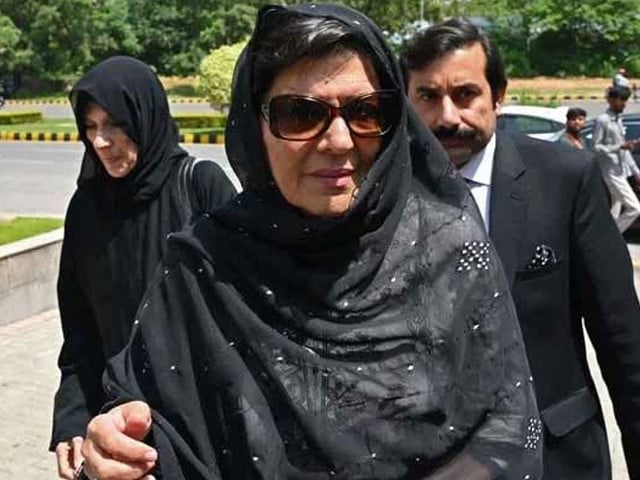
ATC rejects Aleema Khan's acquittal plea in Nov 26 D-Chowk protest case

RAWALPINDI: The Rawalpindi Anti-Terrorism Court (ATC) on Monday rejected the acquittal petition filed by Aleema Khan in connection with a case registered against her over the November 26, 2024, protest at D-Chowk.
ATC Judge Amjad Ali Shah announced the reserved verdict after hearing detailed arguments from lawyers representing both sides, concurring with the prosecution’s stance.
During the hearing, Aleema Khan’s counsel, Advocate Faisal Malik, argued that his client’s only role during the protest was meeting her brother, former prime minister and PTI founder Imran Khan, in jail and conveying his message to the party leadership and the public. He maintained that peaceful protests were protected under the Constitution and democratic norms, adding that Aleema Khan communicated the protest message through the media.
The defence pointed out that no journalist or media outlet had been named or examined as a witness in the case. When the court questioned whether this implied the media should also be implicated, Malik clarified that his argument was limited to the fact that both Aleema Khan and journalists relayed the same message and that there were no witnesses to the conversation that allegedly took place during the jail visit.
Advocate Malik contended that merely conveying a message did not make a person criminally liable, arguing that the charges framed under Section 6 of the Anti-Terrorism Act (ATA) failed to establish the accused’s guilt. He termed the case politically motivated and lacking legal merit.
Opposing the plea, prosecutor Zaheer Shah told the court that Aleema Khan had been charged under five clauses of the ATA based on the investigation report. He argued that organisers of political protests exercised control over their conduct and consequences, invoking the “theory of control”.
“The media has no link to this case. They did not appoint their own prime minister,” the prosecutor said, adding that protesters did not take to the streets at the media’s behest. He questioned the need to make journalists witnesses when, according to the case record, the organisers themselves had acknowledged their role in mobilising the protest.
The prosecutor read out transcripts of Aleema Khan’s media statements, arguing that the Constitution required protests and rallies to remain within the bounds of the law. He alleged that Aleema Khan, along with others, organised a violent protest aimed at destabilising the government.
Referring to one of her media talks, Shah said Aleema Khan had stated that the PTI founder directed supporters to proceed with the protest regardless of whether a no-objection certificate (NOC) had been obtained. “How can this be termed a peaceful protest?” he asked.
The prosecutor further informed the court that one police officer was martyred, 170 others were injured, and business activities across the country were disrupted during the protest. He claimed that armed groups were brought from Khyber Pakhtunkhwa to Punjab and that the accused themselves had admitted to shutting down the country.
Noting that statements of 18 prosecution witnesses had already been recorded, the prosecutor argued that there were no grounds for acquittal at this stage. The court agreed with the prosecution’s arguments and dismissed Aleema Khan’s acquittal petition.
Comments
No comments yet. Be the first to join the discussion!