



















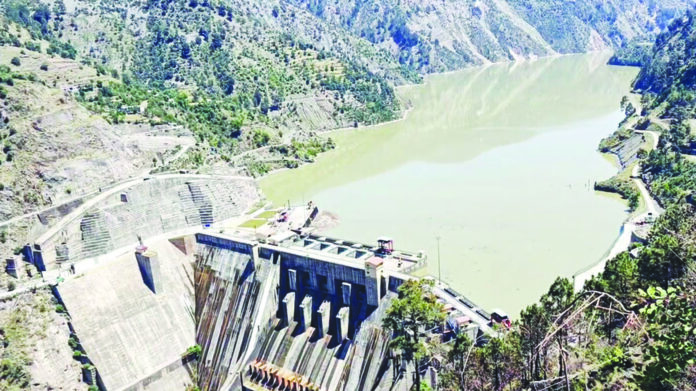
Weaponizing water is tantamount to an act of war— not because of rhetoric, but because water sustains life, food, energy and social stability. This stark reality has returned to the centre of South Asian geopolitics as international legal experts and UN mechanisms openly rebuke India’s rejection of its treaty obligations under the Indus Waters Treaty, warning that unilateral actions on shared rivers risk humanitarian harm and regional destabilisation. Pakistan’s response, far from being impulsive or political posturing, is anchored in international law, historical precedent and the lived vulnerability of a downstream nation whose survival is intertwined with the Indus river system.
Recent developments have sharpened this crisis. Pakistan has accused India of abruptly manipulating Chenab river flows without prior notice or data sharing, a direct breach of the treaty’s cooperative framework. Such sudden variations, occurring during sensitive agricultural cycles, threaten crops, irrigation systems and rural livelihoods. These actions have unfolded against India’s declaration that it has placed treaty cooperation “in abeyance”— a move that has no legal basis under the Indus Waters Treaty, which contains no provision allowing unilateral suspension. International legal opinion has been unequivocal: treaties cannot be selectively paused, and water cannot be used as leverage in political or security disputes.
This international rebuke matters because the Indus Waters Treaty is not an ordinary bilateral arrangement. Brokered by the World Bank in 1960, it has endured wars, crises and diplomatic breakdowns for over six decades precisely because it separated water cooperation from political conflict. Even during the wars of 1965, 1971 and the Kargil conflict in 1999, the treaty remained operational. Its survival was often cited as proof that rational cooperation could prevail even between hostile neighbours. Undermining it now, for tactical or retaliatory purposes, erodes one of the few remaining stabilising pillars in the region.
India has attempted to justify its actions by linking water cooperation to security concerns, including terrorism allegations and broader bilateral tensions. Yet conflating unrelated security disputes with a binding water-sharing treaty sets a perilous precedent. International law does not permit one party to suspend treaty obligations because of grievances elsewhere. The Permanent Court of Arbitration has already reinforced this principle by affirming that India cannot unilaterally strip dispute-resolution mechanisms of their authority or disregard established processes. Such rulings vindicate Pakistan’s insistence that the treaty remains fully in force and legally binding.
Pakistan’s position is also shaped by geography and necessity. As a lower riparian state, Pakistan depends on the western rivers— the Indus, Jhelum and Chenab— for nearly 80 percent of its agriculture and a significant portion of its water supply. Even limited or temporary disruptions can cascade into food shortages, economic stress and social instability. When upstream control is exercised without transparency or advance warning, it creates not only material harm but deep mistrust. The treaty’s design recognised this imbalance and therefore embedded strict requirements for information sharing, prior notification and joint oversight— all of which are now being undermined.
At its core, this crisis is not merely about water volumes or dam operations. It is a test of whether international agreements still bind powerful states, whether humanitarian consequences matter in strategic calculations, and whether cooperation can survive in an era of rising nationalism and coercive diplomacy. The international response so far suggests a clear conclusion: water cannot be turned into a weapon, treaties cannot be suspended at will, and peace in South Asia depends on respecting both law and life.
Beyond legality lies the humanitarian dimension. Access to water is inseparable from the rights to life, food, health and dignity. UN experts have warned that arbitrary interference with river flows violates these fundamental rights and that water must never be weaponised for political coercion. From this perspective, Pakistan’s warnings about the gravity of such actions are not exaggerated; they reflect an understanding that cutting or manipulating water supplies threatens millions of civilians who have no role in geopolitical disputes.
India has argued that climate change, glacier melt and evolving technological realities necessitate a rethinking of the treaty. While climate pressures are real, they strengthen— rather than weaken— the case for cooperation and lawful negotiation. Climate change makes unilateralism more dangerous, not less. Any modernisation of water-sharing arrangements must occur through mutual consent and established legal channels. Acting unilaterally dismantles trust, encourages retaliation and risks turning shared rivers into permanent flashpoints.
What makes the current moment especially troubling is the precedent it sets. If a powerful upstream state can suspend or reinterpret a water treaty whenever political tensions escalate, then transboundary water governance everywhere becomes fragile. Rivers do not recognise borders, and instability over shared resources rarely remains confined. The Indus dispute, if mishandled, could reverberate far beyond South Asia, weakening norms that protect downstream states worldwide.
Pakistan has consistently called for the restoration of full treaty mechanisms and expressed willingness to engage through legal and technical channels. This approach reflects a balance between firmness and restraint — asserting rights without abandoning dialogue. It underscores that Pakistan’s stance is not anti-cooperation, but pro-law, pro-stability and pro-human security.
At its core, this crisis is not merely about water volumes or dam operations. It is a test of whether international agreements still bind powerful states, whether humanitarian consequences matter in strategic calculations, and whether cooperation can survive in an era of rising nationalism and coercive diplomacy. The international response so far suggests a clear conclusion: water cannot be turned into a weapon, treaties cannot be suspended at will, and peace in South Asia depends on respecting both law and life.





Really great read — I appreciate how clearly you explained the importance of local online presence for businesses today. It’s a topic many companies overlook, i find it very interesting and very important topic. can i ask you a question? also we are recently checking out this newbies in the webdesign industry., you can take a look . waiting to ask my question if allowed. Thank you