














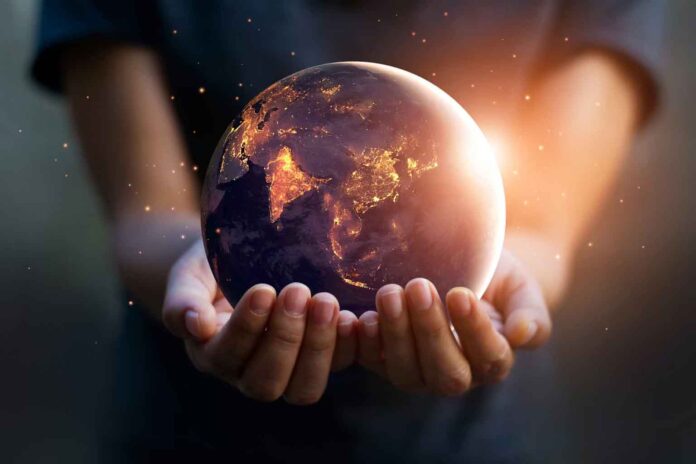
The world is facing the existential threat of the climate change crisis, and the associated ‘Pandemicene’ phenomenon. Having said that, strong neoliberal and austerity-based policies not only are wrongly not allowing it to prepare adequately in terms of resilience, and in appropriately supporting financially the large number of people being affected by climate change induced catastrophic catastrophes– where frequency, and intensity of such climate disasters has continued to increase in the wake of fast-unfolding climate change crisis– but also unwarranted practice of over-board monetary austerity– since inflation is not just mainly an aggregate demand-side phenomenon, but also has significant aggregate supply-side determination, especially in the case of developing countries.
This is on one hand unnecessarily increasing interest payments related expenditure, and on the other, lack of prevalence of adequate level of global sovereign debt restructuring framework is creating immense debt distress, in particular for those developing countries, which are also highly climate change vulnerable, like Pakistan.
In underlining the urgency to deal with a difficult debt situation globally, as internalized in the ‘Sevilla Commitment’ under the ‘Fourth International Conference on Financing for Development’, which was held earlier from June 30 to July 3, a December 11, Project Syndicate (PS) published article indicated ‘One of the most promising ideas in the Seville Commitment (Compromiso de Sevilla), which heads of state and government adopted in July, is the creation of a platform for borrower countries, supported by existing institutions and facilitated by a United Nations secretariat. This simple but potentially transformative concept could shift the balance of information and influence, which has long favored creditors. By allowing borrower countries to discuss technical issues and debt challenges, access capacity-building assistance, and coordinate their actions, the platform would amplify their voice in the global financial system.’
The recently released seventh edition of the seminal report on environment by the United Nations Environment Programme (UNEP), titled ‘Global Environment Outlook’ (GEO) highlighted the urgency needed to deal with the highly dangerous climate-change related situation, whereby it pointed out ‘Despite global efforts and calls for action, our planet has already entered into uncharted territory, facing global environmental crises of climate change, biodiversity loss, land degradation and desertification, and pollution and waste. These interconnected crises, which are undermining human well-being and primarily caused by unsustainable systems of production and consumption, reinforce and exacerbate each other and need to be addressed together.’
At the same time, the GEO report indicated the environmental challenge at hand had strong links with economy, and many other aspects of life. A December 9 Guardian published article ‘Food and fossil fuel production causing $5bn of environmental damage an hour’ pointed out with regard to the GEO report ‘The Global Environment Outlook (GEO) report, which is produced by 200 researchers for the UN Environment Programme, said the climate crisis, destruction of nature and pollution could no longer be seen as simply environmental crises. “They are all undermining our economy, food security, water security, human health and they are also [national] security issues, leading to conflict in many parts of the world,” said Prof Robert Watson, the co-chair of the assessment.’
Among the important devastating impact of climate catastrophes, and the adoption of neoliberal, and austerity policies– which have also a strong causal link with the climate change crisis, and the related ‘Pandemicene phenomenon in the first place– is in the shape of exacerbation of the inequality situation globally. A major report on inequality is titled ‘World Inequality Report 2026’, which is the third edition of such reports.
The WIR 2026 report pointed out for instance with regard to the grave situation of inequality as ‘The first and most striking fact emerging from the data is that inequality remains at very high levels. …today, the top 10 percent of the global population’s income-earners earn more than the remaining 90 percent, while the poorest half of the global population captures less than 10 percent of the total global income. Wealth is even more concentrated: the top 10 percent own three-quarters of global wealth, while the bottom half holds only two percent. The picture becomes even more extreme when we move beyond the top 10 percent. …the wealthiest 0.001 percent alone, fewer than 60,000 multi-millionaires, control today three times more wealth than half of humanity combined. Their share has grown steadily from almost four percent in 1995 to over six percent today, which underscores the persistence of inequality.’
Highlighting the importance of the report, it indicated ‘The World Inequality Report 2026 (WIR 2026) marks the third edition in this flagship series, following the 2018 and 2022 editions. These reports draw from the work of over 200 scholars from all over the world, affiliated with the World Inequality Lab and contributing to the largest database on the historical evolution of global inequality. This collective endeavour represents a significant contribution to global discussions on inequality. The team has helped reshape how policymakers, scholars, and citizens understand the scale and causes of inequality, foregrounding the separatism of the global rich and the urgent need for top-end tax justice. Their findings have informed national and international debates on fiscal reform, wealth taxation, and redistribution in forums from national parliaments to the G20. Building on that foundation, WIR 2026 expands the horizon. It explores new dimensions of inequality that define the 21st century: climate and wealth, gender disparities, unequal access to human capital, the asymmetries of the global financial system, and the territorial divides that are redrawing democratic politics. Together, these themes reveal that inequality today is not confined to income or wealth; it affects every domain of economic and social life.’
The WIR 2026 report pointed out for instance with regard to the grave situation of inequality as ‘The first and most striking fact emerging from the data is that inequality remains at very high levels. …today, the top 10 percent of the global population’s income-earners earn more than the remaining 90 percent, while the poorest half of the global population captures less than 10 percent of the total global income. Wealth is even more concentrated: the top 10 percent own three-quarters of global wealth, while the bottom half holds only two percent. The picture becomes even more extreme when we move beyond the top 10 percent. …the wealthiest 0.001 percent alone, fewer than 60,000 multi-millionaires, control today three times more wealth than half of humanity combined. Their share has grown steadily from almost four percent in 1995 to over six percent today, which underscores the persistence of inequality.’
Moreover, the report highlighted the strong consequence of the climate change crisis in significantly enhancing inequality, pointing out in this regard ‘The climate crisis is a collective challenge but also a profoundly unequal one. …the poorest half of the global population accounts for only three percent of carbon emissions associated with private capital ownership (and ten percent of emissions associated with consumption), while the top ten percent account for 77 percent of emissions associated with private capital ownership (and 47 percent of consumption-based emissions). …Those who emit the least, largely populations in low-income countries, are also those most exposed to climate shocks. …This unequal responsibility is therefore also an unequal distribution of risk. Climate inequality is both an environmental and a social crisis.’