














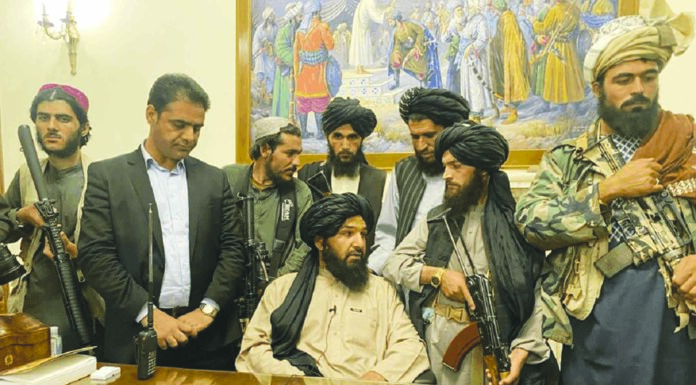
Afghanistan under Taliban rule is facing the consequences of decisions it can no longer ignore. The country’s strategic location, once seen as an advantage, has increasingly become a source of tension, especially with Pakistan, its largest neighbour and main trade corridor. Kabul’s continued unwillingness to curb the Tehreek-e-Taliban Pakistan is pushing bilateral relations into deeper strain, weakening Afghanistan’s fragile economy, and adding to the suffering of its own people.
The Taliban’s desire to project sovereignty is understandable. But sovereignty without responsibility is merely bravado. Over the last two years, Afghan leadership has chosen to placate militant factions that share ideological roots with them, believing that these groups can be managed, contained or deployed as strategic assets. History, however, has repeatedly shown that militancy has no loyalty, and no group that survives on chaos can be domesticated by promises or shared origins. By continuing to provide space, sympathy, and support to the TTP, Kabul is feeding a fire that will eventually burn it from within.
The economic cost of this policy is staggering. With the closure of Torkham, Chaman and other border points, Afghanistan is losing an estimated $2.5 million every single day, a catastrophic figure for a landlocked nation already suffering from liquidity shortages, unemployment and the collapse of formal banking. Bilateral trade estimated between $1.6 and $1.8 billion in FY24 has become hostage to avoidable political miscalculations. For an economy where 97 percent of the population is already living below the poverty line according to UN estimates, this self-inflicted blockade is economically suicidal.
But the more profound cost is geopolitical. Pakistan, despite its frustrations, had for decades insulated trade from security. Even after repeated cross-border attacks, support to TTP, and unfulfilled assurances, Pakistan continued to allow Afghan goods transit, provided electricity, facilitated energy projects and hosted millions of refugees. No other neighbour of Afghanistan has done this nor will. Yet the Taliban leadership has viewed this generosity not as goodwill, but as automatic entitlement. States, however, do not function on sentiment. They function on interests, and Pakistan’s foremost interest today is the safety of its people.
The challenge is not merely the presence of TTP on Afghan soil, it is Kabul’s strategic calculation that these groups offer leverage against Pakistan. This flawed thinking mirrors the toxic realpolitik of the 1990s when militant networks were manipulated as bargaining chips. Every country in the region has since paid a devastating price for those experiments. The Taliban, instead of learning from history, seem determined to repeat it.
If Afghanistan continues down this path, the ramifications will be severe. Not only will bilateral trade remain suspended, but multibillion-dollar regional projects, like TAPI, CASA-1000, rail connectivity, and energy corridors, could collapse under the weight of insecurity. No investor or international consortium will place pipelines or transmission lines across territory where armed groups operate freely. And without regional interdependence, Afghanistan will remain trapped in economic suffocation.
Afghanistan faces a choice that is both stark and simple. It can embrace cooperation, discipline its soil against terrorists, and open the gates to regional prosperity. Or it can cling to outdated loyalties, antagonise its largest trade partner, and watch its economy crumble day by day. The Taliban cannot rewrite geography, nor can they indefinitely ignore economic reality. The world is prepared to engage Afghanistan. Pakistan is prepared to facilitate it. The region is prepared to integrate it, the only question is whether Kabul is prepared to save itself.
Yet, despite this bleak line, a window still exists. The Taliban have the opportunity to reorient their policies and reposition Afghanistan on a constructive regional path. The reality is simple: trade and terrorism cannot coexist. If Kabul wants economic stability, international recognition, multilateral support, and entry into global financial systems, it must demonstrably sever its ties with militant factions. No country, not Pakistan, not China, not Iran, not the Central Asian states, will integrate Afghanistan into regional mechanisms unless Kabul eliminates the perception that its territory is an incubator for extremism.
The Istanbul process, facilitated by Qatar and Türkiye, offered the Taliban a respectful, legitimate platform to reconnect with the world. It provided a diplomatic lifeline at a moment when global frustration with Kabul was growing. Walking away from such forums only deepens Afghanistan’s isolation and strengthens hardliners who believe ideological purity matters more than economic survival. If Taliban 2.0 wishes to avoid the fate of Taliban 1.0 who were abandoned, sanctioned, and sidelined, they must realise that diplomacy is not a concession but a necessity.
Pakistan too must calibrate its policy with clarity. It has sent its strongest message yet by suspending trade and closing borders, but it must remain open to dialogue, coordination mechanisms, joint verification frameworks, and structured pressure. The objective is not to weaken Afghanistan but to ensure stability on both sides of the border. A collapsed Afghanistan is neither in Pakistan’s interest nor the region.
At its heart, the crisis is not just political or economic, it is moral. Afghan citizens, already exhausted by decades of war, poverty, and displacement, deserve better than leaders who gamble their future on temporary alliances with militant groups. Nations are not built on nostalgia for jihadist brotherhoods; they are built on economic growth, responsible governance, and peaceful coexistence with neighbours.
Afghanistan faces a choice that is both stark and simple. It can embrace cooperation, discipline its soil against terrorists, and open the gates to regional prosperity. Or it can cling to outdated loyalties, antagonise its largest trade partner, and watch its economy crumble day by day. The Taliban cannot rewrite geography, nor can they indefinitely ignore economic reality. The world is prepared to engage Afghanistan. Pakistan is prepared to facilitate it. The region is prepared to integrate it, the only question is whether Kabul is prepared to save itself.