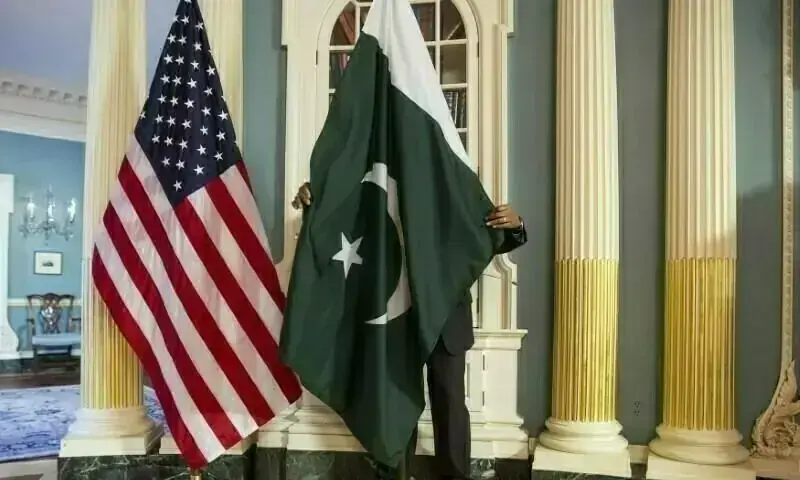
Trade deal opens new pathways

In the dense thickets of global diplomacy where trade wars and strategic alignments increasingly shape bilateral relationships, the recently finalized US-Pakistan trade deal announced on July 31, emerges as more than just a transactional agreement. It is a symbol of Pakistan’s economic recalibration and reentry into a competitive global marketplace, bolstered by pragmatic diplomacy and visionary reforms. While often bracketed by geopolitical noise, this accord has quietly set the stage for what could be a transformative leap for Pakistan’s trade potential, energy autonomy, and technological evolution.
What makes this deal compelling is not merely the reciprocal reduction of tariffs or the promise of foreign investment. Instead, it is the calculated convergence of national interests where Pakistan’s developmental aspirations and America’s shifting economic priorities appear aligned. This alignment has manifested in a pact that not only reverses the looming threat of a punitive 29 percent tariff on Pakistani exports, which had been present since April, but it also establishes pathways for strategic collaboration in energy, mining, information technology, and digital infrastructure.
Trade figures provide the first concrete layer to this step. In 2024, Pakistan exported goods of $5 billion to the US, while imports from the US stood at $2.1 billion, yielding a trade surplus of $2.9 billion in Pakistan’s favor. This 5.2 percent increase from 2023 underscores both the vitality and vulnerability of Pakistan’s export-led relationship with its largest Western trading partner. The spectre of elevated tariffs earlier this year threatened to unravel this progress. Instead, diplomatic efforts led by Finance Minister Muhammad Aurangzeb in tandem with US officials like Commerce Secretary Howard Lutnick and Trade Representative Ambassador Jamieson Greer have not only neutralized that threat but converted it into a tangible economic opportunity.
Although specific percentages remain undisclosed, the removal or dilution of the 29 percent proposed tariff on Pakistani exports potentially offers a significant buffer for key industries, especially textiles, surgical instruments, and agricultural products. In a global export market already saturated by competitive pricing and emerging manufacturing hubs like Vietnam, a reduced tariff regime could enhance Pakistan’s competitiveness in the US market, leading to higher export volumes, industrial rejuvenation, and job creation across domestic supply chains.
Equally crucial, and perhaps more long-term in impact, is the US commitment to assist in the development of Pakistan’s oil reserves, estimated at 238 million barrels as of 2024. While previous exploration attempts, including a joint venture with Exxon Mobil six years ago, yielded no commercial discoveries, the renewed US interest signals both technological confidence and strategic intent. President Donald Trump emphasized selecting a major US oil company to lead this venture. This could inject much-needed expertise and capital into Pakistan’s underdeveloped energy sector, which remains chronically reliant on expensive oil imports. If successful, domestic oil production could shift the import-export balance, save precious foreign reserves, and even open avenues for energy exports within the region.
Beyond the traditional metrics of oil barrels and trade balances, the agreement’s most understated yet profound promise lies in digital and technological investment. Reports confirm US interest in Pakistan’s IT sector, mining, digital infrastructure, and emerging areas such as cryptocurrency regulation, a space where Pakistan is moving toward formal legalization and compliance.
Thus, the US-Pakistan trade deal is more than an economic document; it is a diplomatic milestone and an economic blueprint. It captures a moment where Pakistan’s global narrative shifts from crisis to capacity, from dependency to development. If executed with precision and supported with complementary domestic reforms, this accord could become the seed of Pakistan’s next growth chapter, one not driven by foreign aid or loans, but by exports, energy, and enterprise.
This is not merely about importing foreign capital; it is about integrating Pakistan into the circuits of the Fourth Industrial Revolution. With a young, tech-savvy population and a burgeoning startup ecosystem, Pakistan stands to benefit immensely from foreign investment in digital infrastructure and skill development. It could unlock high-skilled employment, improve financial inclusion through fintech, and catalyze innovation in public service delivery.
The symbolism of this deal also matters a lot. For decades, the US-Pakistan relationship has oscillated between security-centric collaboration and economic neglect. With this agreement, the conversation shifts toward economic interdependence and sectoral modernization. As Prime Minister Shehbaz Sharif aptly stated, the deal represents a ‘landmark’ in bilateral ties. It is a turn toward pragmatism, focusing on exports, investments, and energy rather than aid dependency and military cooperation.
In a year already marked by economic turbulence and rising protectionism, the timing of this deal is opportune. It signals that Pakistan can still negotiate from a position of strategic relevance, and that its economic future is not merely a matter of internal reforms but also about smart diplomacy. The USA, by re-engaging with Pakistan on economic terms rather than security postures, indicates a broader recalibration of its South Asia outlook. For Pakistan, this is a window to prove that it can be a reliable partner not just in times of war or political alignment, but in trade, energy, and digital innovation.
Thus, the US-Pakistan trade deal is more than an economic document; it is a diplomatic milestone and an economic blueprint. It captures a moment where Pakistan’s global narrative shifts from crisis to capacity, from dependency to development. If executed with precision and supported with complementary domestic reforms, this accord could become the seed of Pakistan’s next growth chapter, one not driven by foreign aid or loans, but by exports, energy, and enterprise.

The Writer works as a Researcher with an Islamabad-based policy think tank, the Institute of Strategic Studies Islamabad. He is also a Research Fellow at Hanns Siedel Foundation Pakistan. He can be reached at [email protected]
View all articles →51 Comments
No comments yet. Be the first to join the discussion!