

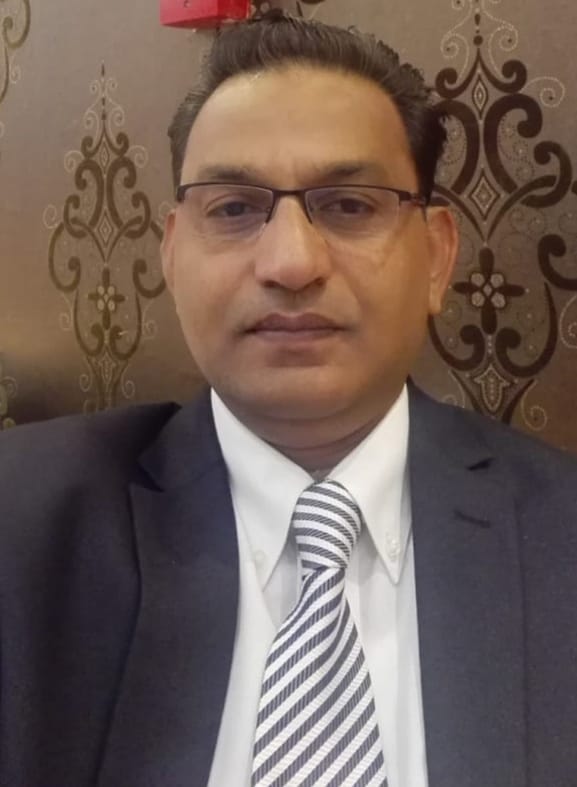

- Dr Xing suggests China-like conflict resolution mechanism to South Asian neighbours
A Chinese scholar on Thursday urged Pakistan and India to resolve Kashmir issue while benefitting from the Chinese model of settling border disputes.
These views were expressed by Prof Dr Xing Guangcheng, the director of the Institute of China’s Borderlands, Chinese Academy of Social Sciences while briefing media here on Thursday. Dr Xing is visiting Pakistan heading a six-member delegation of the Publicity Department from the Xinjiang Autonomous Regions Committee.
Other members of the delegation included Abdulimiti Abulaiti, the deputy director general of the Publicity Department, and senior officials Liu Sen, Li Lin, Abdur Reheman Wushouer and Qi Mingie. Dr Xing said that China had resolved border disputes with Soviet Union as China had evolved a conflict resolution mechanism under which economic and military cooperation agreements were signed with Russia and other four countries of the Central Asia.
“China and Russia (formerly known as Soviet Union) border disputes were more complex than Pakistan and India are locked in. China started bilateral talks with Soviet Union in 1960s without any progress. Once Soviet Union collapsed, China had to talk to four central Asian states as well as Russia, forming (4+1) group,” he said.
He said that if any country fails to resolve border dispute, it could lead to war anytime. He said that China gradually normalised tensions with Russia, signed a military cooperation in 1996 and later also formed a group for economic cooperation in Shanghai. Later, this 4+1 group was named as the Shanghai Cooperation Group after the member states agreed for economic cooperation.
Later, Uzbekistan also joined the group, he said, adding that this was how China had launched One Belt One Road (OBOR) for forming a community of shared destiny. He said that China’s visionary Belt Road and China-Pakistan Economic Corridor (CPEC) initiatives were aimed at forming a community of shared destiny which would be involving all the countries along the old Silk Road with an objective of connecting Asia, Africa and Europe.
“Under the OBOR, gas and petrol pipeline between Gwadar and Kashgar is being constructed while work on coal and solar energy related projects are also underway. They are also actively engaged to establish economic and trade logistic centre, as well as economic development zone in Kashgar,” Dr Xing said.
He was of the view that Xinjiang will have vital role in pushing forward OBOR’s agenda. The Silk Road Economic Belt and the 21st century maritime Silk Road also known as the Belt and Road, is a developmental strategy proposed by Chinese leader Xi Jinping that focuses on connectivity and cooperation among China and the rest of Eurasia.
He said that CPEC has added a new dimension to socio-economic ties between Pakistan and China’s Xinjiang autonomous region, and the two sides were now actively engaged in promoting inter-connectivity through, road, rail and air links. He said the CPEC that was the pilot and major project of OBOR and it has opened numerous avenues of their bilateral cooperation.
Kashgar in the Xinjiang has become the central point linking the region with Gwadar Port. The central and the provincial governments were laying great emphasis on the implementation of CPEC that he hoped will greatly improve the livelihood of the local people. Dr Xing said that Xinjiang that was multi-ethnic region and possessed huge natural resources was looking forward to further develop its ties with its neighbouring countries under OBOR’s initiative.
He said that the visit was aimed at promoting public awareness about the significance of this initiative for giving boost to their bilateral ties. The central and the autonomous region’s governments attached high importance to their relations with Pakistan that is considered their iron brother in whole of China.
About the fast-growing economy of the Xinjiang, he said it has achieved annual growth of 7.6 percent and was showing remarkable progress in all sphere of life. Work on Gwadar-Kashgar oil pipeline that would carry one million barrel per day (1MMBD) Middle Eastern oil to China is highly important in their relations in energy and infrastructure sector.
On the occasion, Abdur Rehman said that religious freedom in Xinjiang was exemplary and that all ethnic groups were fully allowed to perform their religious rites as per their belief. The central and provincial governments fully respect their religious sentiments, he concluded.


