
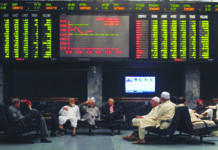











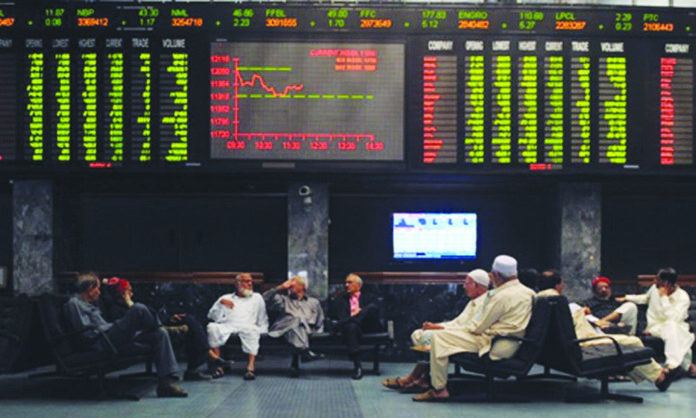
Another rally broke out on the Pakistan Stock Exchange last Friday. The KSE-100 index rose more than 1,800 points, rebound sharply to reach an intra-day high of 186,619 before closing above 184,100, a number that few people would have thought possible just a year ago.
Investment Bankers and Brokers are preparing for what may be Pakistan’s busiest IPO pipeline in years. There are as many as 16 companies lining up to list in 2026, including Ghani Dairies, which will be the first publicly traded corporate dairy farm in the country after the SECP cleared its book building for 104.2 million shares.
But beyond Karachi’s trading floors and corporate boardrooms, the mood is far less celebratory.
Pakistan today appears to be operating multiple economies at once: the one reflected on trading screens, the one captured by macroeconomic indicators, and the one most people actually live in.
In much of the real economy, prices remain stubbornly high, jobs are uncertain, and growth is elusive for most Pakistanis.
That disconnect was on display this month when Prime Minister Shehbaz Sharif toured Davos at the World Economic Forum (WEF), pitching Pakistan’s economic turnaround and renewed investment opportunities to global investors, whilst sentiment at home was moving in the opposite direction. In the fourth quarter of 2025, a majority of Pakistani businesses — 54% — said the country was heading in the wrong direction, according to Gallup Pakistan’s Business Confidence Index, a three-percentage-point increase from earlier in the year.
Macroeconomic indicators tell a similar story. Recent estimates place GDP growth at around 3.0–3.2%. Both the World Bank and IMF warn that it could slow further this year. Based on data from the State Bank of Pakistan, Foreign Direct Investment (FDI) into the country declined sharply by 26 percent in the first four months (July-October) of fiscal year 2026. For an economy claiming to be full of potential and making a strong recovery, this is weak performance.
For households, the picture is even less reassuring. Daily wage earners continue to face job insecurity, rising costs, and day-to-day affordability. Even basic infrastructure in the country adds to our anxiety: from fires engulfing Gul Plaza to the repeated deaths of children falling into open manholes.
These pressures rarely show up in index points, but they define how Pakistan’s economy is experienced by the vast majority of people.
What’s fueling the Stock Market Rally?
A key factor of the PSX’s bull run has been Pakistan’s renewed engagement with the International Monetary Fund. The IMF programme steadied macroeconomic conditions after years of volatility, setting expectations around inflation, exchange rates, and external financing. Over $1.3 billion in fresh IMF support helped restore a measure of confidence, pushing the KSE-100 to successive record highs in 2025.
As inflation eased and interest rates declined, stocks became more appealing than fixed-income investments. Domestic capital moved to equities, and foreign portfolio investors cautiously returned, encouraged by improving reserves and reduced default risk. Political signals like the FY26 federal budget assured investors of policy continuity.
Sectoral performance added to the momentum. Banking stocks such as United Bank Limited, Habib Bank Limited, and Meezan Bank led the rally, benefiting from large spreads and strong balance sheets. Energy and fertiliser companies gained from relatively stable commodity prices and trading volumes, while telecom and technology stocks posted above-average gains amid digital adoption and growth.
These stocks’ rally highlights why market performance does not reflect the larger economy.
The Pakistan Stock Exchange represents only a small, formal slice of the economy, where a few large firms dominate, benefitting disproportionately from financial stabilisation, currency management, and interest-rate cycles.
On the other hand, most Pakistanis work in informal sectors that are invisible to the equity markets. Their earnings depend on things like wages, job security, and public services, which are far less sensitive to IMF programs or portfolio flows.
When inflation drops from very high levels but stays high in absolute terms, the markets may be thrilled, but your average household will still have a hard time making ends meet.
The same is true for economic growth. A GDP expansion of around three percent may be enough to stabilize the country’s balance sheets and calm investors, but it is almost redundant when it comes to creating a meaningful amount of jobs or raising earnings on a large scale.
Liquidity dynamics also help to understand the divergence between the markets and real life. Pakistan’s stock rally is driven by a relatively small amount of money chasing a few stocks. Prices can rise sharply even if the wider economy isn’t growing. This isn’t the first time this has happened in a stock market, but people typically misinterpret it as a sign of more wealth.
Timing matters too. Stock markets are forward-looking and set prices based on expectations of reform, stability, and earnings growth. The real economy, however, adjusts slowly, constrained by infrastructure gaps, poor governance, and low productivity. In Pakistan’s case, markets are likely betting on changes that the average household is yet to see – or may never see if government reforms stall.
The danger lies in mixing bullish runs in the market and positive macro indicators with what is really happening in the economy.
A rising index does not fix a broken public service system, create secure jobs, or expand the tax base. Bold statements at WEF in Davos do not resolve the underlying structural issues that hold back Pakistan’s long-term growth, from low investment to poor human capital. But such statements and rallies can create the illusion that our economic woes are going away, making the need for reform and action less urgent.
Pakistan’s stock market is right about stabilisation, but wrong about the prosperity that every Pakistani faces.
The PSX may be booming, but for most Pakistanis, things are still the same. Without swift structural reforms, particularly in investment and public services, the market’s optimism risks hiding the serious problems that are preventing true progress and putting off the action that the country desperately needs.