Tarar says AJK violence driven by militants, not peaceful protesters
Pakistan’s federal government claims violence in Azad Jammu and Kashmir protests was driven by armed militants, supported by foreign interests, not peaceful demonstrators. Officials cite alleged links to banned groups and election sabotage.

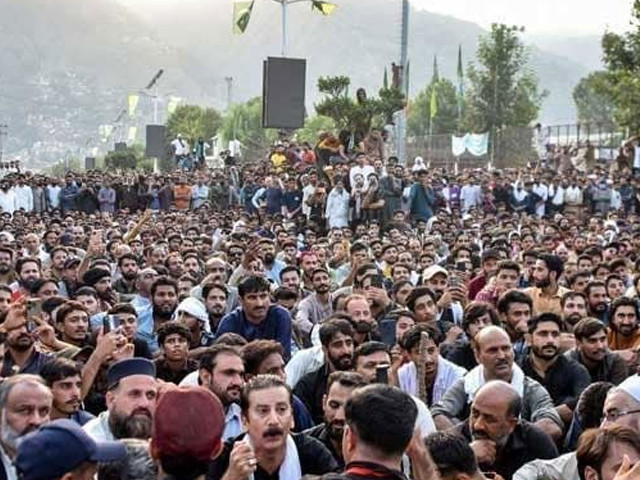
ISLAMABAD: The federal government on Tuesday alleged that the recent violence in Azad Jammu and Kashmir (AJK) was orchestrated by militant elements pursuing a foreign-backed agenda rather than peaceful protesters, as authorities claimed armed terrorists had infiltrated demonstrations organised by the proscribed Joint Awami Action Committee (JAAC).
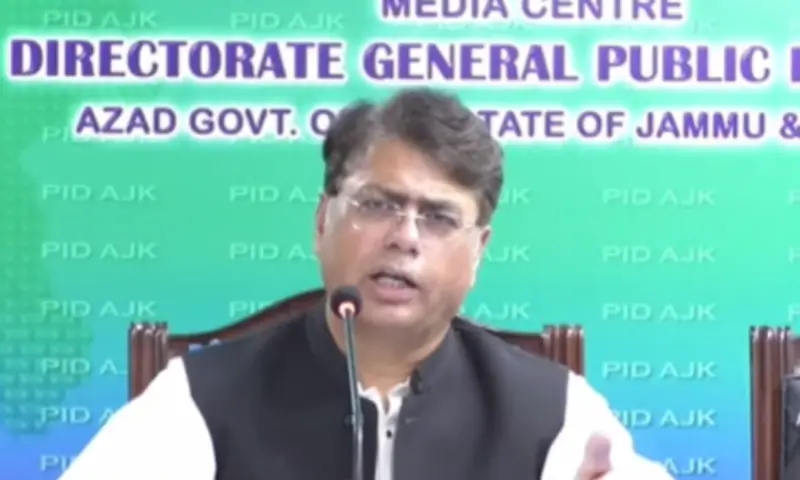
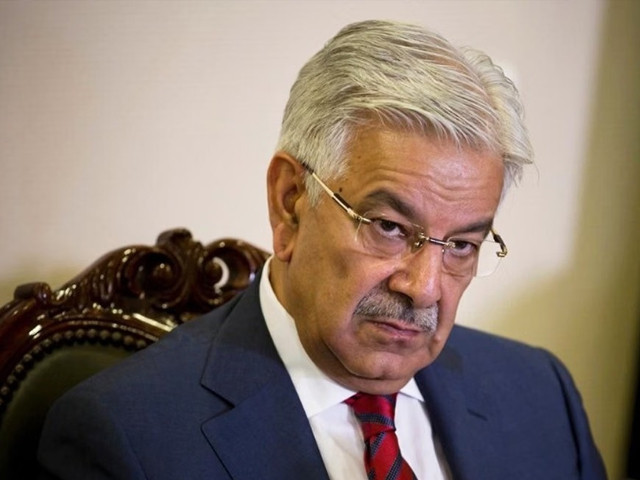
Information Minister Attaullah Tarar said the unrest in parts of AJK could not be described as a peaceful protest, maintaining that armed militants, backed by hostile forces and foreign funding, were involved in attempts to destabilise the region.
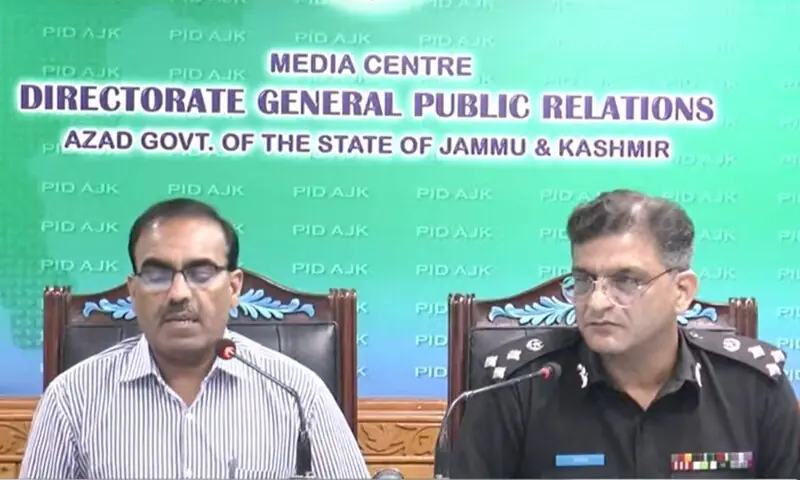
The remarks came as AJK Information Secretary Muhammad Rashid Hanif and senior police officials presented what they described as evidence linking the violence to militants affiliated with Fitna Al Khawarij, the term used by the state for members of the banned Tehreek-i-Taliban Pakistan (TTP).
Addressing a press conference, Hanif said the state possessed credible information indicating that a significant number of participants in the JAAC protests were linked to militant organisations and were attempting to sabotage the remaining phases of the AJK Legislative Assembly elections.
"The state's foremost responsibility is to maintain law and order and ensure the democratic process continues uninterrupted," he said, adding that armed individuals had infiltrated the protests under the cover of civilian demonstrators.
Hanif presented video footage purportedly showing masked gunmen positioned on rooftops, arguing that the presence of heavily armed individuals demonstrated the protests had evolved into militant activity rather than a civil movement.
He alleged that anti-state elements had misled ordinary citizens into joining the demonstrations and were using women and children as human shields while spreading misleading narratives on social media portraying the agitation as a human rights movement.
AJK Police spokesperson and Deputy Inspector General Irfan Kashfi said the armed participants possessed sophisticated weapons, including M-4 rifles, AK-47s, sub-machine guns and, according to preliminary information, sniper rifles.
"These are not peaceful protesters but militants," Kashfi asserted.
He said one police officer had embraced martyrdom during clashes while five others were injured. He further revealed that a suspect arrested in Rawalakot was carrying a military-grade weapon and, according to initial investigations, was a foreign national allegedly operating as a sniper.
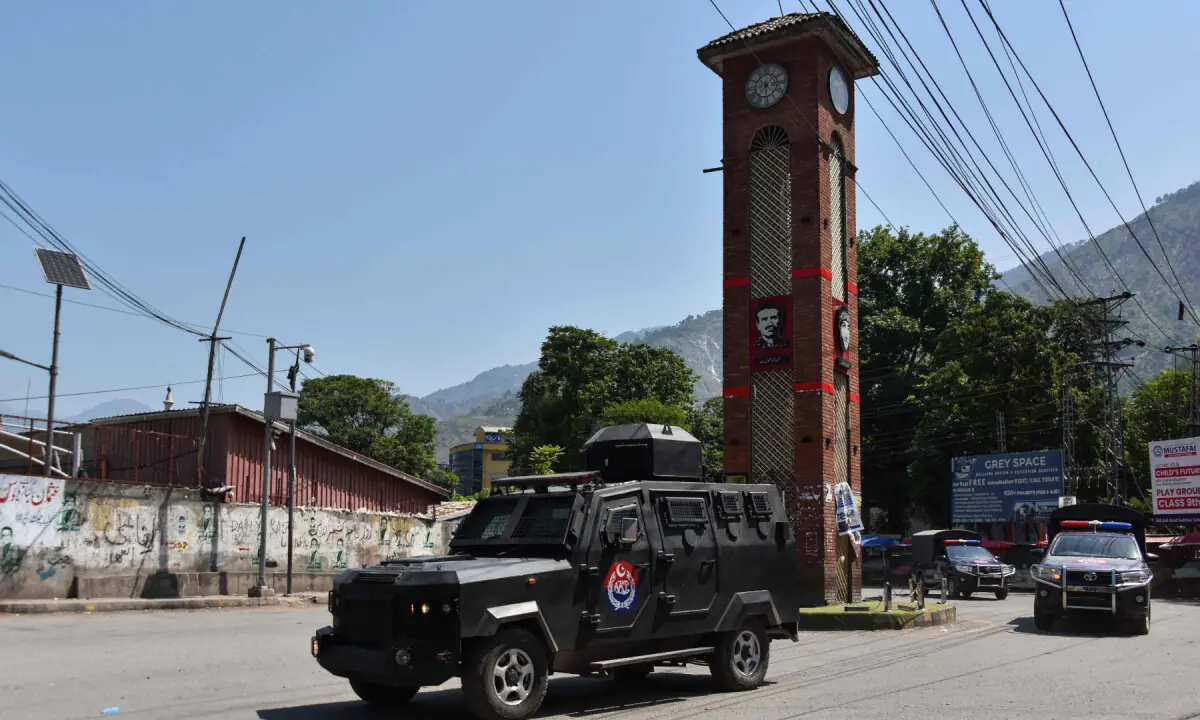
Kashfi said law enforcement agencies were responding in self-defence to protect civilians and that investigations were under way to identify facilitators supporting the armed groups.
He also dismissed speculation that militants could seize control of any area in AJK, affirming that security forces would continue operations until the situation was fully brought under control.
Earlier, AJK Prime Minister Faisal Mumtaz Rathore also accused armed agitators of deliberately engineering unrest during the election process.
Sharing footage showing armed men, Rathore alleged the violence had been planned well in advance to trigger widespread instability.
"The rioters not only possess sophisticated weapons but also occupy strategic positions from where they target security personnel, whose objective has been to prevent escalation and protect civilians," he said.
He appealed to residents to stay away from the protesters, alleging that the organisers had a history of using civilians as human shields to provoke confrontations with security forces.
The latest allegations come against the backdrop of escalating tensions between the AJK administration and the Joint Awami Action Committee over the past several weeks.
The regional government declared the JAAC a proscribed organisation on June 5, placing it under the First Schedule of the Azad Jammu and Kashmir Anti-Terrorism Act.
A day later, authorities launched a crackdown on the group, arresting dozens of its leaders and placing 147 activists on the Fourth Schedule of the anti-terrorism law as part of efforts to curb what officials describe as activities threatening public order and the democratic process.
Comments
No comments yet. Be the first to join the discussion!