The mountains will not wait
The article details Pakistan’s swift response to a deadly attack in Ziarat, launching Operation Shabaan to dismantle militant networks. It warns that lasting security needs action beyond battlefields.

Militants getting help from India
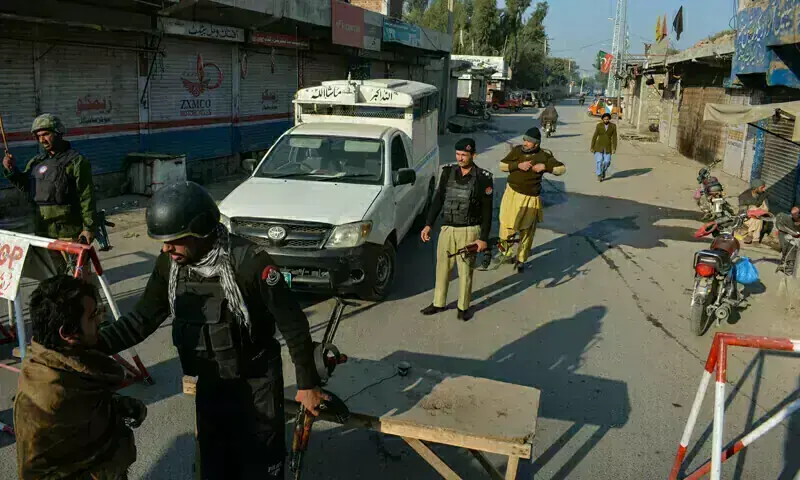
The mountains of Ziarat have witnessed conflict before, but what unfolded there was more than another terrorist attack. It exposed the brutality of a militant insurgency that has become increasingly ruthless and tested Pakistan’s resolve to defend its writ. The assault on the police post guarding Mangi Dam, followed by the abduction and execution of captured policemen, was among the most horrific attacks on law enforcement in recent years. It also became the catalyst for Operation Shabaan, a military campaign that signalled Pakistan’s determination to reclaim the initiative against terrorism.
The state’s response was swift and decisive. Conducted jointly by Pakistan Army, Frontier Corps, and Balochistan Police, Operation Shabaan was designed not merely to avenge a brutal attack but to dismantle the militant infrastructure behind it. Security forces disrupted terrorist networks, destroyed hideouts, and eliminated large numbers of militants, demonstrating a high level of coordination, professionalism, and operational effectiveness. The operation reaffirmed an important reality. Pakistan retains both the capability and the resolve to confront terrorism with force when necessary.
Yet every successful military campaign raises a larger question. What happens after the guns falls silent? Tactical victories weaken terrorist organisations, but they do not automatically remove the political, financial, and logistical networks that allow them to regenerate. Lasting security depends not only on military success but also on denying extremists the space, resources, and external support they need to survive.
That broader challenge begins beyond Pakistan’s borders. Pakistan has consistently maintained that terrorist organisations, including Tehreek Taliban Pakistan and Baloch Liberation Army, continue to operate from sanctuaries inside Afghanistan, where they find refuge, training facilities, logistical support, and operational freedom. Pakistani authorities have repeatedly shared intelligence with Afghan officials linking major terrorist attacks to militants based across the border. The persistence, sophistication, and coordination of these attacks have reinforced Pakistan’s longstanding concern that Afghanistan has become the principal external sanctuary for groups targeting the Pakistani state.
Beyond the sanctuaries in Afghanistan lies an equally troubling dimension. Pakistan has consistently maintained that terrorist groups targeting the country receive financial, logistical, and intelligence support from hostile external actors, particularly networks linked to India’s intelligence agency. According to Pakistani security assessments, this external patronage has strengthened the operational capabilities of terrorist groups, enabling them to sustain attacks aimed not only at inflicting casualties but also at undermining Pakistan’s economic stability, strategic projects, and national cohesion.
Above all, it will require ensuring that the people of Balochistan experience the dividends of peace and feel equal stakeholders in Pakistan’s future. Only then will the mountains remain green, not as battlefields scarred by conflict, but as symbols of hope, prosperity, and enduring peace.
Despite repeated provocations, Pakistan has largely chosen diplomatic engagement over wider military escalation. That restraint reflects strategic responsibility rather than weakness. Pakistan has consistently called on the Afghan authorities to deny their territory to terrorist groups and has sought to address its security concerns through dialogue rather than confrontation. Yet every sovereign state has the right to expect that its borders will not be used as launch pads for attacks against its citizens. Counterterrorism cannot succeed if terrorist sanctuaries and external support networks remain beyond the reach of domestic security operations.
The objective of this violence extends beyond the battlefield. By targeting strategic infrastructure, public institutions, and projects such as the China-Pakistan Economic Corridor, militant groups seek to erode investor confidence, slow economic development, and project Pakistan as a country trapped in instability. The ultimate aim is to weaken the state by increasing its security and economic costs. Pakistan is no longer confronting isolated terrorist groups. It is facing interconnected networks that exploit regional rivalries, information warfare, and external support to undermine state authority and create persistent instability.
At the same time, terrorism must never be allowed to define Balochistan or its people. The overwhelming majority of Baloch are patriotic Pakistanis whose aspirations for security, dignity, education, employment, and development are no different from those of citizens elsewhere in the country. Violent organisations do not represent the province. They exploit genuine grievances while pursuing objectives that extend far beyond them. The most effective response, therefore, is one that isolates terrorists while strengthening the trust and partnership between the state and the people of Balochistan.
Pakistan’s response must remain comprehensive. Military operations will continue to eliminate terrorist networks wherever they emerge, but equal attention must be given to strengthening border management, improving intelligence coordination, exposing external sponsorship through diplomacy, disrupting terrorist financing, and accelerating development in conflict-affected regions. Counterterrorism succeeds when security, governance, economic opportunity, and public confidence advance together.
The policemen executed in the mountains of Ziarat, and the soldiers who continue to sacrifice their lives across Pakistan, deserve more than remembrance. They deserve a national strategy that matches battlefield courage with strategic clarity, diplomatic engagement, institutional resilience, and unwavering political unity. Their sacrifice should strengthen the country’s resolve not only to defeat terrorism but also to remove the conditions that allow it to endure.
The mountains will not wait. Neither will those who seek to use them against Pakistan. The operation will achieve its military objectives, as Pakistan’s security forces have repeatedly demonstrated their capability to defeat terrorist networks. But military success is only the beginning. The lasting peace that Balochistan deserves will depend on what follows after the operation ends. It will require effective governance, accountable institutions, economic opportunity, quality education, healthcare, and development that reaches even the most remote communities.
Above all, it will require ensuring that the people of Balochistan experience the dividends of peace and feel equal stakeholders in Pakistan’s future. Only then will the mountains remain green, not as battlefields scarred by conflict, but as symbols of hope, prosperity, and enduring peace.

The writer has a PhD in Political Science, and is a visiting faculty member at QAU Islamabad. He can be reached at [email protected] and tweets @zafarkhansafdar
View all articles →Comments
No comments yet. Be the first to join the discussion!