

Japanese monk urges global Buddhists to gather in Taxila for peace prayers
Japanese Buddhist monk Junsei Terasawa has urged Buddhists worldwide to gather at Taxila’s Dharmarajika Stupa for prayers for global peace. He said the Buddha’s message of compassion and non-violence should again rise from Gandhara amid growing conflict.

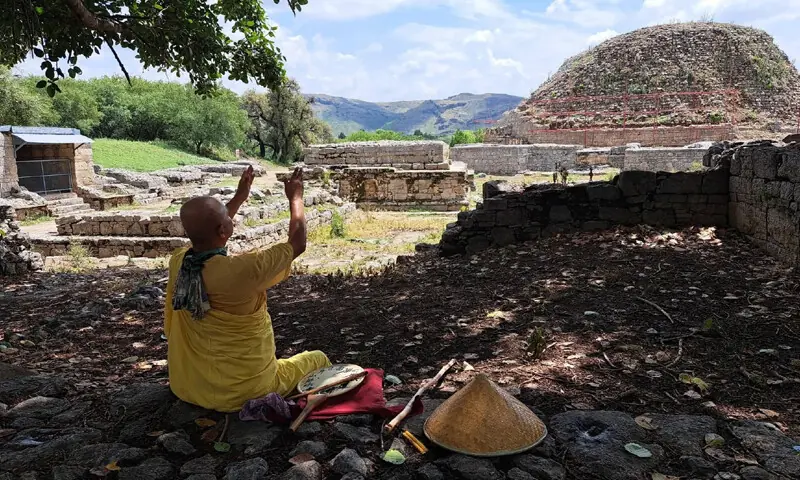
TAXILA: Japanese Buddhist monk Junsei Terasawa has called on Buddhists around the world to assemble at the ancient Dharmarajika Stupa in Taxila for collective prayers for global peace, saying the Buddha’s message should once again rise from Gandhara at a time of war, violence and human suffering.
Speaking to journalists after offering prayers at the nearly 2,000-year-old site, the 76-year-old monk said the world was passing through a period of conflict and uncertainty, making the Buddha’s teachings of compassion, non-violence and reconciliation especially relevant. He said, "The message of peace was raised from Taxila and flourished across the globe, and today, when the world is once again facing conflict and uncertainty, that message must rise again from this sacred land."
Pilgrimage across Buddhist heritage sites
Terasawa is currently on a month-long pilgrimage across Pakistan, during which he has visited major Buddhist heritage sites in Punjab and Khyber Pakhtunkhwa. His journey has also taken him to the archaeological remains in Swat Valley, where he offered prayers and reflected on the continuing significance of the Buddha’s teachings.
At Dharmarajika, he described the monument as one of the most spiritually important places in the Buddhist world and a lasting symbol of peace. The stupa is regarded as a revered Buddhist site where archaeologists discovered sacred relics traditionally associated with the Buddha during excavations.
Peace mission and Gandhara links
For decades, Terasawa has been known internationally for peace-building through non-violent action and interfaith dialogue. His humanitarian work has included peace marches, prayer gatherings and reconciliation efforts in conflict-hit regions across Eurasia, including Iraq, Chechnya and Ukraine.
He also highlighted the historical and spiritual connection between Gandhara and Japan, saying the ancient region was among the principal sources of religious and philosophical traditions that later shaped Japanese society. Terasawa praised Gandhara’s Buddhist sculptures and iconography, saying their blend of regional and classical influences left a lasting mark on Buddhist art in East Asia, with many representations of the Buddha in Japan tracing their artistic roots to ancient Gandharan workshops.
Comments
No comments yet. Be the first to join the discussion!


