MQM-P to start street protests as Mustafa Kamal renews call for new provinces
Mustafa Kamal says MQM-P will take to the streets over Karachi’s rights and renew its demand for new provinces. The Sindh government has rejected his allegations and defended its record on Karachi.

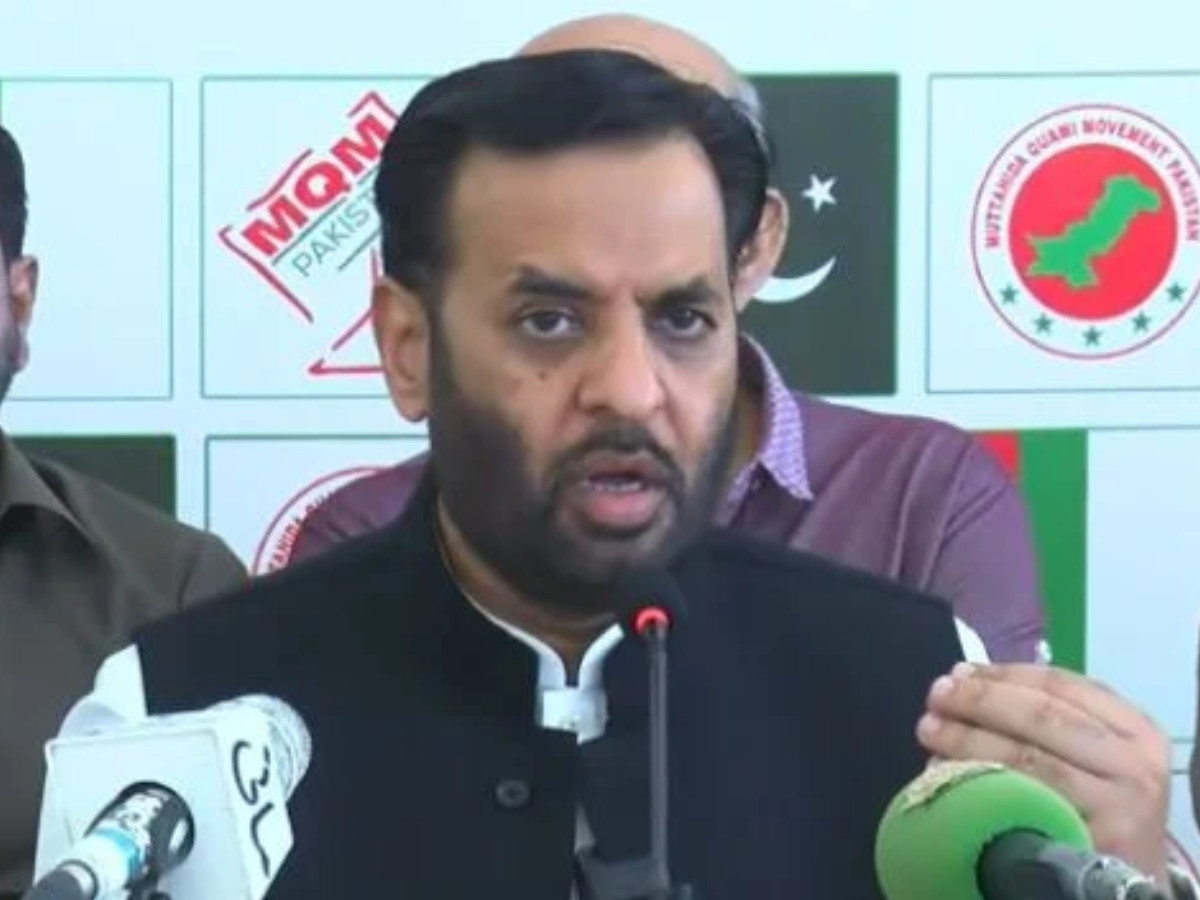
KARACHI: Federal Minister and Muttahida Qaumi Movement-Pakistan (MQM-P) leader Mustafa Kamal said on Saturday that his party would launch street protests over what he described as the Sindh government’s continued injustice towards Karachi and other urban centres, while also reiterating its demand for new provinces and greater devolution of authority.
Speaking at a press conference in Karachi, Kamal said MQM-P had already used parliamentary and constitutional avenues to press its case but had failed to secure acceptance of its demands. He said the party had spoken on the assembly floor and also put forward constitutional amendments before deciding to take the issue to the public through protests.
Referring to criticism of the demand for new provinces, Kamal rejected any suggestion of separatism and said MQM-P was seeking administrative changes within the framework of the Constitution. He said the party’s campaign was aimed at addressing injustice and that the ‘new MQM’ would argue its case through data, constitutional points and facts rather than confrontational politics.
Kamal said Karachi had not received its due share of resources despite its central role in the national and provincial economy. He claimed the city contributed nearly 50% of federal revenue and around 95% of Sindh’s revenue, but received only Rs680 billion out of Rs22,000 billion allocated for it over the past 18 years.
He said that before 2010, Karachi received direct federal funding under tax collection compensation and that until the Seventh National Finance Commission (NFC) Award, the city was given one-sixth of the General Sales Tax collected from it. According to Kamal, the Sindh government stopped passing on those federal funds after 2010. He said restoring the earlier formula would allow Karachi to receive around Rs270 billion a year from the federal government, and claimed that the city would have received about Rs2 trillion over the last 18 years if the previous arrangement had remained in place.
Arguing that Karachi’s development was vital for the country’s economic improvement, Kamal said stronger infrastructure would reduce the cost of doing business, improve profitability and help businesses grow. He said better roads, schools, hospitals and information technology centres would enable the city to make an even larger contribution to the national economy.
Criticism of Sindh government
Kamal accused the Pakistan Peoples Party-led Sindh government of failing to provide basic civic services in Karachi, including clean drinking water, sanitation, quality education and modern infrastructure. He said a generation in the city had grown up without seeing proper municipal services.
He also said Sindh had the country’s highest rate of child stunting and the largest number of out-of-school children. Kamal added that children in Sindh had died from dog bites and after falling into manholes, and extended his criticism to conditions in Hyderabad, Sukkur, Nawabshah, Mirpurkhas and Khairpur.
The MQM-P leader alleged that development funds had been concentrated at the Chief Minister’s House and said public money had been diverted abroad instead of being spent on the province’s development. He specifically alleged that Sindh’s money had been invested in Dubai real estate. Kamal also criticised the reported use of force against mothers protesting the disappearance of 18 children in Khairpur, saying they were beaten instead of being given relief.
Demand for decentralisation
Reiterating the party’s longstanding position, Kamal said Pakistan’s current governance structure required further decentralisation. He argued that the country could no longer be effectively run through a system in which authority devolved only to four provinces, and said powers should reach local communities directly. He added that issues such as sanitation, water supply, roads, master planning and waste management should not remain controlled at the ministerial level.
At the end of his address, Kamal said MQM-P would now take its campaign to the people through street action.
Sindh government response
Sindh government spokesperson Ghanwer Ali Khan Isran rejected Kamal’s allegations and said Karachi had always remained central to the provincial government’s development priorities. He said those trying to derive political benefit from Karachi’s development should first explain their own record.
Isran challenged Kamal to resign from his federal post before launching protests and said that despite holding a federal ministry, he had not raised Karachi’s rights with the federal government. He also said neither the Constitution nor the NFC Award provided a separate financial share for any city, adding that the award distributed funds among provinces, which then allocated resources to districts.
According to Isran, the federal government provides resources for the entire province rather than to satisfy any political party or individual leader.
Comments
No comments yet. Be the first to join the discussion!