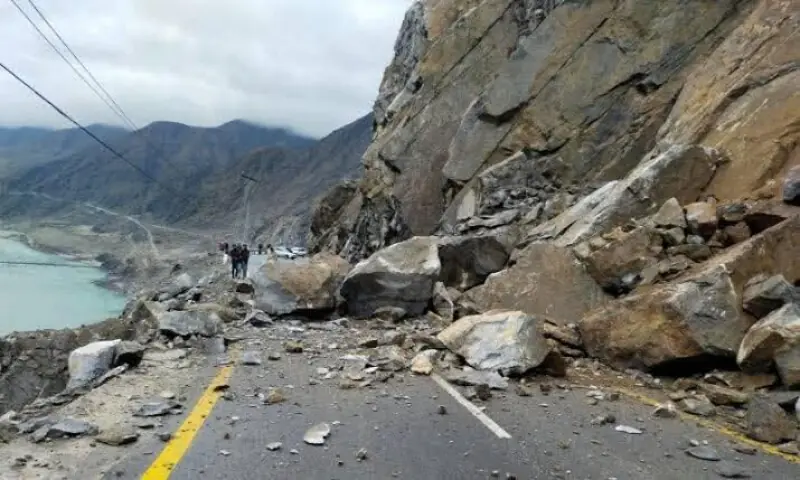
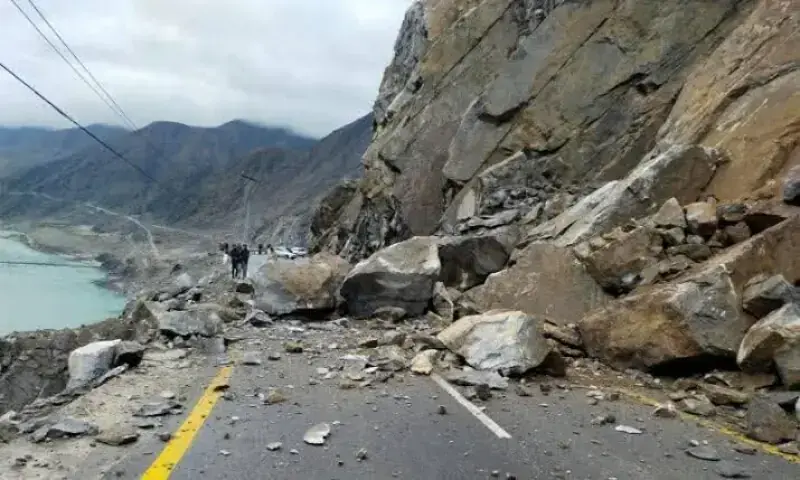
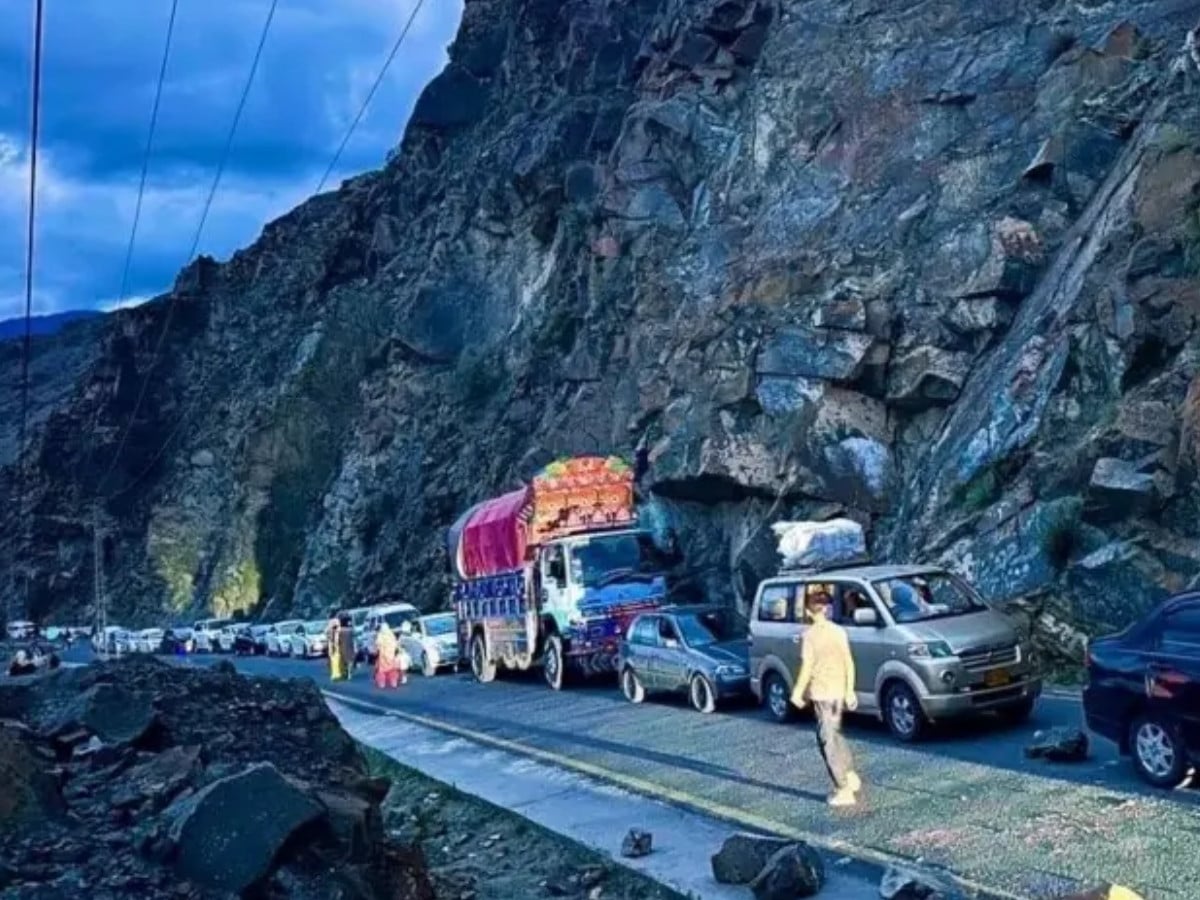
Torrential rains cut off roads and strand travellers across Gilgit-Baltistan
Torrential rain caused flash floods and landslides across Gilgit-Baltistan, blocking major roads and stranding thousands, including tourists. Authorities said relief operations were underway as more rain was forecast until July 26.

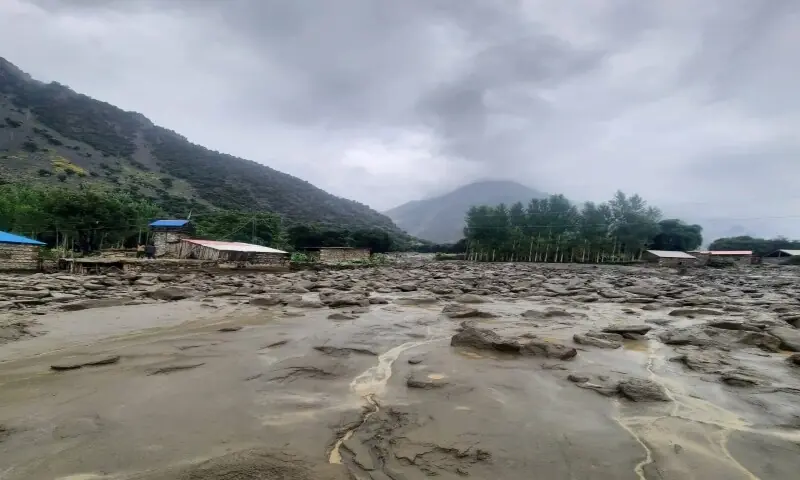
ISLAMABAD: Torrential rain triggered flash floods and landslides across Gilgit-Baltistan, washing away roads and bridges, disrupting travel on key routes and leaving thousands of people, including tourists, stranded in different parts of the region, according to the Gilgit-Baltistan Disaster Management Authority (GBDMA).
The Pakistan Meteorological Department has forecast more rain in Gilgit-Baltistan and warned of glacial lake outburst floods until July 26. The affected routes included the Karakoram Highway, Babusar Road, Baltistan Road, Naltar Highway, Ghizer-Shandur Road and Astore Valley Road, along with other links to remote areas. The GBDMA said the Karakoram Highway was blocked at several points from Dassu to the Hunza and Nagar districts, while flooding at multiple locations also hampered relief and rehabilitation work.
In Skardu, heavy flooding in the Tormak Nallah area of Rondu subdivision swept away at least three key communication bridges, including Malan Bridge. Floods also caused extensive damage to roads, bridges, crops, farmland and infrastructure in parts of Kharmang, Ghanche and Shigar. In Haramosh, suspension bridges and power houses were reported damaged.
Electricity and water supply systems were disrupted in Astore, Tangir, Thore and other areas of Diamer, which also affected communication services. Drinking water schemes, irrigation channels and protective embankments were destroyed in several places, and some villages were cut off from one another. Dozens of families in Losala village of Astore, Thore Valley, Tangir in Diamer and other localities were left homeless due to floods and landslides.
Across Ghizer district, authorities reported temporary road closures, localised flooding and partial damage to two houses. Vulnerable communities were moved to designated safer locations as a precaution. In Gilgit’s Jutal area, rising water levels in the Hunza-Nagar River put eight households at risk. In Yasin Valley, Sheliabad, Amit and surrounding areas of Ghizer, river erosion damaged agricultural land and non-fruit trees, while the Ghizer-Shandur and Ghizer-Gilgit roads remained blocked.
Relief and official response
In a statement, the GBDMA said swelling rivers and streams had damaged homes, roads, bridges, crops and agricultural land. It said the authority, district administration, Rescue 1122 and other agencies were carrying out joint relief operations. As of Thursday, affected families were being shifted to safer places, while the supply of tents, ration, medicines and clean drinking water was underway. The authority said relief goods, including tents, food, medicines and other essential items, had already been provided to affected residents.
Gilgit-Baltistan Chief Minister Amjad Hussain directed authorities to speed up relief and rehabilitation work and ordered all relevant departments and district administrations to remain on round-the-clock alert to protect lives and property. He also instructed the food and health departments to ensure uninterrupted provision of ration, clean drinking water, tents, medicines and other necessities in the affected areas. Orders were also issued for the immediate deployment of heavy machinery to carry out emergency repairs on damaged infrastructure, bridges and roads and to restore traffic.
The chief minister said the provincial government would stand by the affected population.
Rehabilitation of the victims and all possible assistance will be ensured by utilising all available resources,
He also directed commissioners and deputy commissioners concerned to carry out field visits themselves and submit daily reports on relief activities to the Chief Minister’s Secretariat.
Meeting with NDMA
Earlier, Amjad Hussain visited the National Disaster Management Authority headquarters in Islamabad and met NDMA Chairman Lieutenant General Inam Haider Malik and other senior officials to review the situation, according to an official statement. The NDMA chairman briefed him on steps being taken to reduce disaster risks, improve preparedness and strengthen emergency response across Pakistan, particularly in Gilgit-Baltistan.
According to the statement, the NDMA chairman said modern scientific and technological systems were being used to issue timely early warnings in disaster-prone areas and that relief and rehabilitation efforts were being conducted in coordination with relevant institutions after natural disasters. He also informed the chief minister that glaciers in Gilgit-Baltistan were being continuously monitored through advanced scientific methods, with each glacier assigned a unique identification code to track its movement, size and possible risks.
The chief minister said glaciers in Gilgit-Baltistan were Pakistan’s largest natural freshwater source and stressed that their protection, monitoring and sustainable management should remain national priorities. He also said the effects of climate change had become a reality and that Gilgit-Baltistan was among the regions most exposed to glacial lake outburst floods, flash floods and landslides, calling for coordinated action by federal and provincial institutions and other stakeholders.
Comments
No comments yet. Be the first to join the discussion!