Main US military bases in the Middle East come under focus during Iran war
An AFP overview carried by Dawn details the main US military bases across the Middle East and how several have come under attack during the war with Iran. The facilities span Bahrain, Iraq, Jordan, Kuwait, Qatar, the UAE and Saudi Arabia.

WASHINGTON: Major US military installations across the Middle East have drawn renewed attention during the war with Iran, as bases long used to project American power in the region have also come under attack.
These installations fall under the US military’s Central Command and play a broad operational role. Elizabeth Dent, a senior fellow at the Washington Institute for Near East Policy, said bases hosting US troops in the Middle East "can support a wide range of missions from logistics, pre-positioning assets, refuelling, and of course combat operations"
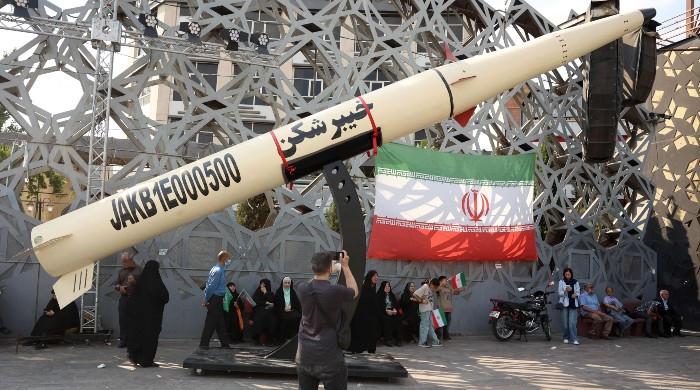
Iran has said Gulf states enabled the United States to use such facilities to carry out attacks. Dent said that was likely in some cases, but added that Tehran’s "perennial argument that all of these bases are inherently offensive is not accurate"
Bahrain, Iraq and Jordan
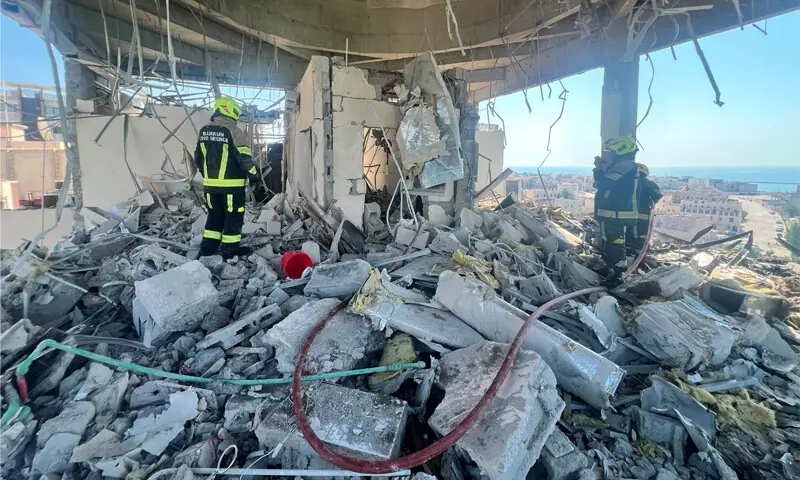
Bahrain hosts the headquarters of the US Navy’s Fifth Fleet as well as US Naval Forces Central Command. Its deep-water port can receive the largest American warships, including aircraft carriers. The US Navy has operated from the base since 1948, when it was still run by Britain’s Royal Navy. American anti-mine vessels and logistical support ships are also based there. During the current war, Bahrain came under heavy Iranian strikes, and Manama briefly evacuated the neighbourhood that hosts the Fifth Fleet early in the conflict.
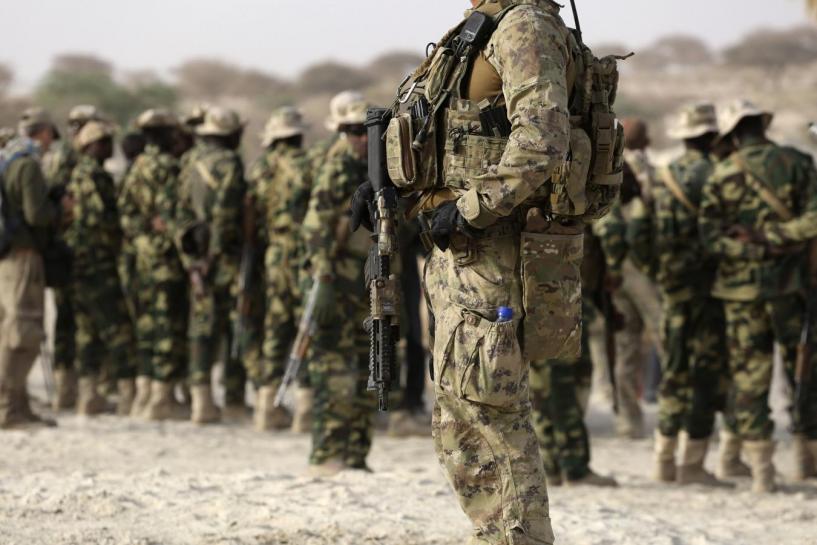
In Iraq, where Baghdad maintains close ties with Iran while also remaining a strategic US partner, American troops are stationed under the US-led coalition against the Islamic State group. They are mainly deployed in the northern Kurdistan region, particularly at Erbil airport and Al-Harir air base. The coalition mission in Iraq is being prepared for closure by the end of September. During the war, Iraqi groups have struck US facilities, including diplomatic sites in Baghdad and Erbil, more than 600 times. Last week, a US service member was killed in northern Iraq during the controlled detonation of unexploded ordnance from a downed Iranian drone.
Jordan has also featured prominently. While Iran often refers to US facilities there as American bases, both Amman and Washington say they are Jordanian bases that host US troops. Before the February 28 strikes on Iran that began the war, the United States reportedly sent dozens of military aircraft to Muwaffaq Salti Air Base. The base also hosts other Western forces and includes F-16, F-15 and F-35 fighter aircraft, along with refuelling and reconnaissance aircraft, drones, and Patriot and THAAD air defence systems. Recent Iranian attacks in Jordan killed three US service members.
Dent, a former director for the Gulf and Arabian Peninsula in the Office of the US secretary of defence, said "In recent years, largely because of Iran’s growing missile, drone, and proxy network, the US shifted toward more nimble basing along the western side of the Middle East region" in Israel and Jordan.
Kuwait, Qatar, UAE and Saudi Arabia
Kuwait has hosted a substantial US military presence since Washington intervened after Iraq’s 1990 invasion. Among several American facilities there is Camp Arifjan, which houses the forward headquarters for the US Army component of Centcom. Ali al-Salem Air Base hosts the 386th Air Expeditionary Wing and serves as a main airlift hub and entry point for delivering combat power to joint and coalition forces in the region. The US has also deployed MQ-9 Reaper drones to Kuwait. Since the war began, six US service members have been killed there, along with four Kuwaiti troops and border guards.
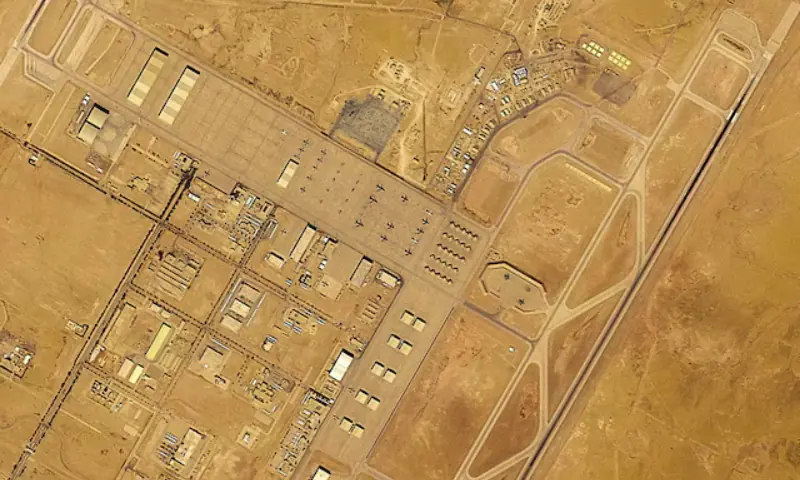
Qatar is home to Al Udeid Air Base, which includes forward elements of Centcom as well as the command’s air forces and special operations forces. It is described as the largest US base in the Middle East and hosts rotating combat aircraft and the 379th Air Expeditionary Wing, whose assets include airlift, aerial refuelling, intelligence, surveillance, reconnaissance and medical evacuation capabilities. Iran struck Al Udeid during the present war after first attacking it in June 2025 following US strikes on Iranian nuclear facilities.
In the United Arab Emirates, Al Dhafra Air Base hosts the US 380th Air Expeditionary Wing, made up of 10 aircraft squadrons and including MQ-9 Reaper drones. Combat aircraft have rotated through the base, which also serves as the US Air Force hub for advanced air warfare training.
US forces returned to Saudi Arabia in 2019 under a bilateral agreement. While the kingdom does not host formal American bases, it does accommodate US troops at Prince Sultan Air Base in Al-Kharj, outside Riyadh. The facility houses the 378th Air Expeditionary Wing and has also been attacked during the conflict. A US service member in Saudi Arabia died after being wounded in an Iranian attack in March.
Despite the attacks on several Gulf-based facilities, Chatham House Middle East expert Neil Quilliam said he did not expect Gulf states to consider scaling back the US military presence, "though DC itself, is likely to reconsider its military posture in the region"
Comments
No comments yet. Be the first to join the discussion!