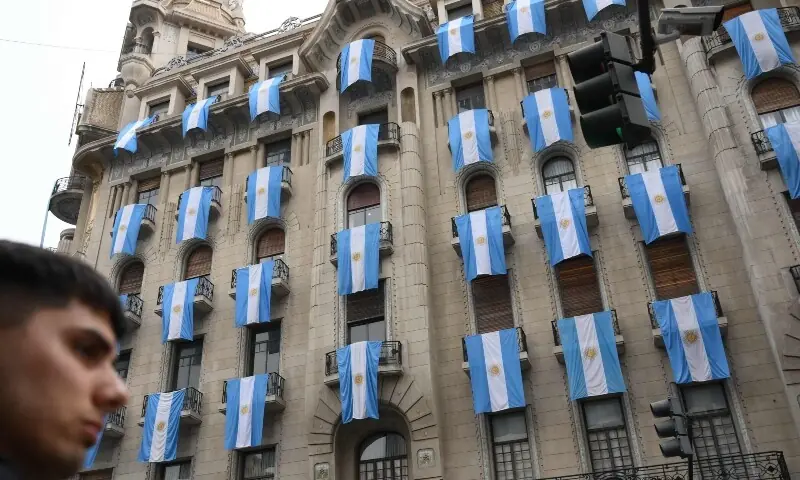
Argentina debates criticism after World Cup final defeat to Spain
Argentina's World Cup final defeat to Spain has intensified criticism of the team's conduct, while many at home say their style is being misunderstood. The debate has also revived scrutiny over racism allegations involving Argentine fans and players.

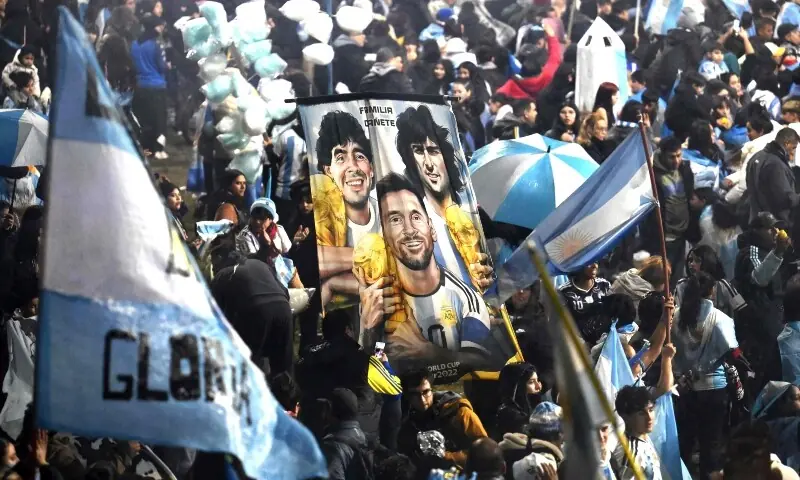
BUENOS AIRES: Argentina's defeat to Spain in the World Cup final has intensified debate over the national team's conduct, with critics pointing to fouls, confrontations and what they described as poor sportsmanship, while many Argentines say their side is being judged unfairly.
The 1-0 loss to Spain capped a tournament in which hostility toward Argentina had been building. Critics argued the team benefited from favourable officiating, including penalties and cards shown to opponents, and said FIFA had treated the side kindly. The backlash sharpened after the final, where the match featured repeated fouls and on-field altercations, and the Argentine squad turned away as Spain collected the trophy.
International reaction was severe. The New York Times described Argentina's display as a "tetchy, petulant and distasteful performance".
Former Germany player Thomas Hitzlsperger wrote on X that the team were "disgusting sportsmen".
British television personality Piers Morgan said "they basically just went around whacking as many Spanish players as they could.
Mixed reaction inside Argentina
Many Argentines rejected the criticism, saying the team's style reflects competitiveness and emotion rather than malice. Leo Simone, a 55-year-old lawyer living north of Buenos Aires, said Argentines were accustomed to being disliked and argued that outsiders misread the country's self-image. His wife added that people mistake arrogance for pride.
Near Ezeiza Airport, where thousands of supporters gathered on Monday night to welcome the players back to Buenos Aires, 35-year-old construction worker Maximiliano Heredia said the country had long faced criticism but continued to give everything on the field.
Online, some supporters embraced the backlash. Journalist Pedro Rosemblat wrote on Instagram that Argentina's irreverence and rebelliousness provoke others, and that accusations of cockiness, cheating and dirty play only strengthen national pride.
Criticism from Argentine commentators
Not all voices in Argentina dismissed the complaints. Sports journalist Ezequiel Fernandez Moores told AFP that some of the criticism was warranted, saying the country can at times act as though it is the centre of everything. He said football culture in Argentina includes provocation, mockery and boasting, but those codes do not necessarily make sense to an international audience. He also said the team's decision to turn their backs during Spain's trophy presentation was wrong.
Simone, however, rejected the idea that Argentina should be seen as a violent side simply because of its physical approach. He said the team competes forcefully in a style common in South American football and argued that Spain also used tactical fouls.
Evelio Rubio, a 47-year-old Venezuelan neurologist who has lived in Argentina for a decade, said it is difficult for outsiders to understand how deeply football is felt in the country. Coming from Venezuela, where the national team has not won titles, he said experiencing that intensity from within Argentina had been spectacular.
Racism concerns resurface
The tournament also renewed scrutiny of racism involving Argentine fans and some players. Past controversy has included a chant mocking members of the French team as not truly French. At club level, there is also a longer history of supporters throwing bananas onto the pitch or making monkey gestures toward Brazilian fans or black players.
During this World Cup, FIFA issued a statement condemning racism after an Argentine supporter told black US influencer IShowSpeed to go to the zoo and cry during a livestream. American actor Samuel L. Jackson also sparked controversy by urging black people in an Instagram story not to back Argentina, which he called one of the world's most racist countries.
Ivan Schuliaquer, a sociologist at the National University of San Martin, said racism linked to football should not automatically be applied to Argentine society and history as a whole. He said racism in this sphere is real and should not be denied, but added that in many cases such labels come from colonising countries that have themselves not fully resolved racism.
Comments
No comments yet. Be the first to join the discussion!