

Is Israel the biggest threat to the USA?
The article argues Israel poses a uniquely serious risk to U.S. security, citing alleged insider cyber access, espionage patterns, and influence operations targeting Americans.

For decades, the United States has viewed Israel as its most trusted ally in the Middle East—a beacon of democracy, a strategic bulwark, and a partner in shared values. Yet a growing body of evidence suggests this relationship has evolved into something far more complicated, raising an uncomfortable question: could Israel actually be the biggest threat to American security and sovereignty?
When we examine cyber capabilities, espionage activities, influence operations, and legislative maneuvers, Israel emerges as a uniquely dangerous actor—one whose authorized access to American systems makes it more capable of doing harm than any traditional adversary.
Israel's cyber warfare capabilities are widely considered among the most sophisticated in the world, with the Pentagon's Defense Intelligence Agency rating its espionage threat against the US as "critical"—the highest designation available.
The country has demonstrated this prowess through operations like the mass pager explosions in Lebanon and the Stuxnet virus, but what makes Israel uniquely threatening is that these capabilities were largely built with American assistance, meaning they understand US systems from the inside out.
This insider knowledge, combined with their own innovations, arguably gives them an asymmetric advantage over other adversaries like China or Russia, who lack the same level of authorized access to American military and intelligence infrastructure. The espionage is not hypothetical—Israel has been caught numerous times planting spyware on the phones of American Iran negotiators, attempting to place listening devices inside US Secret Service vehicles, and running the infamous Jonathan Pollard spy ring.
These incidents represent a pattern of behavior inconsistent with an ally relationship and more characteristic of an adversarial power operating against American interests. While China and Russia certainly conduct espionage against the US, neither has the same level of institutionalized access to American systems, making Israel's intelligence-gathering capabilities uniquely dangerous and harder to detect. Perhaps the most alarming development is the revelation that the Israeli government engaged Brad Parscale, Donald Trump's former campaign manager, to run a multimillion-dollar digital influence campaign targeting American conservatives to prevent them from turning against Israel.
The operation escalated to the point where Vice President JD Vance publicly accused elements within the Israeli government of funding a campaign "to try to derail the negotiation" of a US-Iran deal and attacking him personally to shift American foreign policy in Israel's favor. When a sitting US Vice President must publicly call out a foreign government for attempting to undermine American foreign policy, the relationship has moved beyond normal ally dynamics into dangerous territory.
The legislative threat is even more concrete—Section 219 of the NDAA would have effectively merged the US and Israeli military industrial bases, allowing joint weapons development and granting Israel co-ownership of American weapons systems.
While the Senate blocked this proposal by a narrow 50-46 vote, the fact that nearly half of US senators supported such an unprecedented surrender of sovereignty demonstrates the depth of Israeli influence within the American legislative branch. Prime Minister Netanyahu framed this as moving "from aid to partnership," but critics like Representative Thomas Massie called it an "unprecedented escalation of foreign involvement" that amounts to "fully capitulating our nation's autonomy to foreign influence."
The American Israel Public Affairs Committee functions as a powerful lobbying force that has effectively shaped US foreign policy to serve Israeli interests, sometimes against American interests, with documented "revolving-door" relationships between AIPAC, the US government, and the Israeli government. Unlike other countries seeking to influence US policy, Israel has legal and institutionalized access through these organizations, giving it a level of domestic influence that no other foreign power can match. This access extends beyond lobbying to actual legislative drafting, with critics charging that Netanyahu runs Congress through the legislation he writes and sends to American lawmakers.
The current crisis is exacerbated by Prime Minister Benjamin Netanyahu's personal legal troubles—facing corruption charges that would likely end his political career, he has been described as taking aggressive actions to secure Israel's position while simultaneously fighting for his political survival.
This introduces an unstable element into US-Israel relations: a foreign leader willing to manipulate American politics and policy to serve his personal legal and political interests, with critics arguing his aggressive policies are driven more by self-preservation than Israeli national security. The combination of capability, access, influence, and personal motivation makes Israel a uniquely dangerous actor in the American political landscape.
To determine if Israel is truly the biggest threat, we must compare it to other adversaries—China remains America's primary strategic competitor with global ambitions to displace US dominance, while Russia poses an immediate military threat through its war in Ukraine and proven willingness to interfere in American elections.
However, neither China nor Russia has the same level of authorized access to US military technology, intelligence systems, and governmental processes that Israel enjoys, nor do they have domestic lobbying networks as powerful as AIPAC operating on their behalf. The old adage "trust, but verify" does not apply when you have literally integrated your defense systems with a foreign power.
If "biggest threat" means greatest military potential or most expansive geopolitical ambitions, China retains that title, but if "biggest threat" means greatest capability to harm the United States from within through espionage, influence operations, and legislative capture, then Israel is at minimum among the top tier and arguably the most dangerous.
The distinction between "biggest" and "most unique" is crucial—Israel presents a threat unlike any other because it comes from an "ally" where the US has let its guard down, making it more capable of doing damage than any traditional adversary precisely because of the trust extended to it.
The Defense Department's own intelligence assessments placing Israel's espionage threat above even China and Russia confirm that this is not mere conspiracy theory but a genuine intelligence concern. If we compare any other country with influence in the United States, no nation can be more dangerous than Israel itself should the relationship turn adversarial.
This is not to say that Israel is currently an enemy or that the alliance should be abandoned, but rather that the current trajectory of ever-deepening integration without appropriate safeguards is dangerously naive and threatens American sovereignty in unprecedented ways.
The central question for US policymakers is whether the current path of military integration, intelligence sharing, and legislative deference serves the American people or a foreign power with its own distinct interests.
When a foreign government can fund social media campaigns to shape American public opinion, draft legislation for US lawmakers, and threaten to derail American foreign policy when it doesn't align with its interests, the alliance has fundamentally shifted from partnership to something resembling dependency. America's founders warned against entangling alliances that could compromise sovereignty—their wisdom deserves renewed attention in this context.
Ultimately, whether Israel is the "biggest" threat depends on whether we define threat as "potential for conflict" or "capacity for harm from within." In the latter category, Israel may well be the single greatest danger to American sovereignty and security—hidden in plain sight, protected by the very alliance that makes it so dangerous, and operating with capabilities that no other nation can match. The time for honest conversation about this relationship is now, before the integration becomes so complete that disentanglement becomes impossible.
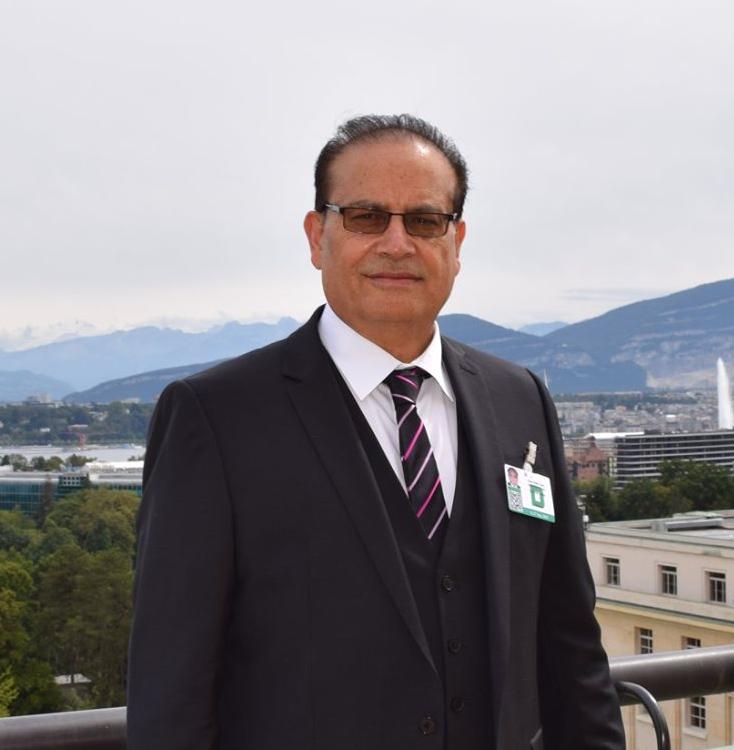
The writer retired as Press Secretary the President, and is former Press Minister at Embassy of Pakistan to France and former MD, Shalimar Recording & Broadcasting Company Limited
View all articles →Comments
No comments yet. Be the first to join the discussion!


