

June 29, 2026
Israel’s Mission Impossible
Washington seeks to restrain Israeli escalation in Lebanon, prompting calls for less US military dependence. The piece argues true independence is “mission impossible” given air power, supply chains, and costs.
June 29, 2026

The main obstacle to ME peace
Israel is discovering a hard strategic truth: the country that wants absolute freedom of military action cannot easily free itself from the very superpower that makes that military action possible.
For decades, Israel has depended on the USA not only for diplomatic protection, but also for the aircraft, bombs, interceptors, missiles, spare parts, emergency resupply, and financial aid that sustain its defensive shield and offensive reach. Now, as Washington tries to restrain Israeli escalation against Lebanon in order to preserve a wider regional ceasefire and protect its own diplomatic understanding with Iran, some Israeli voices are arguing that Israel should reduce or end its military dependence on the USA. It is an emotionally attractive slogan, but economically and militarily it is close to a mission impossible.
Israel’s mission impossible is not merely military independence from the USA. Its real mission impossible is trying to remain economically prosperous, militarily dominant, politically unrestrained, and regionally expansionist all at the same time. That equation cannot hold forever
The facts are stark. The USA provides Israel with about $3.8 billion annually under the 2019–2028 military aid memorandum. But the real value of US support is much larger than that figure. It includes access to advanced aircraft, precision-guided munitions, air-defence cooperation, intelligence sharing, emergency replenishment, and direct US military support during regional crises. In recent wars, US forces have helped intercept drones and missiles aimed at Israel, while US political backing has shielded Israel from far greater diplomatic isolation.
Israel is not a weak military power. It has one of the world’s most advanced defence industries. Its cyber capabilities, drone technology, radar systems, electronic warfare, missile defense, and intelligence tools are globally respected. Israeli defence exports reached record levels in recent years, showing that the country can design and sell sophisticated military technology. But exporting advanced systems is not the same as independently sustaining a multi-front war, replacing US aircraft, producing deep stocks of precision bombs, and maintaining strategic air dominance without Washington.
The most important vulnerability is air power. Israel’s offensive doctrine relies heavily on US-made F-35s, F-15s, and F-16s. These aircraft are the backbone of Israel’s ability to strike Gaza, Lebanon, Syria, Iran-linked targets, and other distant theatres. Israel can modify these aircraft with domestic systems, but it does not independently manufacture them. Nor does it independently control the full supply chain for engines, advanced components, spare parts, and future upgrades. If the USA stops supplying or servicing these systems, Israeli offensive capability would not collapse overnight, but it would steadily degrade.
The numbers explain the dilemma. Israel’s military expenditure surged to about $46.5 billion in 2024, equal to roughly 8.8 percent of GDP. That is already one of the highest defence burdens in the world. To become meaningfully independent from the USA, Israel would likely need to spend around 12 to 15 percent of GDP on defence for many years. That means an additional annual burden of roughly $18 billion to $35 billion, depending on the level of independence pursued. Such money would not come from the sky. It would come from taxes, borrowing, civilian cuts, reduced welfare, delayed infrastructure, pressure on education, and weaker investment in health, housing, and productivity.
In simple terms, Israel would have to choose between becoming a more militarized economy and remaining a prosperous civilian economy. The deeper the pursuit of military independence, the greater the sacrifice imposed on ordinary citizens. Hospitals, schools, universities, transport networks, housing programmes, technology investment, social services, and family support would all face pressure. Israel could build more factories, more missile plants, more ammunition lines, and more domestic systems, but every shekel moved into permanent militarization would be a shekel removed from civilian development.
Time is another obstacle. Israel could reduce some dependence in five to eight years by expanding domestic production of ammunition, drones, interceptors, electronic systems, and some missiles. It could reduce dependence further in 10 to 15 years with a massive industrial programme. But true independence in combat aircraft, stealth technology, strategic engines, large precision weapons, satellites, and wartime resupply could take 20 to 30 years, and even then may remain incomplete. No small country can easily replicate the industrial depth of the USA.
This is why the idea of cutting loose from Washington in one year is unrealistic. If Israel attempted it suddenly, its economy could face an additional 3 to 6 percent of GDP in defence pressure. Its offensive capability could be weakened by 40 to 60 percent over one to two years, especially if precision munitions, aircraft parts, and resupply pipelines were disrupted. Its defensive sustainability in a prolonged multi-front war could fall by 25 to 40 percent. Its ability to sustain occupation, control hostile territories, and conduct repeated military operations across several fronts could become 30 to 50 percent harder.
This is the central contradiction of Israeli strategy. Some Israeli hardliners want complete freedom to strike Lebanon, Syria, Gaza, Iran-linked groups, and other regional adversaries without US restraint. They also want to pursue a maximalist vision of regional dominance, sometimes expressed through the dangerous idea of a “Greater Israel.” But such ambitions are possible only because the USA has historically supplied the military oxygen. Remove that oxygen, and the same expansionist project becomes far more costly, risky, and perhaps unsustainable.
This is also why many Israeli analysts and strategic thinkers warn against alienating Washington. The USA is not merely a donor; it is the main strategic pillar of Israel’s military architecture. US support gives Israel technological superiority, financial relief, diplomatic cover, and crisis-time backup. Without that support, Israel would remain powerful, but it would be a more vulnerable, more expensive, more isolated, and more constrained military power.
The recent US attempt to restrain Israeli action against Lebanon shows that Washington still has leverage. Israel may resent that leverage, but it cannot easily escape it. If the price of independence is the weakening of its air force, the squeezing of its economy, the reduction of civilian prosperity, and the erosion of its ability to sustain long occupations, then independence becomes less a strategy and more a self-inflicted wound.
Israel therefore faces a choice. It can continue chasing permanent military dominance at the cost of economic balance, regional stability, and moral legitimacy. Or it can accept the limits of force, respect international boundaries, reduce occupation, and become a responsible member of the international community. The wiser path is not to militarize the economy further, but to demilitarize national thinking.
The lesson is clear: Israel cannot bomb its way into permanent security, nor can it easily break away from the country that underwrites its military power. Military independence from the USA may sound like strategic courage, but in reality it would expose Israel’s deepest dependency. For Israel, the path to security does not lie in endless expansion or in defying its principal ally. It lies in restraint, diplomacy, lawful borders, and recognition that no state can build lasting security by living permanently at war with its neighborhood.
Israel’s mission impossible is not merely military independence from the USA. Its real mission impossible is trying to remain economically prosperous, militarily dominant, politically unrestrained, and regionally expansionist all at the same time. That equation cannot hold forever.
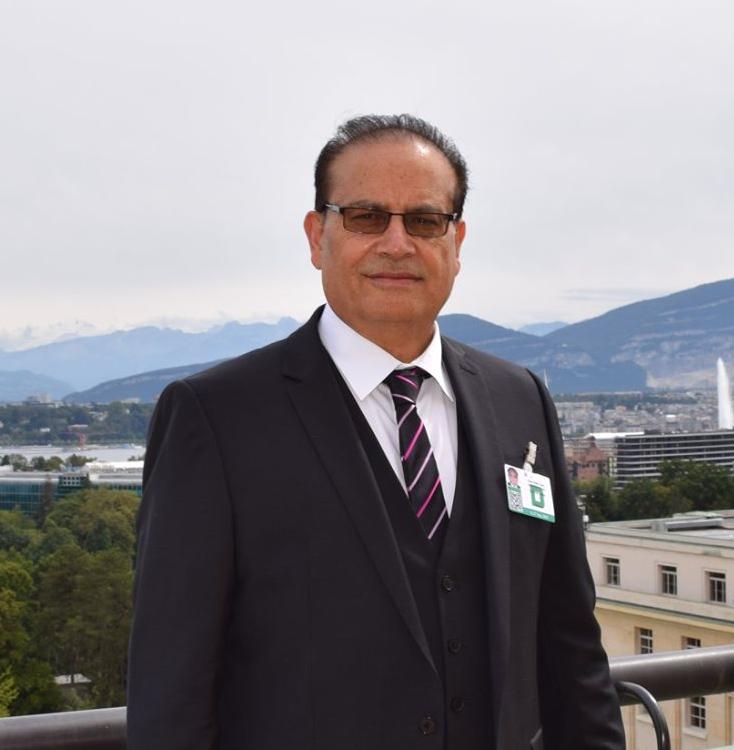
The writer retired as Press Secretary the President, and is former Press Minister at Embassy of Pakistan to France and former MD, Shalimar Recording & Broadcasting Company Limited
View all articles →0 Comments
No comments yet. Be the first to join the discussion!


