

EU flags shortcomings in Pakistan’s GSP+ compliance ahead of 2027 review
The European Commission has said Pakistan must address shortcomings in its GSP+ compliance to remain eligible under the revised regime from 2027. Its latest review cited human rights concerns while also noting some legislative progress.

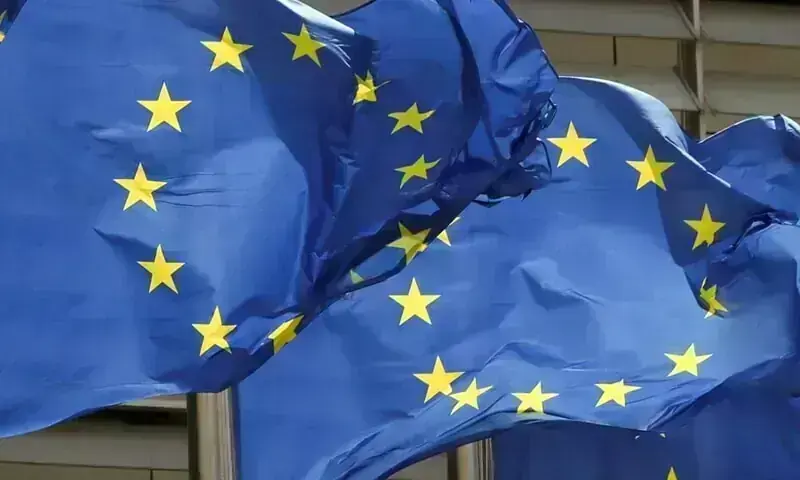
ISLAMABAD: The European Union has identified concerns in Pakistan’s compliance with obligations under the Generalised Scheme of Preferences Plus and said Islamabad will need to address those gaps to remain eligible under the revised framework due to take effect in 2027.
In its latest report on the implementation of the GSP for the 2023-2025 period, the European Commission said Pakistan had faced compliance problems with its GSP+ commitments and had seen setbacks in several areas, while positive change remained limited. Future access to the EU’s preferential trade regime would depend on concrete progress in areas where concerns remain.
The report, issued jointly by the European Commission and the EU High Representative for Foreign and Security Policy, is the final monitoring assessment under the current GSP regulation. An attached Staff Working Document said the review of Pakistan was shaped mainly by concerns over human rights, though it also noted a number of legislative and administrative steps taken during the reporting period.
The Commission listed several developments it viewed positively, including legislation creating a National Commission for Minorities, the narrowing of the death penalty’s scope, the continuation of the de facto moratorium on executions, implementing rules under the Anti-Torture Act, a Domestic Violence Bill for Islamabad Capital Territory and Pakistan’s first conviction for marital rape. The National Commission for Human Rights had emerged as an important institution for advancing the country’s human rights obligations.
Human rights and rule of law concerns
At the same time, most of the progress remained legislative and administrative and still needed to translate into improvements on the ground. Serious concerns persisted, particularly affecting the rule of law and civil society space, and noted an increase in enforced disappearances and extrajudicial killings without accountability for those responsible.
The Commission also raised concern over freedom of expression, saying amendments to cybercrime, anti-terrorism and blasphemy laws had introduced vague provisions that could be used against dissidents, human rights defenders, journalists, minorities and ordinary citizens. Such provisions could expose people to imprisonment, confiscation of assets or restrictions on foreign travel.
Media freedom continued to worsen despite legislation aimed at protecting journalists, adding that media workers had faced intimidation, harassment, violence and strategic litigation over reporting on sensitive matters. Targeted litigation, including SLAPPs, was at times used to obstruct journalists and lawyers in carrying out their work. Laws including the Pakistan Electronic Crimes Act, criminal defamation, blasphemy, sedition and counter-terrorism legislation contained broad concepts relating to hate speech, defamation, terrorism and false news, creating what it described as a significant chilling effect on dissidents, journalists, human rights defenders and members of ethnic or religious minorities.
The Commission also said recent constitutional amendments had drawn criticism for potentially weakening judicial independence and adding to longstanding concerns over fair trial guarantees and access to justice. The latest amendments had raised concerns about their effect on judicial independence, military accountability and respect for the rule of law.
Political rights and other issues
The assessment was shaped by persistent complaints regarding the integrity of the 2024 electoral process, severe measures against opposition leaders and supporters, and increased military influence. Political rights were affected by abusive judicial proceedings and the detention of opposition supporters and leaders, including a former prime minister, while raising concerns about fair trial standards and detention conditions, including access to lawyers, visitors and medical assistance.
It also stated that military trials do not meet the requirements of Article 14 of the International Covenant on Civil and Political Rights regarding fair and public trial standards before an independent, impartial and competent court, as well as adequate and effective legal representation.
The report gave considerable attention to enforced disappearances, saying reports continued to point to a high and rising number of cases, especially in Balochistan and Khyber Pakhtunkhwa. The Commission of Inquiry on Enforced Disappearances had failed to establish accountability for perpetrators and criticised the absence of specific legislation criminalising enforced disappearances.
The Commission further pointed to ongoing discrimination against religious minorities, particularly Ahmadis, continued violence against women and children, large numbers of out-of-school children, child marriages, child labour, prison overcrowding and concerns over the treatment of Afghan refugees returned under Pakistan’s repatriation programme. At the same time, it acknowledged Pakistan’s efforts to strengthen social protection, pursue prison reforms, introduce measures against gender-based violence, expand education initiatives and improve institutional mechanisms for human rights protection.
Trade importance of GSP+
Pakistan remains the largest beneficiary of the EU’s GSP+ arrangement, under which exporters receive preferential access to the European market in exchange for implementing 27 international conventions related to human rights, labour rights, environmental protection, climate action and good governance.
The Commission said the economic gains for Pakistan under the arrangement remained significant. EU imports from Pakistan stood at €9.4 billion in 2022, fell to €7.9bn in 2023 due to weaker European demand and recovered to €8.3bn in 2024. The EU remained Pakistan’s biggest export market, accounting for 28 per cent of total exports, while textiles and clothing made up around 70pc to 76pc of Pakistani exports to the bloc.
About 90pc of Pakistan’s exports to the EU remained eligible for GSP+ preferences during 2022-2024, with average utilisation at 93pc and recovering to 95pc in 2024. The Commission said Pakistan benefited from around €732 million in tariff exemptions last year alone, equal to about 9pc of its exports to the European Union.
Beyond human rights, the report also reviewed Pakistan’s implementation of commitments on labour rights, environmental protection, climate change and sustainable development. It welcomed Pakistan’s ratification of the 2014 International Labour Organisation Protocol to the Forced Labour Convention and the expansion of labour inspection mechanisms.
Comments
No comments yet. Be the first to join the discussion!


