

Court ruling on disappeared Kashmiri trader revives families’ search for answers
A court in Indian-occupied Kashmir has declared a trader dead nearly 29 years after he disappeared from military custody, in a ruling seen as a rare acknowledgement in disappearance cases. The decision has renewed focus on unmarked graves, legal impunity and families still seeking answers.

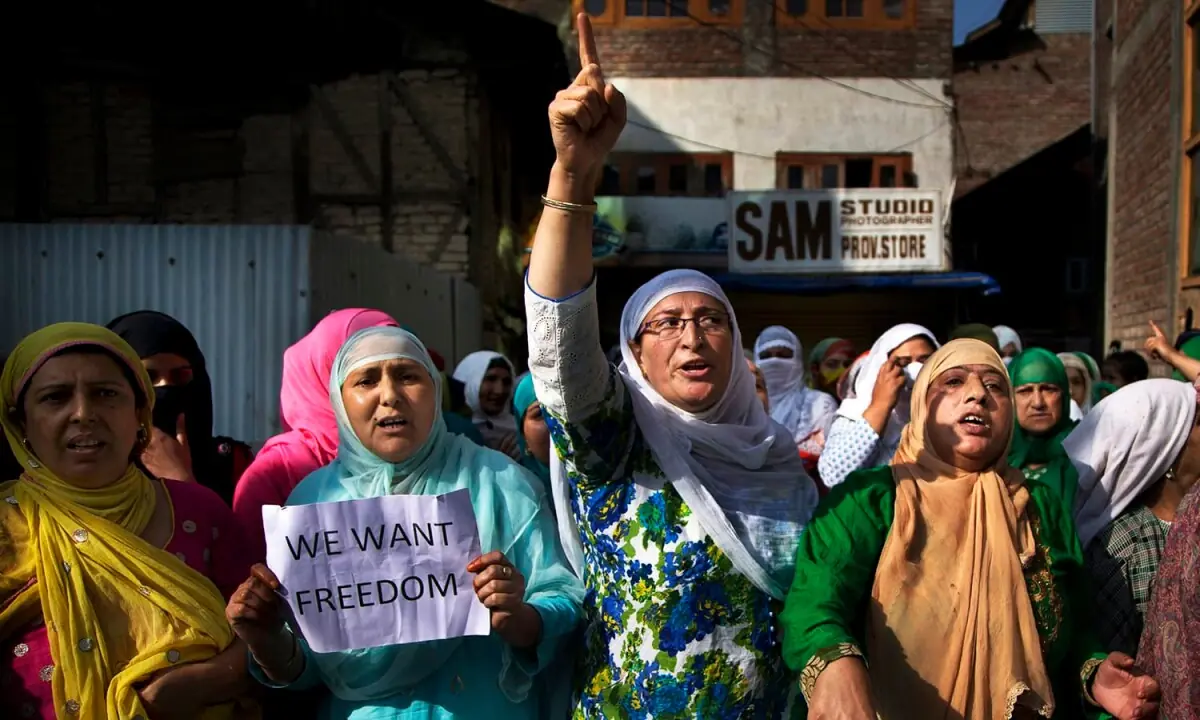
ISLAMABAD: A court ruling declaring a Kashmiri man dead nearly three decades after he disappeared from military custody has revived attention on thousands of similar cases in Indian-occupied Kashmir, where families have long sought official acknowledgement of what happened to missing relatives.
According to AFP, Junaid Rashid was five years old when his father, Abdul Rashid Wani, disappeared in July 1997 after being taken into custody. After years of legal proceedings and efforts by the family to trace him, a judge declared Wani dead and ordered the issuance of a death certificate. The ruling also referred to a police investigation that identified the army officer who had taken Wani into custody.
Wani, a timber trader from Srinagar, had been stopped near his home while carrying what his family and the police investigation described as a substantial amount of cash intended for suppliers. The court ruling, citing the inquiry, stated that the accused officer, an army major, had killed Wani in custody and disposed of his body. The judgement recorded the date of death as the same day he disappeared, but gave no indication of where his remains might be.
Rashid told AFP that the ruling amounted to delayed recognition of what his family had long believed. He said the family had spent years searching for Wani and fighting court battles, while also enduring severe personal costs, including selling their home to finance the effort.
Speaking to AFP, Rashid said his family had been urged to abandon the search and had even been offered money by army officers. He recalled his grandmother pleading with one officer to return her son. Rashid also said he had visited the army camp with his mother while searching for his father and remembered meeting the officer later named in the investigation.
The case is described as the first such ruling among thousands of petitions related to the disappeared. In Kashmir, women whose husbands have gone missing for years without confirmation of death are often referred to as half-widows, reflecting their uncertain status and inability to complete mourning rituals.
Disappearance cases and unmarked graves
Muslim-majority Kashmir has been divided between Pakistan and India since 1947. After political efforts for self-determination failed, an armed struggle began in 1989. India accused Pakistan of supporting the fighters, an allegation Islamabad denies. The conflict led to heavy militarisation, with at least 500,000 Indian troops still stationed in the occupied valley.
The Delhi-based People’s Union for Democratic Rights said Wani’s case reflects the broader human rights record in the territory since the conflict escalated in 1989. The Association of Parents of Disappeared Persons estimates that as many as 8,000 people may have disappeared.
In 2009, APDP mapped what it said were 2,700 unmarked graves in remote mountainous areas of occupied Kashmir and cited residents as saying they had buried mutilated bodies left behind by Indian security forces. AFP reported from Kupwara, where numbered metal markers still stand over rows of graves. A resident there said villagers buried an estimated 500 bodies between 1990 and 2000 after police left the corpses without identifying them. He also said some graves were later opened to allow relatives of missing Kashmiris to try to identify remains.
Kashmir’s State Human Rights Commission examined the issue and in 2011 said bodies had been found at 38 locations identified by APDP. Authorities had identities for only 464 of the 2,730 bodies recorded at those sites and said it was possible that many disappeared people could be among those buried there. The commission called for DNA testing, but AFP reported that it was never carried out. The commission itself was shut down in 2019 after New Delhi took direct control of Kashmir.
Families still waiting
AFP also reported the case of Jana Begum, whose husband Manzoor Ahmed Dar was taken away during a midnight raid in 2002 while the family slept. Begum later identified the officer she said had seized him during an identification parade arranged after protests and legal challenges, but the case did not progress despite years of litigation.
In 2016, after police privately told the family that Dar had died during interrogation, relatives carried out symbolic funeral rites, according to his daughter Bilkees Manzoor. She told AFP that while she believed her father was no longer alive, the family still wanted to know what had been done to him and where his body was.
Three other families also described similar experiences to AFP but did not want to be named because they feared reprisals. One elderly man said the suffering would continue across generations.
Impunity and legal barriers
According to AFP, few families expect criminal accountability. Indian security personnel can be prosecuted in civilian courts only with special permission from the government. Local authorities made at least 50 requests for prosecution after police investigations found prima facie evidence of abuses, including enforced disappearances, but no permission was granted in any of those cases.
AFP further reported that India signed the International Convention for the Protection of All Persons from Enforced Disappearance in 2007 but has not ratified it, meaning enforced disappearance is not criminalised under Indian law. Local police as well as India’s ministries of defence and home affairs, and the prime minister’s office, did not respond to AFP requests for comment.
A senior lawyer representing many affected families told AFP that impunity was embedded in the governing structure in Kashmir. He also said restrictions imposed after 2019 had ended the monthly silent vigils once held by families in a Srinagar park, where they displayed photographs of missing relatives. Part of that site has since been turned into a memorial for police personnel killed in the conflict.
Comments
No comments yet. Be the first to join the discussion!


