Extreme heat threatens Italy's Parmigiano Reggiano heartland
Extreme heat in Italy’s Emilia-Romagna region is affecting cows, milk production and the ageing of Parmigiano Reggiano cheese. Producers say higher temperatures and rising energy costs are putting pressure on a centuries-old industry.

ROME: Extreme heat is putting pressure on Italy’s Parmigiano Reggiano-producing region, where higher temperatures are affecting cattle, milk output and the cost of keeping both farms and ageing facilities cool.
In Emilia-Romagna, farmers who decades ago opened barn windows only at night during summer now keep them open all day as heatwaves push temperatures above 40 degrees Celsius. Nicola Bertinelli, president of the Parmigiano Reggiano Consortium, said the heat is harming both the quality and volume of milk. Bertinelli, whose family dairy farm was founded in 1895 near Parma, said cows lie down more, eat less and can produce up to 10% less milk during very hot conditions.
Parmigiano Reggiano is made from just three ingredients — milk, salt and rennet — and authentic production is restricted to five provinces, mostly in Emilia-Romagna. The rules also require cows to be fed only with grass and hay grown locally. Bertinelli said a lack of rainfall directly threatens that system.
Speaking to Reuters, he said:
"If it doesn't rain, grass doesn't grow, hay cannot be produced and it's impossible to obtain the milk needed to make the cheese,"Farmers have added fans and water-mist systems to reduce heat stress on animals, but those measures have sharply increased electricity use. The impact is also being felt in warehouses where cheese wheels are matured for at least 12 months and in some cases for three years or longer.
Rising storage costs
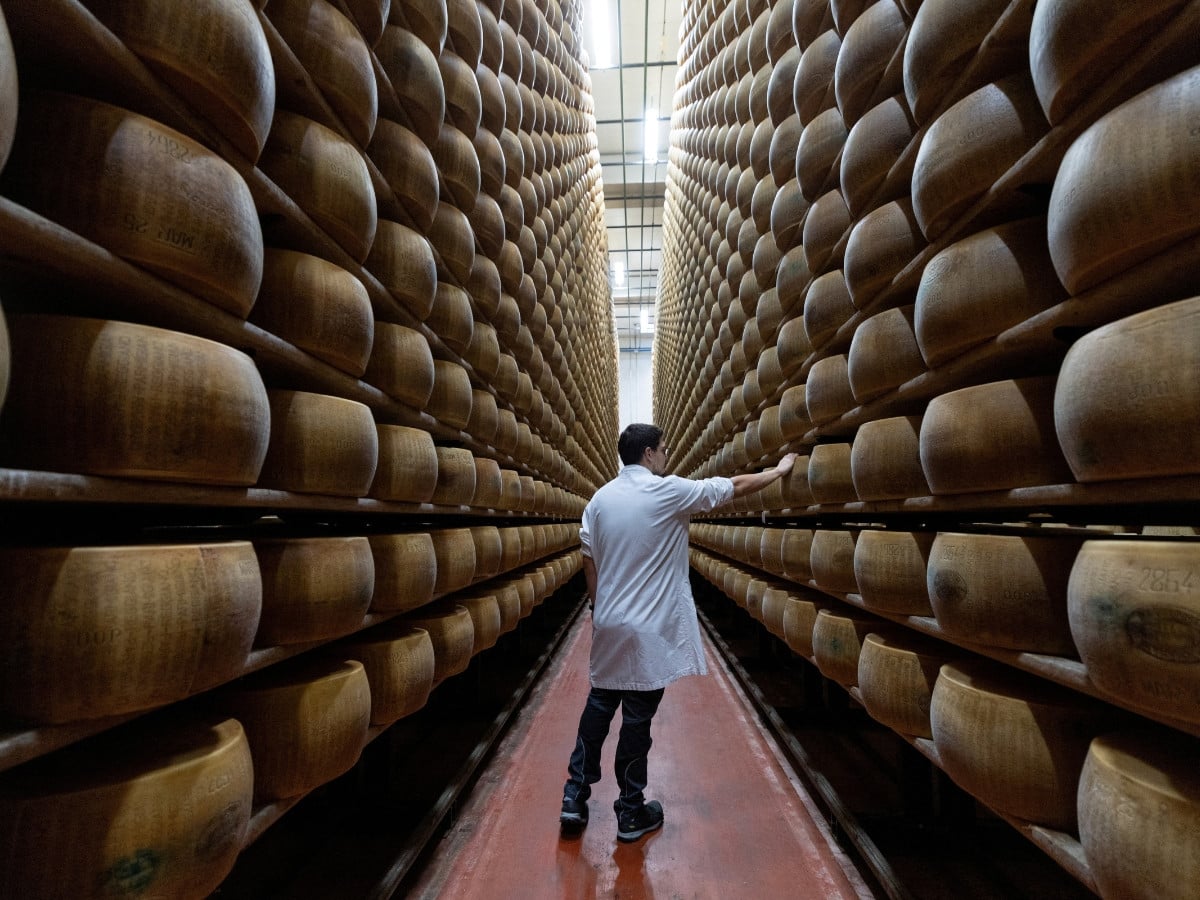
More than 500,000 wheels of Parmigiano Reggiano, valued at over 300 million euros, are stored in two warehouses run by Magazzini Generali delle Tagliate, a unit of Credito Emiliano, in the provinces of Reggio Emilia and Modena. MGT director Giancarlo Ravanetti said the company’s daily energy use climbed by around 30% during this year’s most intense heatwaves.
He said the operator had tried to improve efficiency by upgrading cooling systems and boilers, strengthening insulation and increasing renewable energy generation. The region’s climate-controlled storage sites, known collectively as the Bank of Parmigiano, have become a key part of the industry’s infrastructure.
Inside those facilities, traditional methods are combined with technology. Each wheel undergoes strict quality checks, including X-ray scans, while experts also inspect them weekly by tapping them with small hammers to detect defects that may emerge during ageing. Ravanetti said:
"The human factor remains key and is the real strength of the entire process,"Economic stakes for the region
Paolo Ganzerli, international sales director at food group GranTerre, said prolonged and more severe extreme weather would affect not only milk quantity and quality but also production costs. GranTerre posted consolidated revenue of 1.87 billion euros in 2025.
The Parmigiano Reggiano sector generates an estimated 4.5 billion euros in annual revenue and supports thousands of jobs in the local economy. In 2025, exports made up more than half of the cheese’s global sales, with the United States remaining its largest foreign market.
Ganzerli said the cheese has been produced for more than eight centuries and warned about what is at risk if extreme weather intensifies.
"We don't want to be the last generation to eat it."Comments
No comments yet. Be the first to join the discussion!