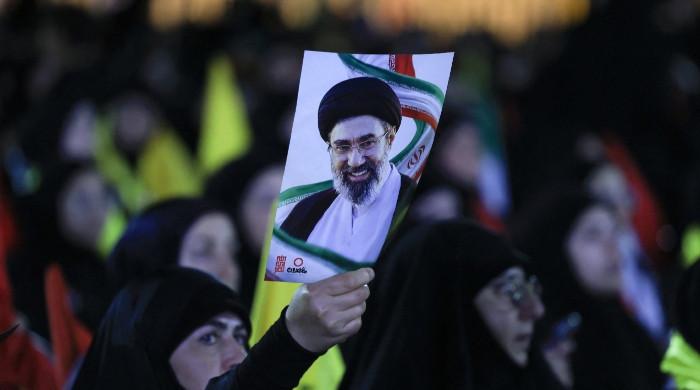
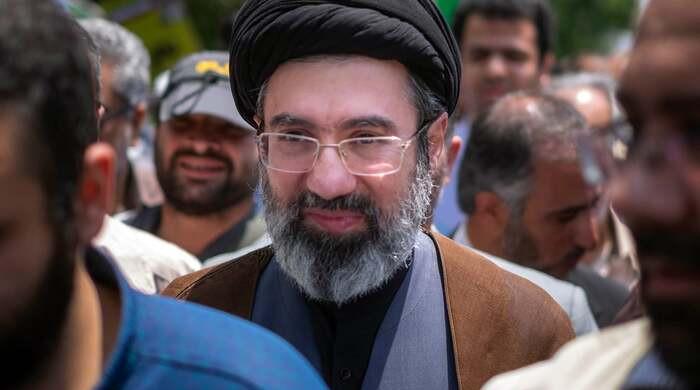
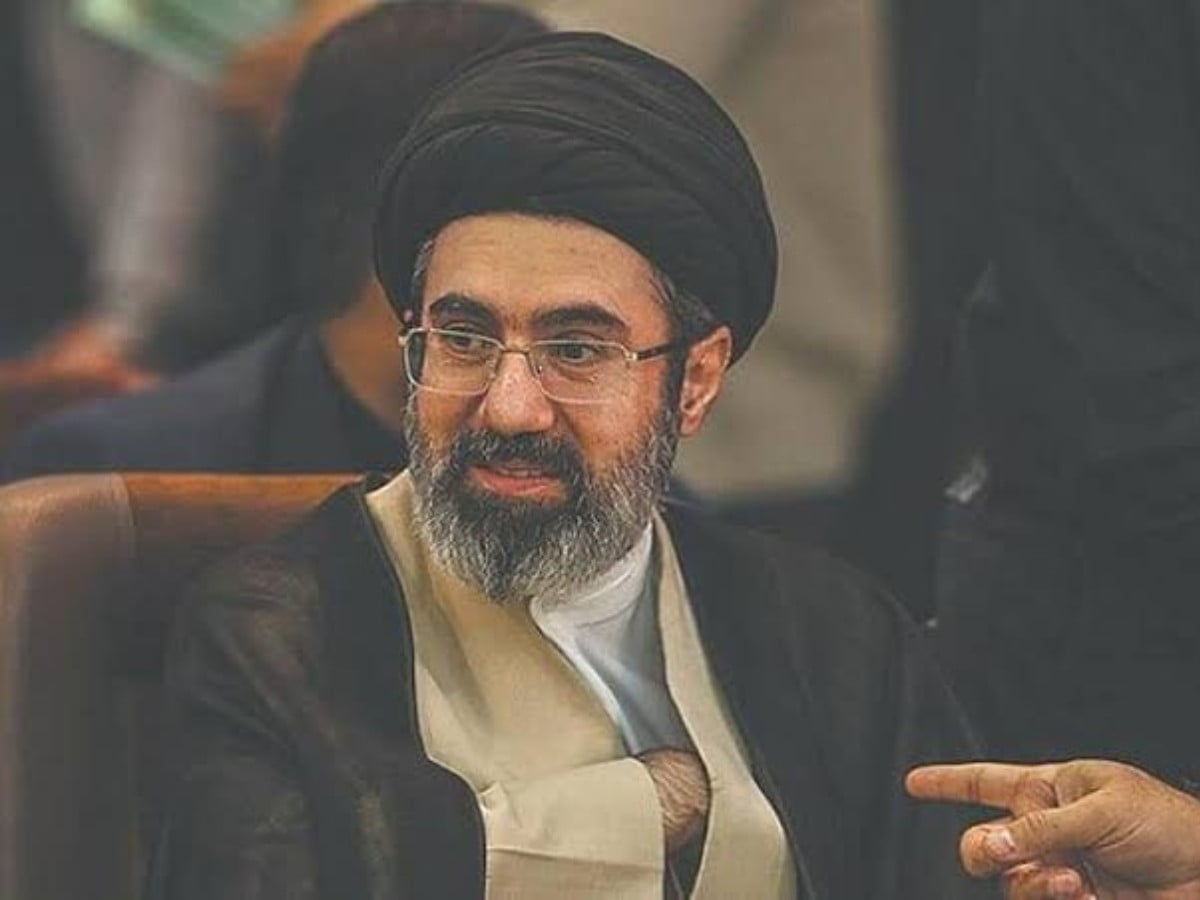
Iran's Mojtaba Khamenei vows revenge as US-Iran rhetoric escalates
Iran’s Supreme Leader Mojtaba Khamenei has vowed revenge for the killing of his father as Donald Trump warned against any assassination attempt. The threats came as mediation efforts continued after fresh US-Iran strikes.

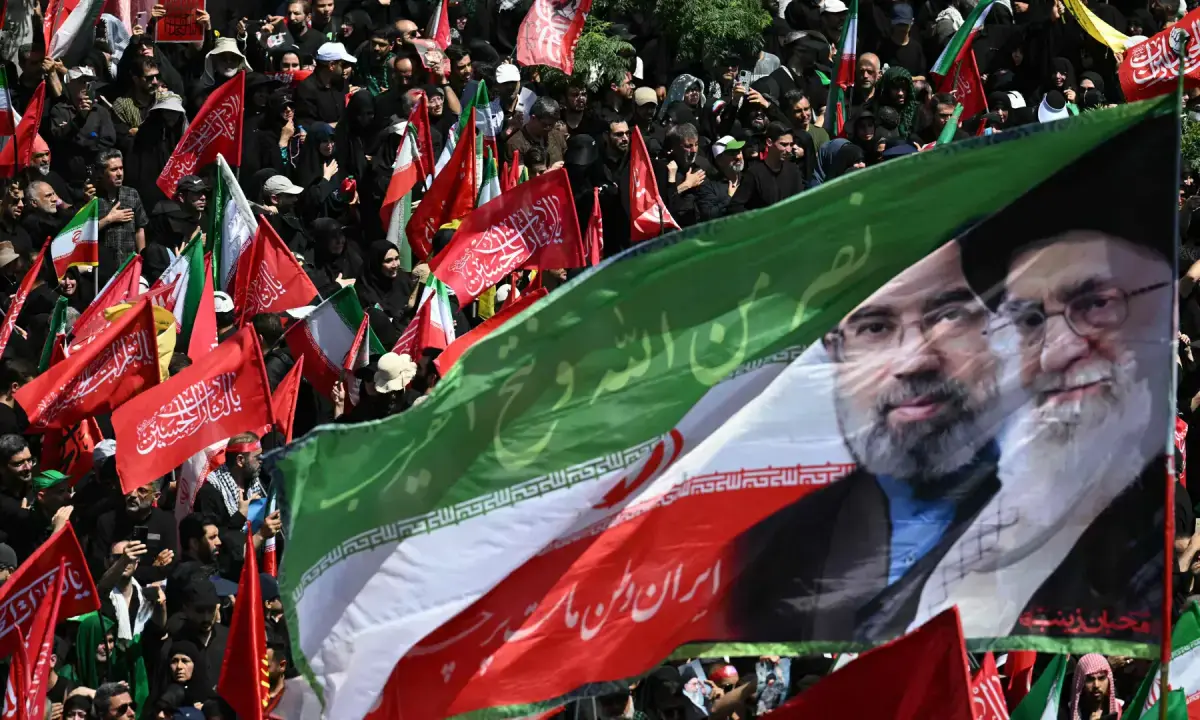
TEHRAN: Iran’s Supreme Leader Ayatollah Mojtaba Khamenei on Saturday vowed retaliation over the killing of his father and predecessor, Ayatollah Ali Khamenei, in what Iran says were US-Israeli strikes, as tensions with Washington rose again after this week’s exchange of attacks.
In his first message since funeral ceremonies for his father, Mojtaba Khamenei said revenge would be pursued regardless of whether current officials remained in office. He became supreme leader after Ali Khamenei was killed on the first day of the war that began on February 28 with large-scale US-Israeli strikes. He has not appeared in public since before the war.
In the written message, Khamenei said Iran had prepared a list of people it intended to target. He wrote “Vengeance is the will of our nation and must inevitably be carried out”.
He added “This matter depends neither on my personal existence nor on that of other officials. Whether we are present or not, it will come to pass.”
Hours earlier, US President Donald Trump warned on Truth Social that any attempt on his life would trigger a devastating American response. Trump wrote “1000 Missiles are Locked and Loaded and aimed at the Islamic Republic of Iran, with thousands of more to immediately follow, should the Iranian Government act on its threat, pronounced in many corners of the Globe, to assassinate, or attempt to assassinate, the sitting President of the United States of America, in this case, ME!”.
He added “Orders have already been given, and the US Military is ready, willing, and able, for a one year period of time, subject to extension, to completely decimate and destroy all areas of Iran.”
Both sides have hardened their public positions after attacks this week shook an interim arrangement intended to end the war. Trump has said the ceasefire is over, while mediators have tried to revive diplomacy. Iran’s Tasnim news agency reported on Friday that a Qatari delegation had travelled to Iran to try to strengthen Doha’s mediation role.
Trump has said talks with Iran would continue, although he described them as a waste of time. Iranian Foreign Minister Abbas Araghchi, however, said Tehran had honoured its commitments under the Pakistan-mediated Islamabad Memorandum of Understanding signed on June 18. He said Tehran had so far kept its word and added that there could only be mutual compliance.
Shipping dispute and talks over Hormuz
The latest military exchange began after Iran was accused of targeting three vessels that it said had strayed from their approved route. In response, Washington launched extensive strikes inside Iran, hitting about 90 sites, according to the US military. Iran’s health ministry said on Saturday that 17 people were killed and 115 injured in those attacks.
The US strikes were followed by Iranian reprisals against Gulf countries allied with Washington that host American military facilities. A major obstacle in efforts toward a final settlement remains the future of the Strait of Hormuz, which Iran closed to commercial shipping during the war in response to the US-Israeli strikes.
Iran has said it wants to control ship movements through the strait and plans to impose fees, adding that navigation would not return to the pre-war arrangement. Washington has rejected that position. Under customary international law, states are generally not allowed to levy tolls on straits used for international navigation.
Araghchi arrived in Oman on Saturday for talks on administering the waterway. Axios and Politico had reported that Washington had given Tehran until Saturday to stop firing on commercial ships passing through Hormuz and to acknowledge that the waterway is open.
Regional mediation efforts
Qatar, though among the Gulf states targeted during the conflict, has remained active in efforts to restore diplomacy. According to Prime Minister Shehbaz Sharif’s office, Qatar’s emir spoke by phone with the prime minister on Friday. PM Shehbaz also said he had spoken with Iranian President Masoud Pezeshkian and urged him to protect the hard-earned peace in the region.
Even as mediation continued, Iran’s chief negotiator in talks with Washington, Mohammad Bagher Ghalibaf, adopted a firm position. Iran’s ISNA news agency quoted him as saying “Ending the war is a priority for the countries of the world, but everyone must know that this confrontation will never end with Iran’s surrender.”
He also said Iranians were fully prepared to defend themselves.
Comments
No comments yet. Be the first to join the discussion!