The Pakistan nobody talks about
The article highlights how rural Pakistan—home to 61% of the population—continues to face long loadshedding, unreliable schools and clinics, and unsafe water, despite GDP gains.

The country cousin is being left even further behind
Imagine waking before dawn in a village in interior Sindh, southern Punjab, or the hills of Khyber Pakhtunkhwa as June arrives and the temperature climbs past 46°C before ten in the morning. The fan stopped turning sometime in the night, when the electricity went again, and it will not return for another 14 to 16 hours. There is no gas to cook on. The water in the clay pot is already warm. The nearest hospital is 40 km away on a road that becomes impassable after rain.
The nearest school with a functioning teacher, a real one who arrives daily, is not much closer. Your children have no internet, no library, no air-conditioned room to study in, and no realistic prospect that the circumstances of their birth will not define the entire trajectory of their lives. This is not a description of a forgotten decade. It is a description of July 2026, in a country that simultaneously congratulates itself on macroeconomic stabilisation and a GDP that has crossed $450 billion.
Sixty-one percent of Pakistan’s population is classified as rural by the 2023 Census, representing over 140 million people living in circumstances that the country’s development narrative consistently fails to honestly confront. The World Bank’s Poverty, Equity, and Resilience Assessment, published in October 2025, found that poor public services and basic infrastructure, including unreliable schools, clinics, roads, and water systems, are at the heart of Pakistan’s poverty trap.
Only 17 percent of Pakistani households have piped water in their homes. Only half have safely managed drinking water of any kind, with rural and low-income households facing the most severe gaps. In Sindh, 93 percent of urban households have electricity connections compared to only 48 percent in rural areas, a 45 percent disparity within the same province, under the same government, administered by the same state.
And for those rural households that do have electricity connections, the connection is a source of its own particular cruelty. Pakistan’s power crisis, which returned with force in 2026 following a gas shortage that knocked 4000 MW of generation capacity offline, has produced a hierarchy of suffering in which rural communities sit at the very bottom.
Urban areas experience up to eight hours of daily loadshedding. Rural and high-loss areas face 12 to 16 hours. In areas classified as poor recovery zones, meaning places where poverty itself makes bill payment difficult, outages stretch to 16 hours and beyond, sometimes to 20, in peak summer heat.
The punishment for being poor, in Pakistan’s electricity distribution system, is to receive even less electricity than everyone else. The logic of this arrangement, which systematically denies power to the areas that can least afford alternatives like generators or solar panels, has never been satisfactorily explained by any government, because it cannot be explained without acknowledging that it is a form of institutionalised neglect.
Pakistan’s development conversation takes place in air-conditioned offices in Islamabad and Karachi, in the language of macroeconomic indicators that aggregate away the lived experience of the majority. GDP growth of 3.7 percent means something very specific to a family sitting in 45-degree heat with 16 hours of loadshedding, no gas, no clean water, and a hospital too far away to reach in an emergency. It means nothing. Until rural Pakistan stops being a footnote in the national development narrative and becomes its primary subject, stabilisation will remain exactly what it is: a comfort for those already comfortable, and a statistic for everyone else.
The healthcare picture is no less stark. Per capita government health expenditure falls below one dollar in 24 out of 36 districts in Punjab alone, according to verified data from the Pakistan Electronic Government Health Information System. Rural women bear the sharpest edge of this failure. Maternal mortality in rural Pakistan remains multiple times higher than in urban centres, driven by the absence of skilled birth attendants, functional basic health units, and emergency obstetric care within reachable distance.
The World Bank found that 78 percent of ten-year-olds in Pakistan cannot read or write a simple text, a learning poverty figure that reflects overwhelmingly the reality of rural schools staffed by absent teachers, lacking furniture, running without electricity, and operating in buildings that in many documented cases have no roofs.
The internet gap compounds every other gap simultaneously. Digital connectivity has become as foundational to economic participation and educational access as roads and electricity once were, and rural Pakistan is being left behind here just as thoroughly. When a child in Karachi can access online tutoring, government services, and global information while a child 40 km from Multan cannot, the digital divide does not merely reflect existing inequality. It multiplies it, locking rural communities out of the economic opportunities that increasingly require connectivity as a basic prerequisite.
What makes this neglect particularly inexcusable is that rural Pakistan is also the source of much of what keeps the national economy functioning. Agriculture, which employs 40 percent of Pakistan’s workforce and contributes nearly a quarter of GDP, is overwhelmingly a rural enterprise.
The remittances flowing from rural families who sent sons and daughters to Gulf states fund household consumption across thousands of villages. The resilience with which rural communities absorb floods, droughts, and economic shocks, year after year without meaningful state support, is a form of invisible subsidy to a national economy that takes the output and ignores the deprivation.
Pakistan’s development conversation takes place in air-conditioned offices in Islamabad and Karachi, in the language of macroeconomic indicators that aggregate away the lived experience of the majority. GDP growth of 3.7 percent means something very specific to a family sitting in 45-degree heat with 16 hours of loadshedding, no gas, no clean water, and a hospital too far away to reach in an emergency. It means nothing. Until rural Pakistan stops being a footnote in the national development narrative and becomes its primary subject, stabilisation will remain exactly what it is: a comfort for those already comfortable, and a statistic for everyone else.
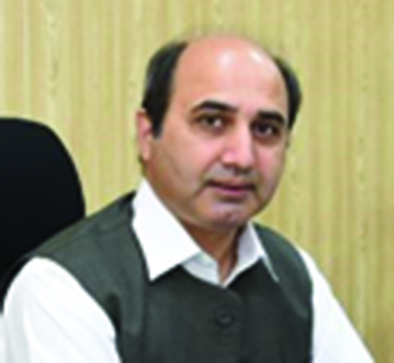
The writer has a PhD in Political Science, and is a visiting faculty member at QAU Islamabad. He can be reached at [email protected] and tweets @zafarkhansafdar
View all articles →Comments
No comments yet. Be the first to join the discussion!