US launches fresh strikes on Iranian targets
The US launched fresh strikes on Iranian targets after three tankers were hit near Oman, while Washington also revoked a temporary oil sanctions waiver. The developments coincided with a NATO summit in Ankara dominated by Donald Trump’s positions on Turkiye, Greenland and defence spending.

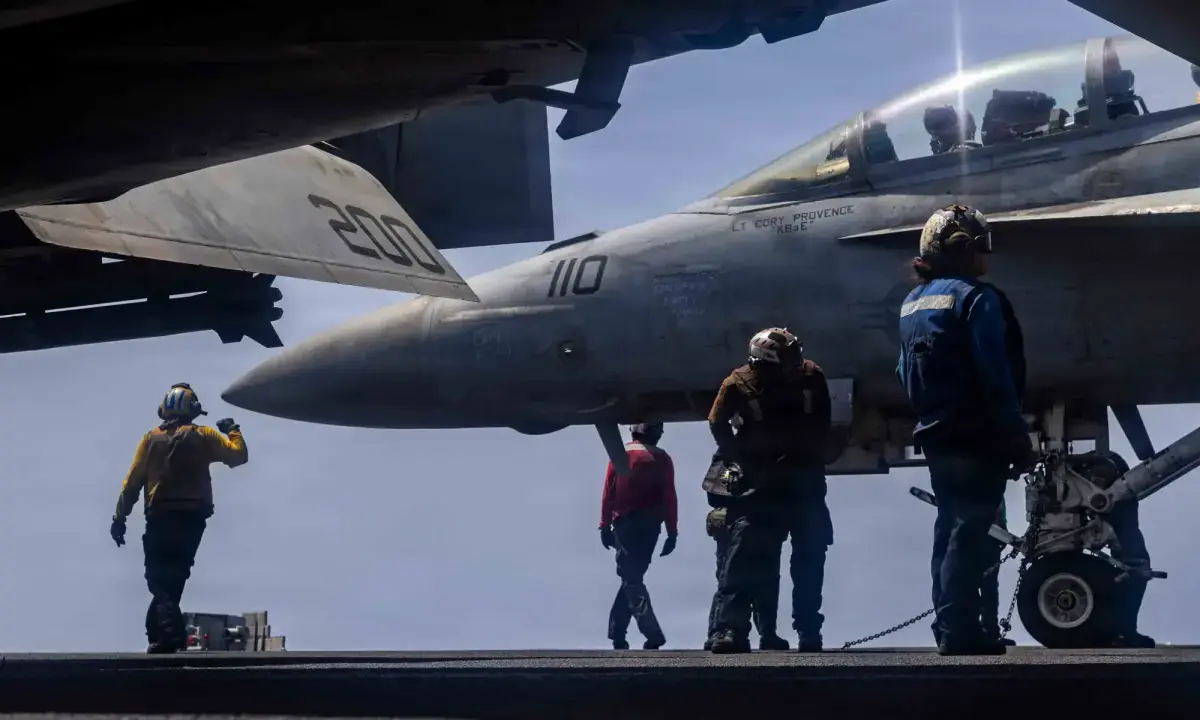
WASHINGTON: The US military carried out a new round of strikes on Iranian targets early Wednesday, hours after Washington withdrew a temporary sanctions waiver linked to Iranian oil exports, according to the US Central Command.
Centcom said the action came after three tankers were hit in the Strait of Hormuz. In a statement posted on social media, it said US forces launched the attacks "to impose heavy costs for targeting and attacking commercial shipping crewed by innocent civilians in an international waterway … in unwarranted, dangerous, and a clear violation of the ceasefire."
Earlier on Tuesday, the US Treasury Department revoked a licence announced in June that had permitted Iran to produce, sell and deliver crude oil and related products through August 21. A US official told AFP that Tehran’s conduct in the Strait was unacceptable and said the US-Iran memorandum of understanding was entirely tied to Iranian behaviour.
The official said Iran would receive benefits only if it demonstrated good behavior, but added that US negotiators were still working in good faith toward a final deal.
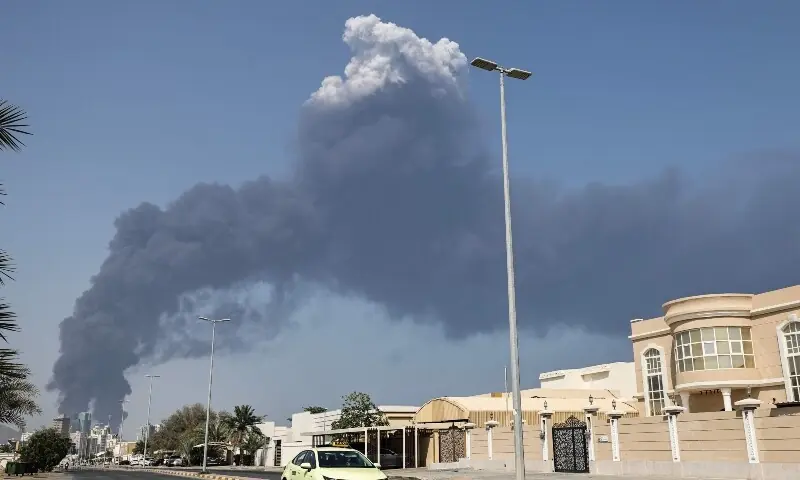
British maritime security agency UKMTO reported that an unknown projectile struck a tanker overnight, causing a fire, and said two more vessels were later hit, with at least one of them struck by a drone. It said all three incidents occurred near Oman. Qatar said one of the vessels was a Qatari LNG tanker and blamed Iran for what it described as an unacceptable attack.
Trump dominates NATO gathering in Ankara
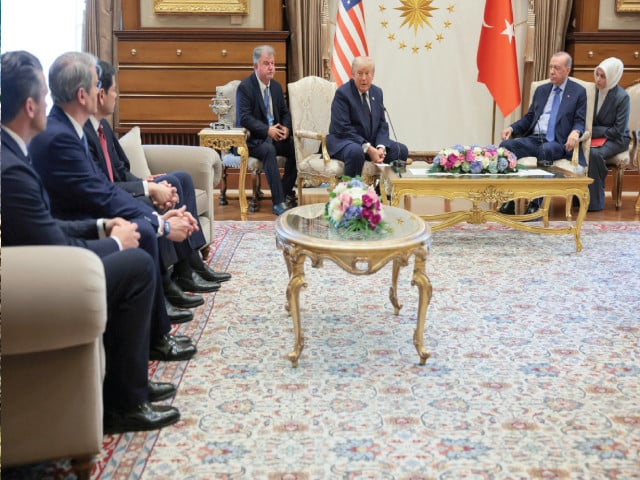
The developments unfolded as President Donald Trump arrived in Ankara for a two-day summit of NATO heads of state and government, the alliance’s first such meeting since the Iran war. The summit was quickly overshadowed by Trump’s renewed criticism of allied burden-sharing, his demand for US control of Greenland, a promise to lift sanctions on Turkiye and indications that Washington could allow Ankara back into the F-35 fighter jet programme.
At a meeting with Turkish President Recep Tayyip Erdogan at the presidential complex, Trump said the United States would remove sanctions imposed on Turkiye under the Countering America's Adversaries Through Sanctions Act after Ankara bought Russian S-400 air defence systems in 2020. He also said his administration would decide on a possible sale of F-35 stealth fighter jets to Turkiye, although legal and congressional obstacles remain.
Trump again complained that European allies were not contributing enough to collective defence and singled out Britain, France, Germany and Italy for what he called inadequate support during the US military campaign against Iran. Even so, he said he remained hopeful about efforts to end the war in Ukraine, adding that he had spoken separately with Russian President Vladimir Putin and Ukrainian President Volodymyr Zelenskiy before the summit.
Standing alongside Erdogan, Trump also revived his push for Greenland to come under US control, saying the Arctic island should be controlled by Washington rather than Denmark. Danish Prime Minister Mette Frederiksen responded that allies should respect the sovereignty of the Danish kingdom and repeated that Greenland was not for sale. Greenland Foreign Minister Mute Egede also rejected the remarks, saying the island’s future would be decided only by its own people while maintaining close cooperation with allies.
Defence spending and Ukraine remain central issues
Before Trump’s arrival, NATO Secretary General Mark Rutte told a defence industry forum on the sidelines of the summit that European allies were sharply increasing military investment. He called for a revolution in NATO’s defence industrial base and said the security environment required a rapid increase in production to address threats from Russia and challenges posed by China, North Korea and Iran.
NATO announced defence initiatives and procurement agreements estimated at at least $50 billion. These included European purchases of surveillance drones from Northrop Grumman, NATO acquisition of aircraft from Sweden’s Saab, and a draft agreement between Lockheed Martin and Rheinmetall to jointly produce ATACMS missiles in Germany. The arrangement would mark the first planned production of the missile system outside the United States. Rutte also said NATO allies would invest more than $40 billion over the next five years in anti-drone capabilities.
The summit also underscored concern over Ukraine. NATO members are expected to restate support for Kyiv and commit €70 billion in assistance for 2026, while Zelenskiy has appealed for more air defence systems amid intensified Russian attacks.
Trump’s arrival in Ankara was marked by a state استقبال organised by Erdogan, including mounted guards, military honours and fighter jet flypasts at the presidential complex. The display highlighted the close personal relationship between the two leaders as NATO sought to project unity despite continuing disagreements over Greenland, the fallout from the Iran conflict and the future of US engagement in Europe.
Comments
No comments yet. Be the first to join the discussion!