

LHC upholds refusal to restore airport access of taxi drivers
The Lahore High Court has upheld the Pakistan Airports Authority’s refusal to restore airport entry passes and taxi stickers of cab drivers at Lahore airport. The court ruled that access to restricted airport premises is a regulated permission, not a vested right.

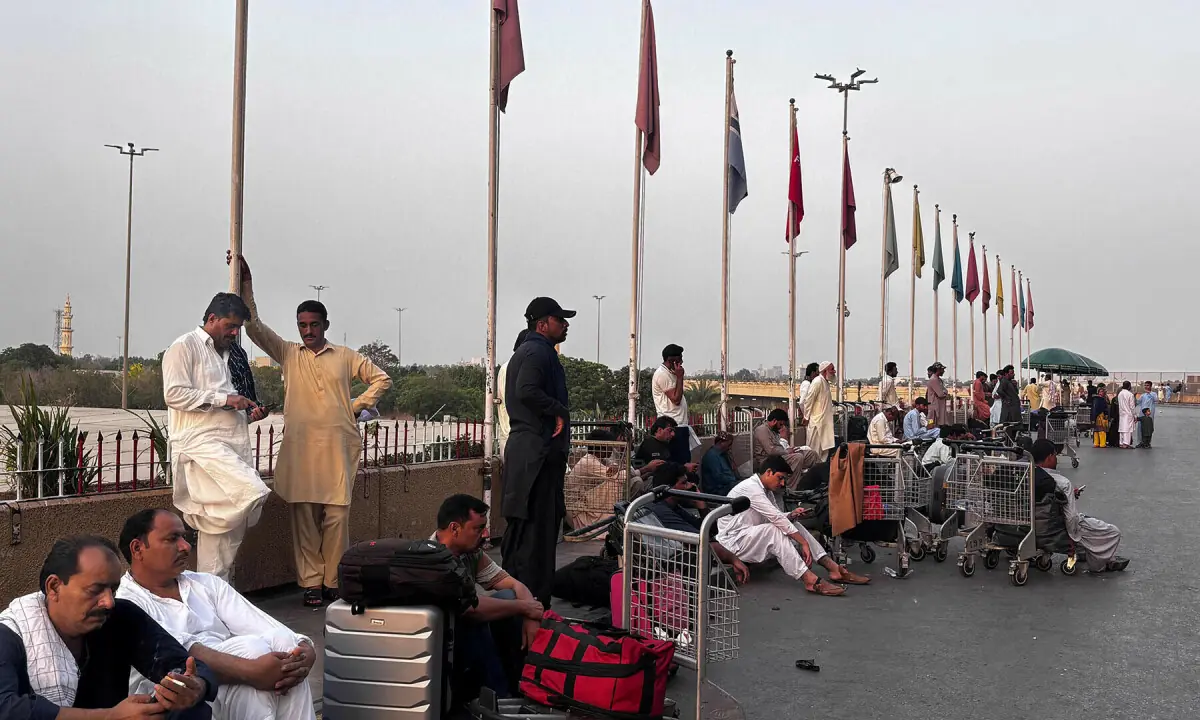
LAHORE: The Lahore High Court (LHC) has upheld a decision by the Pakistan Airports Authority (PAA) not to restore airport entry passes and taxi stickers of a group of cab drivers at Allama Iqbal International Airport, ruling that access to restricted airport premises is a regulated facility and not a legal entitlement.
Justice Raheel Kamran issued the ruling on a petition filed by Allah Bakhsh and other drivers against an order of the airport manager dated Nov 27, 2025, which had declined their request for restoration of the permits. The petitioners had also accused the authorities of favouritism, monopoly and discriminatory treatment in the running of taxi services at the airport, and had asked the court to ensure equal business opportunities for all lawful taxi operators there.
According to the case record, the petitioners had previously worked as taxi drivers at the airport and had been issued entry passes and taxi stickers. After those permissions were withdrawn, they moved the high court, which had earlier directed the airport manager to decide their pending application after hearing them.
Following that hearing, the airport manager rejected the request, citing repeated breaches of standard operating procedures, complaints of misconduct, and concerns related to passenger facilitation and discipline at the airport. The drivers then returned to the court, contending that the order relied on old and unverified allegations and infringed their constitutional rights to lawful treatment, equality before law and the freedom to pursue a lawful occupation.
Court backs regulatory authority
The PAA argued that no taxi driver had a vested right to operate from within the airport’s restricted premises. It said the airport manager was empowered under the law to regulate access, assess the suitability of drivers and preserve order within airport grounds.
In his judgement, Justice Kamran held that the airport manager exercises statutory powers intended to ensure aviation safety, passenger facilitation, operational discipline and security at a sensitive public facility. He ruled that an airport entry pass or taxi sticker is not an entitlement, but a regulatory permission that remains subject to ongoing assessment and supervision by the airport manager.
The judge also addressed the petitioners’ claim regarding their right to livelihood, observing that although the Constitution protects the freedom to engage in a lawful occupation, that freedom is subject to lawful regulation when the activity is carried out in a restricted and security-sensitive place. He noted that refusal of access to airport premises did not stop the petitioners from continuing transport work elsewhere, but only barred their entry into a controlled facility in the wider public interest.
The court dismissed the petition, while clarifying that the petitioners may file fresh applications before the competent authority in accordance with the law.
Comments
No comments yet. Be the first to join the discussion!


