

How the World Cup mirrors a shifting planet
The 2026 World Cup shows a changing football map as African and Asian teams press, attack and reach the knockout stage. Europe’s old dominance faces new rivals—on the field and in the stands.

The old football superpowers are fading
Football is not merely a game. It is the most universal emotional language on earth. No other sport commands the same depth of passion, the same river of tears, the same roar of hope, and the same national longing. It belongs to streets, villages, capitals, stadiums, television screens, migrant communities, rich clubs, poor neighbourhoods and entire continents. A football match can become a national festival, a public tragedy, a diplomatic signal and a cultural declaration all at once.
The FIFA World Cup sits at the center of this global emotion. The 2026 World Cup is the biggest edition in history: 48 teams compete across 104 matches in Canada, Mexico and the USA. FIFA presents this tournament as the largest and most ambitious World Cup ever staged. But the real importance of 2026 is not only its size. Its deeper meaning is that football power is becoming more democratic. The old monopoly of Europe and South America is visibly under pressure.
The tournament is now in the Round of 32, and the evidence is on the field. African teams are not present as decoration; they are present as serious competitors. Morocco eliminates the Netherlands on penalties and reaches the last 16. Morocco beats the Dutch 3–2 in a shootout after a 1–1 draw and now faces Canada in the Round of 16. Paraguay eliminates Germany on penalties. Brazil survives Japan only by a narrow 2–1 margin. France defeats Sweden, but the old European aura of automatic superiority is weaker.
In the Round of 32 field, Africa is strongly represented by Morocco, South Africa, Ivory Coast, DR Congo, Senegal, Algeria, Egypt, Cape Verde and Ghana. Asia and the wider AFC zone are represented by Japan and Australia, while Middle Eastern and North African football is present through Morocco, Algeria and Egypt, with the broader regional rise visible in the growing investment of Saudi Arabia, Qatar and other Gulf states.
For decades after the Second World War, South America carried the soul of football. Brazil, Argentina and Uruguay give the world beauty, rhythm, improvisation and artistry. Brazil’s five World Cup titles remain the highest by any country. Argentina and Uruguay add their own legendary chapters. South American football is not only about tactics; it is about imagination. It teaches the world that the ball can be danced with, not merely kicked.
Then Europe rises. Germany brings discipline. Italy brings defensive intelligence. France brings athletic diversity and tactical balance. Spain brings possession football. England, the Netherlands, Belgium and Portugal become central to the modern football economy. European clubs become the richest and strongest institutions in the game. They attract the best players from Africa, South America and Asia. Europe becomes the training ground, marketplace and tactical laboratory of world football.
But 2026 shows that the old football map is changing. Europe still has money, clubs, academies and history, but fear is disappearing. African and Asian teams no longer enter the pitch with inferiority. They press, attack, organize, counterattack and take penalties with belief. Morocco’s victory over the Netherlands is not only a result; it is a message. Japan’s narrow loss to Brazil is not failure; it is proof that Asia can push the five-time champions to the edge. African teams reaching the knockout stage in large numbers shows that the continent is no longer waiting outside the palace. It is already inside.
Africa appears to be the next great football frontier. It has youth, speed, hunger, physical power and a huge talent base. African players already shape European leagues. The missing piece has often been national organization, federation stability, coaching continuity and infrastructure. But Morocco’s 2022 semifinal run and its 2026 continuation show that when African talent is organized properly, it can challenge anyone. Senegal, Ghana, Nigeria, Ivory Coast, Algeria, Egypt, DR Congo and South Africa all represent different dimensions of this rise.
Football’s power map begins with South American genius, moves into European organization, and now enters the age of global redistribution. The ball is moving from old centers to new frontiers. The World Cup is no longer only a contest between Europe and South America. It is becoming a world parliament of talent, emotion, money, identity and ambition. The beautiful game is telling us something profound: the world is changing, and the football field is changing with it.
Asia’s rise is different but equally important. Japan and South Korea build through discipline, school systems, domestic leagues and technical education. Japan now plays with confidence against the strongest nations. South Korea has already shown in past tournaments that Asian football can reach deep stages. Iran, Saudi Arabia, Qatar, Iraq and other West Asian nations add another layer: physical courage, tactical compactness and growing investment.
The Middle East is becoming a football investment zone. Qatar hosts the 2022 World Cup. Saudi Arabia is preparing to host the 2034 World Cup. Gulf states are buying clubs, attracting stars, building academies and placing football inside national development strategies. Money alone cannot produce greatness, but money combined with youth development, coaching, facilities and football culture can accelerate history.
This shift in football also resembles a wider shift in the world. The old global order is no longer as fixed as it once appeared. Power is moving from a narrow Western center toward a more complex, multipolar world. China is rising economically and strategically. India is growing. Turkey, Saudi Arabia, Iran, Pakistan and other regional powers are asserting themselves more visibly. The comparison is not exact— football results do not prove military, economic or diplomatic supremacy— but football does reflect confidence, investment, identity and the psychology of nations.
That is why the 2026 World Cup feels larger than sport. When Morocco defeats the Netherlands, when Paraguay removes Germany, when Japan pushes Brazil, when African teams fill the knockout stage, the message is clear: history is no longer owned by the same few countries. The world is becoming more competitive, and football is one of the most visible arenas where this change is seen.
Europe and South America remain giants. Brazil, Argentina, France, Spain, Portugal, England and others are still elite. But the gap is narrowing. The next 20 years may not produce the complete fall of Europe or South America, but they are likely to produce a new football order. Quarterfinals and semifinals will increasingly include African and Asian teams. The first World Cup champion from outside Europe and South America is no longer impossible. Africa appears the strongest candidate to break that wall first, followed by Japan or South Korea from Asia.
The 2026 World Cup is therefore a turning point. It is not only expanding the number of teams; it is expanding belief. It is giving the global South, Africa, Asia and the Middle East a larger stage. And these teams are not merely filling spaces. They are creating shocks, rewriting assumptions and forcing the old powers to sweat.
Football’s power map begins with South American genius, moves into European organization, and now enters the age of global redistribution. The ball is moving from old centers to new frontiers. The World Cup is no longer only a contest between Europe and South America. It is becoming a world parliament of talent, emotion, money, identity and ambition.
The beautiful game is telling us something profound: the world is changing, and the football field is changing with it.
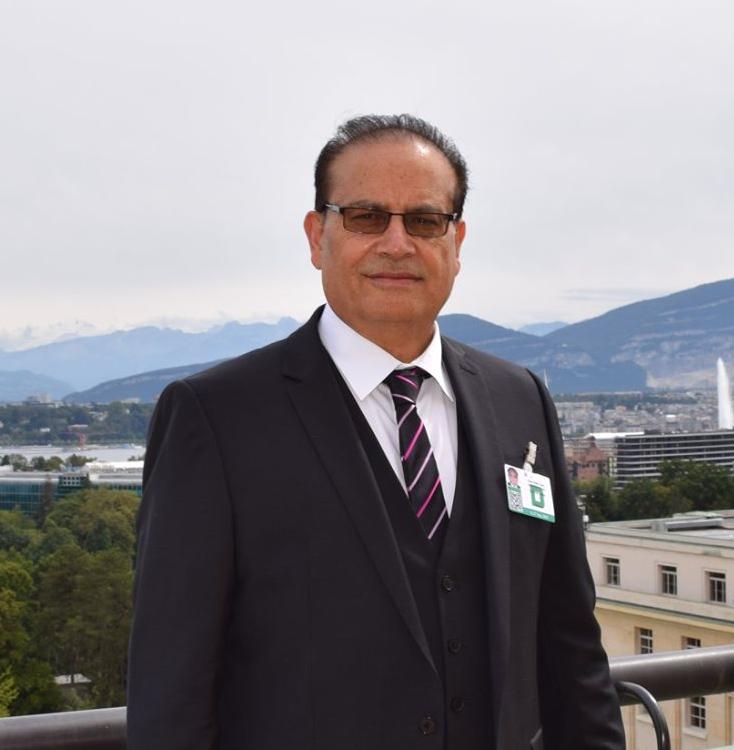
The writer retired as Press Secretary the President, and is former Press Minister at Embassy of Pakistan to France and former MD, Shalimar Recording & Broadcasting Company Limited
View all articles →Comments
No comments yet. Be the first to join the discussion!


