Heatwave spreads across eastern US ahead of July 4 holiday weekend
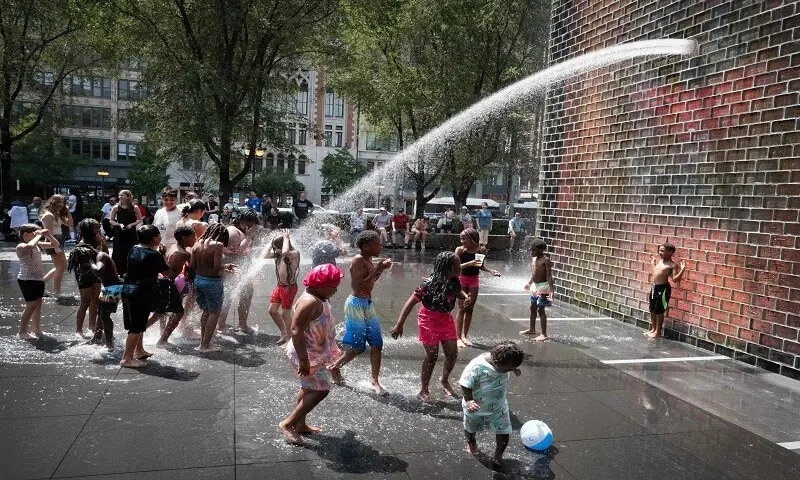
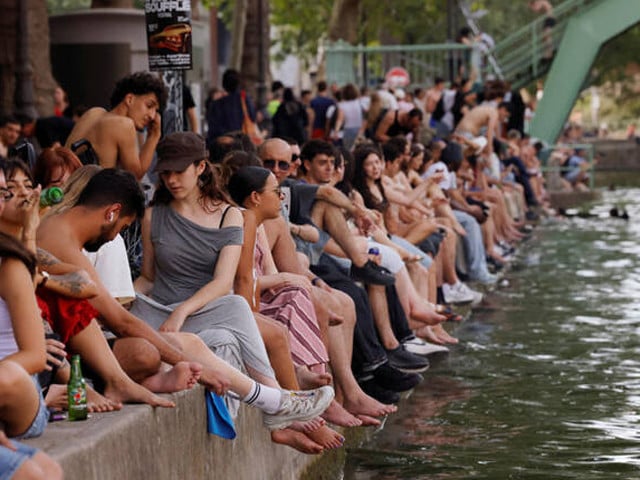
A record-breaking heatwave has spread from the Midwest into the eastern United States, placing tens of millions under warnings ahead of the July 4 holiday weekend. Authorities in cities including Chicago and New York have opened cooling centres and urged residents to take precautions.

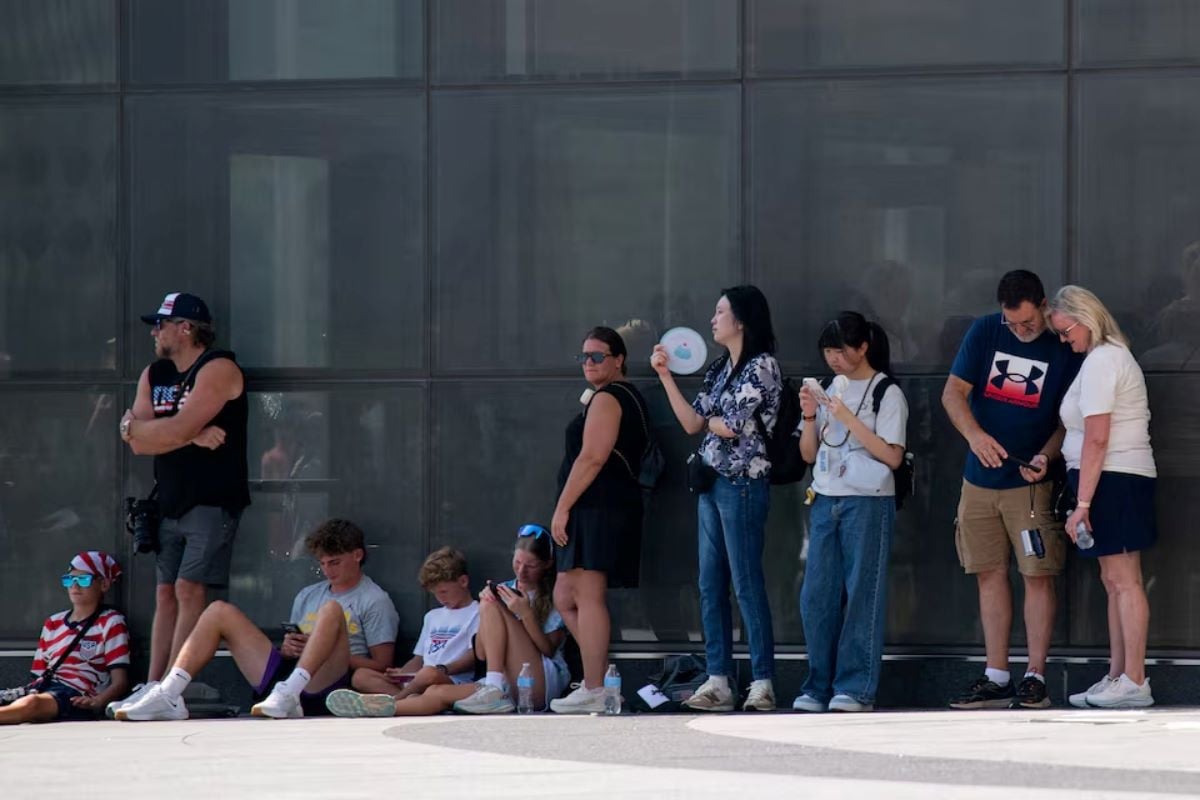
Washington: A record-setting heatwave expanded from the US Midwest into the eastern part of the country on Wednesday, placing tens of millions of people under heat warnings expected to remain in effect through the July 4 holiday weekend, when Americans mark the nation’s 250th anniversary.
So-called real-feel temperatures were forecast to range from 100 to 115 degrees Fahrenheit, or 37.8 to 46.1 degrees Celsius, across a large swathe of the region. The conditions were expected to heighten the risk of heat-related illness, especially for vulnerable groups, while also adding pressure to electricity grids already under strain from higher demand linked to data centres and electric vehicles.
Residents describe impact of extreme temperatures
In Hill City, Kansas, mail carrier Sabrina Hooper said the heat had made her new job far more difficult just a week after she started. Her work involves walking as much as 10 miles a day to deliver parcels.
Hooper, 34, said, adding that she sometimes finds relief from lawn sprinklers.
It's so nice. You can take your hat off, get it wet, slap it back on your head.
Hill City was identified as the hottest place in the United States for five straight days in 2012 during another severe heatwave, when the town’s heat index reached 108 degrees. The heat index reflects how hot conditions feel once humidity is taken into account.
In Brownsville, Texas, near the Gulf Coast and the US-Mexico border, resident Dana Robles said she was concerned about the growing cost of keeping her home cool as the heat index climbed to 108 degrees. Her family’s monthly electricity bill can top $300 during the hottest periods, amounting to nearly one-third of their rent. She also voiced concern about possible power failures caused by pressure on the grid.
“I’m scared the electricity is going to go off all day and our food is going to get spoiled”, she said.
In Chicago, high-school science teacher Michelle Klein said she had begun preparing over the weekend by filling her car with fuel, shopping early for groceries, stocking extra cold drinks and watering her plants deeply.
Klein, 57, said on Tuesday evening after taking her usual evening walk despite a heat index of 103 degrees.
In Chicago’s suburbs, property investor Amy Kaspar said a tenant called her urgently on Monday night because an air conditioner appeared to be malfunctioning. Kaspar found the unit was working, but was unable to cool the apartment sufficiently in the severe heat and humidity.
“Combined with the wind, it feels like standing behind the exhaust of a bus right now in Chicago”, Kaspar, 50, said.
Authorities open cooling centres and urge safety checks
Chicago’s Office of Emergency Management and Communications urged residents on Wednesday to check regularly on relatives, neighbours, older people and others who may be especially at risk. The office said residents could request a well-being check through the city by calling 311 if they were unable to reach someone.
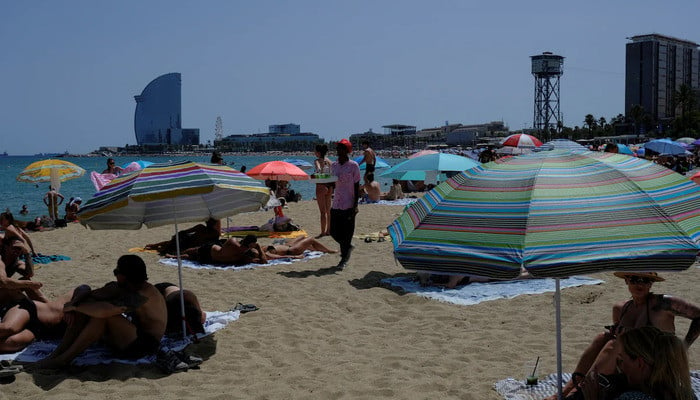
The intense temperatures in the United States were unfolding alongside a separate record-breaking heatwave in western Europe. Scientists said that European event would have been virtually impossible without human-caused climate change. Years of scientific research have established that greenhouse gas emissions are making heatwaves more frequent and more severe around the world.
By Wednesday morning, the extreme heat had begun reaching New York City. Mayor Zohran Mamdani said at a press conference that the city had opened hundreds of cooling centres and sent out more than a dozen cool vans carrying water, electrolytes, sunscreen and meals for people needing relief.
At a senior centre in Harlem, air conditioning was running at full capacity, and a sign in 13 languages identified the facility as a public cooling centre. Director Richard Allman said the centre would stay open beyond normal hours over the July 4 weekend.
“We try to make this a comfortable place for people on an extra-hot day”, he said.
Before the heatwave intensified, New York officials had also asked operators of electronic signs in Times Square to dim billboard lighting to reduce electricity consumption and requested businesses to keep thermostats no lower than 78 degrees. Energy provider Con Edison urged customers to cut usage between 2pm and 10pm. The city also extended hours at public swimming pools, opened more cooling centres in libraries and municipal buildings, and increased street outreach efforts.
Comments
No comments yet. Be the first to join the discussion!