Israel-Lebanon framework deal may deepen deadlock, analysts say
Analysts and political figures say the Israel-Lebanon framework deal may entrench a deadlock by linking Israeli withdrawal to Hezbollah’s disarmament. They warn the terms could prolong Israel’s presence in southern Lebanon and strain Lebanon’s internal stability.

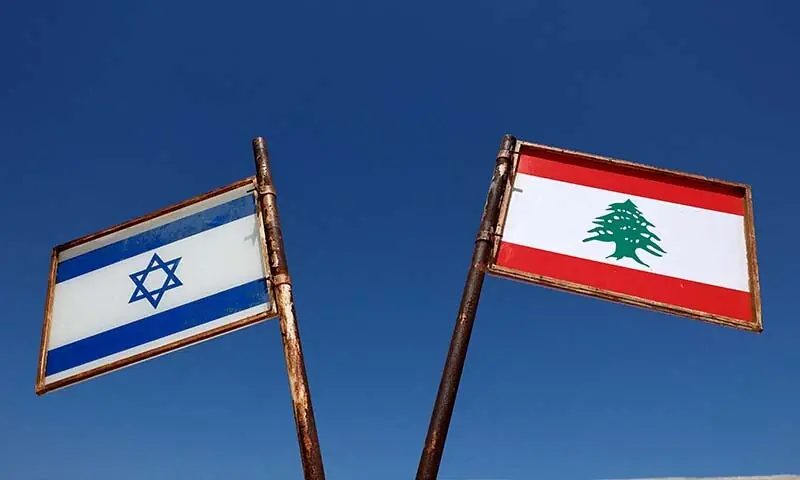
BEIRUT: A new framework agreement between Israel and Lebanon could end up cementing a military and political impasse rather than resolving the conflict linked to Hezbollah, according to regional analysts and political figures cited in Reuters.
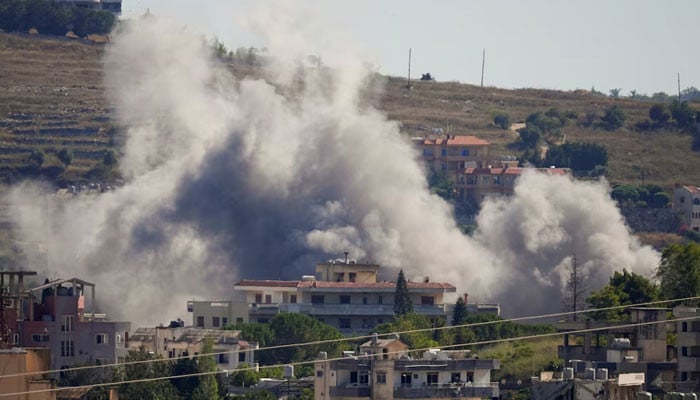
The deal ties any Israeli withdrawal from southern Lebanon to the disarmament of Hezbollah and other non-state armed groups, a condition that several analysts said is not realistically achievable. They said Hezbollah has categorically rejected disarmament, while no Lebanese government has the authority to enforce such a step. In that scenario, they argued, Israel would gain political justification to maintain an open-ended military presence in southern Lebanon after launching its invasion when Hezbollah fired at Israel on March 2 in solidarity with Tehran over the war in Iran.
Critics say the arrangement leaves the Lebanese state bound by obligations it cannot fulfil while still unable to fully recover sovereignty over its own territory. The agreement also runs up against Lebanon’s sectarian political order, which is based on power-sharing rather than coercive state control over the country’s most powerful armed faction.
A senior Lebanese politician, speaking on condition of anonymity, said the Lebanese army was neither designed nor equipped to disarm Hezbollah and that expecting it to do so overlooked both the group’s military strength and Lebanon’s fragile sectarian balance.
"This is not an agreement, it is an imposed settlement," Michael Young, a Beirut-based analyst, said the burden of implementation had been placed overwhelmingly on Lebanon, with no matching guarantee that Israel would leave southern Lebanon.
He added that it “creates a structure that allows the Israelis to remain [in southern Lebanon] indefinitely”.
Questions over implementation
Fawaz Gerges of the London School of Economics and Political Science described the framework as fundamentally unworkable. He said it was built around a condition that could not be met in practice and added that Israel had already entrenched a buffer zone in southern Lebanon roughly eight to 10 kilometres deep while linking any later withdrawal to Hezbollah’s disarmament. He said the terms could turn that buffer zone into a long-term arrangement with diplomatic cover, calling it a political "gift" to Israel.
The conflict in Lebanon has also been part of wider diplomatic efforts related to the broader US-Iran war. Gerges said Washington had deliberately separated the Lebanon file from the wider conflict, giving Israel greater room to act in Lebanon.
The agreement signed in Washington states that Israel has no territorial claim on Lebanon, but also makes the Lebanese army’s authority in the south dependent on verified disarmament of non-state groups, including Hezbollah. Israeli Prime Minister Benjamin Netanyahu has presented the deal as a major breakthrough that could eventually support broader peace, even as Israeli troops remain deployed in what Israel calls a security zone.
Netanyahu said on Saturday:
"We will continue to hold it (territory in the security zone) until Hezbollah and other terrorist organisations are disarmed, and until no further threat to Israel is posed from Lebanon,"
Three senior Israeli officials said Israel had little confidence in Lebanon’s ability to disarm Hezbollah, but still viewed the agreement as an important diplomatic step toward eventual peace with Lebanon.
Fears of internal unrest
Reuters reported that more than 4,000 people have been killed in Lebanon and one million displaced during Israel’s campaign against Hezbollah. Lebanese President Joseph Aoun welcomed the agreement as an initial move toward restoring national sovereignty and said it should help Lebanese citizens return to a fully liberated land.
But Parliament Speaker Nabih Berri called it an "agreement of dictates, not one that preserves Lebanon’s rights" and said it would not be implemented. Hezbollah chief Naim Qassem said the deal was "null and void" and a "surrender" and said his movement would continue fighting until Israel leaves. Hezbollah lawmaker Hassan Fadlallah warned of "internal conflict" in Lebanon.
Analysts also warned that any attempt to forcibly disarm Hezbollah could inflame sectarian tensions. Young said the deal “won’t lead us anywhere except to civil conflict, and maybe an insurrection by the Shia [Muslim] community”.
Danny Citrinowicz, a regional analyst and former Israeli military intelligence officer, said Hezbollah’s dismantlement was "something that would never happen" and said the framework effectively legitimised an indefinite Israeli military presence. He added: "Nothing will happen. Israel won’t withdraw, and Hezbollah won’t dismantle" while arguing that no Israeli prime minister has the domestic political space to pull troops out while Hezbollah remains armed and northern Israeli communities are still displaced.
Citrinowicz said a more limited deal centred on Hezbollah withdrawing from areas south of the Litani River, a larger Lebanese army deployment and stronger state authority would have had a better chance of succeeding. Analyst Mohammed Obeid also said the agreement was unlikely to be carried out, adding that its provisions were "like explosives" that could detonate Lebanon’s internal stability because they depend on state action to disarm Hezbollah.
Comments
No comments yet. Be the first to join the discussion!
1731228726-0/Copy-of-Untitled-(14)1731228726-0.png)