

Chinese EV technology finds a route into India despite curbs on automakers
Chinese automakers remain shut out of India’s market, but their EV platforms, parts and supply deals are expanding through Indian partners such as Tata Motors and JSW Motor. Export controls from Beijing have also complicated some India-China technology tie-ups.

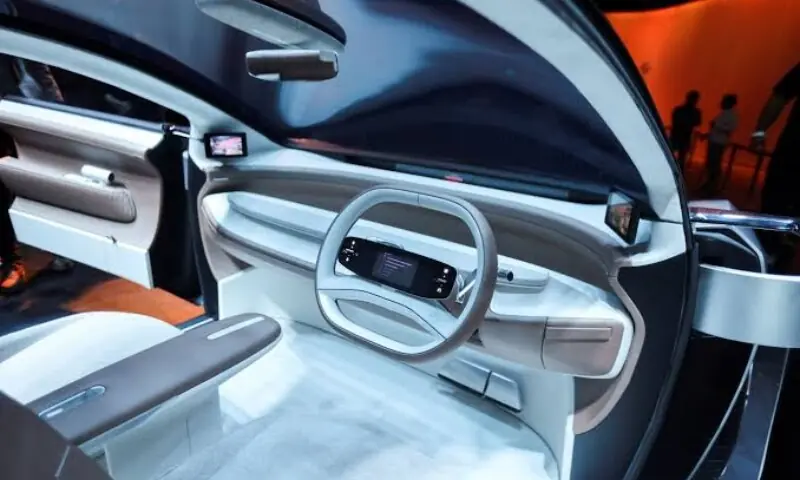
ISLAMABAD: Chinese carmakers remain largely blocked from entering India directly, but their electric vehicle technology is gaining ground in the country through supply and platform agreements with Indian companies, according to a Reuters report carried by Dawn.
India tightened scrutiny of Chinese businesses after the 2020 border clash in which soldiers from both countries were killed. Although New Delhi and Beijing have since been trying to improve relations, frictions persist. Even so, links between the two countries’ automotive industries are expanding, with Indian manufacturers turning to Chinese platforms and components to speed up EV plans.
Earlier this month, Tata Motors said it would use a vehicle platform from China’s Chery to make premium electric vehicles in India. The arrangement does not include an equity stake, and both companies emphasised that it is a supply deal rather than a transfer of technology know-how to Tata, underlining the political sensitivity around such cooperation. For Tata, India’s third-largest automaker, the platform offers a faster route to market for new EV models.
Tata plans over time to reduce reliance on imported kits from China and develop more components locally. That approach has support among some Indian policymakers because it could strengthen domestic manufacturing capacity. A senior Indian government official said the government backed deals that could eventually lead to more local production and shifts in the supply chain.
Santosh Pai, a partner at Dentons Link Legal, said cooperation between the two countries was difficult to avoid if India wanted a larger manufacturing role globally and if Chinese companies wanted to grow internationally. “If India wants to expand its manufacturing sector and be a bigger part of the global supply chain, partnership with China is inevitable. If Chinese companies want to be global leaders, they cannot wish away India and its economic potential,” said Santosh Pai, partner at law firm Dentons Link Legal.
Growing role in a major market
The Tata-Chery arrangement suggests that India has not been able to fully insulate its market from China’s EV sector. China’s EV industry, widely seen as the most advanced in the world, is expected to continue making inroads into India through such partnerships, in a market that remains large and is still expanding.
Analysts say that could create pressure for Japanese automakers and other established players investing heavily in India, partly because they currently face limited direct competition there from Chinese brands. Gao Hua, a former director at China SAE and now an independent analyst, said Chinese EV companies saw strategic value in securing a presence in India through supply deals.
“If Chinese firms don’t participate, others from different countries will step in,” Gao said.
Chinese tie-ups are also appearing in segments long dominated by Japanese, Korean and European firms. One example is Indian component maker Uno Minda, which has formed a joint venture with China’s Inovance to make EV powertrains in India, where Bosch, Nidec and Aptiv are already active.
Export controls disrupt licensing plans
Technology licensing between Indian and Chinese companies began to gather pace after India introduced investment restrictions in 2020, but the process has not been smooth. In 2025, Beijing’s export-control restrictions, introduced in retaliation to tariffs imposed by US President Donald Trump, forced Indian battery maker Amara Raja to end its licensing arrangement with China’s Gotion for lithium-ion cell technology used in EV batteries.
Amara Raja executive director Vikramadithya Gourineni told Reuters that the technical tie-up had stopped.
“All technical collaboration has stopped,” Amara Raja’s executive director Vikramadithya Gourineni told Reuters.
He said the company had still benefited from what it learned during the partnership, including factory and production-line layouts, technology planning and links to suppliers.
“The main things we were able to take away was understanding on factory and line layouts, technology roadmaps … and connecting to the vendor base,” Gourineni said.
With licensing no longer available, Amara Raja is increasing spending on in-house research and development and talent, he said. The company is continuing to import equipment, battery cells and other materials from Chinese suppliers for its cell-manufacturing plans, but faces difficulty obtaining enough visas for engineers from China to provide operational support.
Another Chery partnership in India
Chery has also entered a similar arrangement with JSW Motor, the carmaking venture of steel-to-cement businessman Sajjan Jindal. Familiar with the plans cited by Reuters, the agreement reached last year gives JSW rights to use and adapt multiple Chery platforms to build a line-up of hybrids and EVs for India.
Those sources said the arrangement includes an upfront payment of about 20 billion rupees, or $209 million, in addition to royalties. They added that JSW, which is investing $3 billion in the venture, is aiming for annual sales of 300,000 vehicles by 2030. The first vehicles are expected to arrive largely as imported kits from Chery, with JSW gradually building an Indian supply chain and expanding production at its factory in western India. JSW Motor and Chery did not respond to requests for comment.
Gao said the trend showed why complete disengagement was not always practical.
“This highlights the importance of nuanced approaches. Cutting ties is not always the best option,” Gao said.
Comments
No comments yet. Be the first to join the discussion!


