June 23, 2026
What is known about the $300 billion Iran fund in the US memorandum
A $300 billion reconstruction fund is included in the US-Iran memorandum, but the text does not say who would finance it. US Vice President JD Vance said no American taxpayer money would be used, while Gulf participation remains unclear.

June 23, 2026
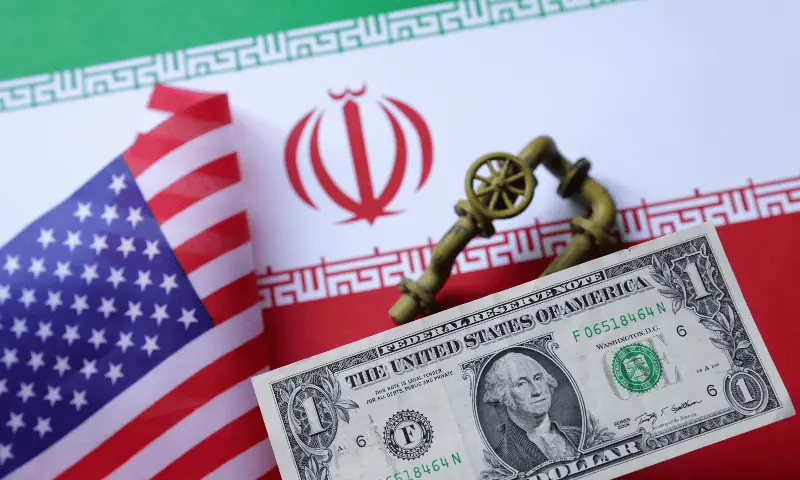
WASHINGTON: A $300 billion fund for Iran’s reconstruction and economic development is one of the central economic provisions in the memorandum of understanding between the United States and Iran, but the text does not identify who would provide the money.
Washington ‘undertakes with regional partners to develop a definitive mutually agreed plan with at least $300 billion for the reconstruction and economic development’ of Iran. It adds that the implementation mechanism will be settled as part of a final agreement within 60 days, and that the United States will grant the licenses, waivers and permissions required for the relevant financial transactions.
The document does not specify the contributors to the fund. It is presented as part of a broader package of economic incentives offered by the United States to encourage Iran to move toward a final accord. The text also says all sanctions on Iran would end once a final deal is signed, while Washington would immediately issue waivers enabling Tehran to resume oil sales.
Anna Jacobs, a non-resident fellow at the Arab Gulf States Institute, said the inclusion of the fund in the memorandum appeared intended to signal the benefits available to Iran if it complied with the framework and negotiated in good faith. US Vice President JD Vance, meanwhile, said the benefits would only follow if Iran demonstrated compliance with the terms to be finalised during the 60-day period, which he said began on Thursday.
US funding ruled out
The proposal has drawn criticism from US hawks, who argue it offers excessive concessions to Iran and could strengthen its ruling system. Senator Lindsey Graham said that if Western governments were to finance it, the plan would be akin to a Marshall Plan for Germany ‘with the Nazis still in charge’.
Vance said Iran would ‘never get a dime’ from American taxpayers under the arrangement. Analysts and commentators said the ‘regional partners’ referred to in the text most likely meant wealthy Gulf states, several of which were hit by Iranian drones and missiles during the war.
Questions over Gulf role
Gulf states have not publicly said they would take part in financing reconstruction in Iran, and divisions remain over Tehran in the aftermath of the war. Iran has also sought war reparations from the United States.
Jacobs said Iran was in urgent need of funding and that the expectation was that the prospect of larger investment over time could support further de-escalation. She also questioned whether enough trust could be rebuilt to make that possible.
Saudi Foreign Minister Prince Faisal bin Farhan declined last week to discuss the details of the fund. However, he said that after Iran’s attacks on Gulf states, trust and the broader relationship would have to be rebuilt before economic cooperation or mutual investment could reasonably be considered. He also said domestic investment remained a priority for Saudi Arabia.
Saudi security analyst and researcher Hesham Alghannam said the kingdom’s approach was based on a sequence of priorities beginning with security, then confidence-building backed by verifiable guarantees, and only after that moving to wider economic cooperation.
The United Arab Emirates, which suffered the heaviest impact from Iran’s attacks, had repeatedly called on Tehran to pay reparations for the damage caused, although it had softened its language in the weeks before the deal. The UAE had also been among Iran’s main trading partners despite US sanctions, at least before the war.
Any Gulf investment in Iran could give those states leverage, but would likely require assurances that the money would not be diverted to rearm Tehran.
Frozen assets issue
Vance has also sought to reassure US allies over a separate provision in the deal concerning Iranian assets that the text says would be made ‘fully available’. He said those funds would not be used to ‘finance terrorism’.
Vance said mediator Qatar and Jared Kushner, son-in-law of US President Donald Trump, had proposed ‘ a very interesting solution ’ for the frozen assets, with the United States and Qatar retaining approval over the process for unlocking them.
He said that if Iranian assets were unfrozen, they would instead ‘go to make American farmers richer and to feed the Iranian people’, adding that the money would be used by Iran to purchase American soybeans, corn and wheat.
0 Comments
No comments yet. Be the first to join the discussion!