June 23, 2026
Oil industry seeks urgent talks after pricing change triggers Rs104 billion loss
The petroleum minister has called an emergency meeting after the oil industry said a unilateral pricing formula change caused Rs104 billion in losses. OCAC also warned of mounting pressure on margins, liquidity and investor confidence.

June 23, 2026
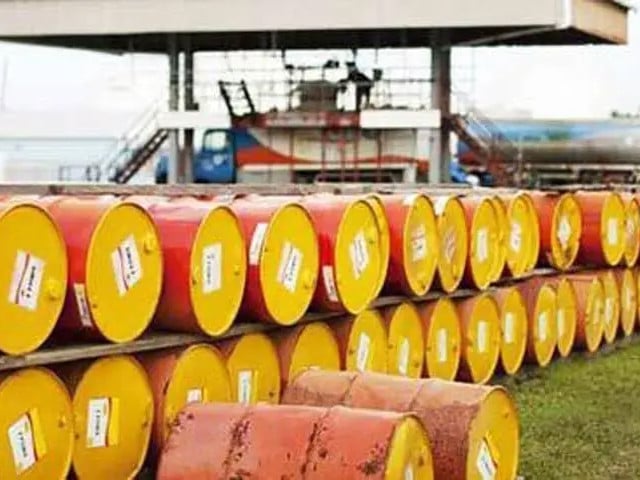
ISLAMABAD: The petroleum minister has called an emergency meeting with chief executives of oil refineries and oil marketing companies after the oil industry protested a change in the pricing formula that it says has caused losses of about Rs104 billion.
According to a notice issued by the petroleum division, the minister will meet the chief executive officers of refineries and OMCs on June 23. The meeting comes after the Oil Companies Advisory Council approached the minister for urgent consultations over what it described as a unilateral revision in the pricing mechanism.
In its letter to the minister, OCAC said the government’s latest reduction in petrol and diesel prices was achieved at the expense of the downstream petroleum sector through the adoption of another new pricing formula. This had created major financial exposure for companies holding existing inventories.
The council stated that, based on industry stocks of around 505,000 metric tonnes of motor spirit and 655,000 metric tonnes of high-speed diesel, the immediate erosion in value works out to nearly Rs104 billion for OMCs and refineries. The losses had damaged working capital, liquidity and shareholder value, adding that the impact stemmed from a policy decision rather than commercial inefficiency.
Industry raises concern over repeated interventions
OCAC expressed what it called grave concern over continued unilateral interventions in petroleum pricing and said these actions were undermining the viability of the downstream sector. It urged the government to adopt a consultative and equitable pricing framework and to put in place safeguards for mandatory strategic inventories.
The council said the industry had repeatedly warned over recent months about the financial impact of abrupt pricing decisions and growing policy uncertainty. Despite repeated representations to the ministry, pricing decisions were still being taken without meaningful consultation with the companies responsible for maintaining the country’s fuel supply chain.
The government recently made a sharp cut in petrol and diesel prices after crude oil prices fell following the Iran-US peace deal. OCAC said that during a period of elevated procurement costs, both OMCs and refineries had continued to back the government’s objective of maintaining energy security by committing significant financial resources to ensure uninterrupted fuel availability.
The council said OMCs maintained nationwide distribution and mandatory strategic inventories despite increasing working capital pressure. Refineries supported the national effort by capping the HSD margin, keeping pre-war kerosene prices for the armed forces unchanged, supplying jet fuel for Hajj flights at pre-war rates, and contributing more than Rs7 billion toward lowering the price differential claim.
Margins, claims and investor confidence
OCAC said the industry had consistently cautioned that inventory gains recorded during periods of rising international prices would only be temporary and would reverse once market conditions normalised. It argued that industry conditions were being assessed through overly simplified analysis instead of established market considerations such as procurement cycles, financing costs and stockholding obligations.
The council maintained that any consumer relief should not come through forcing OMCs and refineries to absorb losses. The present approach was shifting the financial burden of a sovereign policy decision onto company balance sheets and described this as inequitable, commercially unsustainable and inconsistent with the principles of a predictable energy market.
It also pointed out that OMC margins were last revised in September 2023 and have not been adjusted since, despite continued inflation, higher operating expenses and rising compliance requirements. As a result, the industry said it is facing increasing operating costs, unresolved margin adjustments, outstanding price differential claims of about Rs66.7 billion, tougher stockholding obligations and unprecedented losses.
OCAC further warned that the implications went beyond immediate losses. Pakistan’s petroleum sector had historically drawn major foreign investment from international energy companies that had invested billions of rupees in storage, logistics and retail infrastructure on the assumption of policy stability and regulatory consistency. The council said continued abrupt interventions were now making investor withdrawal and the insolvency of weaker participants a certainty rather than a risk, with possible consequences for investor confidence at a time when Pakistan is seeking foreign direct investment.
The council said the industry remained committed to supporting national energy security, but argued that this could not continue if the sector’s commercial foundation kept being weakened by repeated unilateral interventions and the continued transfer of policy costs to industry participants.
0 Comments
No comments yet. Be the first to join the discussion!