

June 20, 2026
SC says judges with tarnished reputation should be removed, not compulsorily retired
The Supreme Court has held that judges with tarnished reputations should be removed from service rather than granted compulsory retirement. The ruling came in a case involving former additional district and sessions judge Afzal Zahid.

June 20, 2026
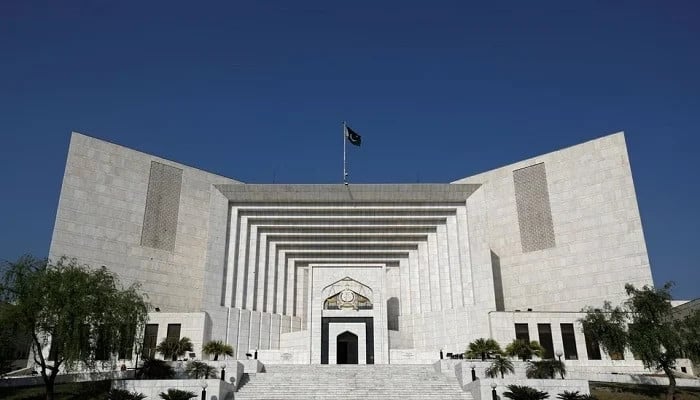
ISLAMABAD: The Supreme Court has ruled that a judicial officer whose credibility and public standing are damaged should be removed from service rather than granted compulsory retirement with benefits, holding that the judiciary’s authority rests on public confidence and moral standing.
The ruling came in a detailed nine-page judgment authored by Justice Shahid Waheed in a case concerning former Additional District and Sessions Judge Afzal Zahid, who had served in tehsil Mailsi, Punjab. The three-member bench also included Justice Naeem Akhtar Afghan and Justice Muhammad Shafi Siddiqui. The court had heard the appeals on May 13, 2026.
According to the judgment, the standard expected of a judge goes beyond the absence of proven corruption. The court said a judicial officer must possess an unblemished character, exemplary conduct and a respectable reputation in society. It held that integrity in judicial office is indivisible and that a judge is expected to remain above suspicion.
The judgment said public trust is central to the judicial system and that retaining a judge whose reputation has been compromised weakens both judicial ethics and confidence in the institution. It added that people approach courts not only for legal arguments but also for the assurance of conscience and fairness embodied in the office of a judge.
“A judge’s integrity cannot be divided; it is either complete or non-existent”, the judgment read.
The court further observed that a judge’s standing is not damaged only by corruption proved through inquiry, but can also be affected by a poor reputation that harms the dignity of the judiciary. It said that giving compulsory retirement to such an officer creates the impression that integrity and reputation in the judiciary are matters open to compromise, which the judgment described as a mockery of the law.
“If a judge's credibility and reputation are damaged, keeping such a person in office is tantamount to undermining judicial ethics and public trust”, the judgment added.
In strong language, the judgment said that when a corrupt or disreputable judge is dismissed, the institution removes a cancerous tumour from its body and begins the process of healing. It also said the judiciary draws its strength not from force, weapons or the military, but from credibility and moral authority in the eyes of the public.
Islamic references in judgment
The court referred at length to the Quran, Hadith and Islamic jurisprudence, saying the office of a judge in Islam is not merely employment but a sacred trust and an act of worship. It cited Surah An-Nisa, verse 58, on returning trusts to their rightful owners and deciding matters with justice.
The judgment also referred to a Hadith that describes two kinds of judges: one who recognises the truth and decides accordingly, and another who decides with ignorance or injustice. The court said that knowledge alone is not sufficient for judicial office and that piety and integrity are equally essential.
Citing principles associated with Islamic jurists including Imam al-Mawardi and Ibn Qudamah, the court said that when doubts arise in the public mind regarding a judge’s integrity because of his character, his removal becomes necessary. It added that keeping an incompetent or disreputable person in judicial office amounts to a breach of trust against God, His Messenger and the Muslim Ummah.
Case background and appeals
The judgment said multiple complaints alleging corruption had been received against Afzal Zahid, after which the Lahore High Court placed him under supervision. Quarterly reports prepared during that period found his reputation to be tainted.
Although a departmental inquiry did not directly establish corruption allegations against him, the competent authority dismissed him from service on the basis of poor reputation and questionable integrity. The Service Tribunal later converted that dismissal into compulsory retirement.
The matter then reached the Supreme Court through two appeals. The Lahore High Court, acting through its registrar, challenged the tribunal’s decision to convert the penalty into compulsory retirement, while the judge also filed an appeal seeking reinstatement and removal of adverse remarks.
The Supreme Court held that the institution requires not only actual integrity but also the perception of integrity, and ruled in favour of the principle that a judge with a damaged reputation should not remain in office under the cover of compulsory retirement.
0 Comments
No comments yet. Be the first to join the discussion!


