

June 19, 2026
Discovery of leopard remains reshaped understanding of wildlife in Islamabad hills
A leopard skull and claw found on Islamabad’s Trail 6 in 2018 provided key evidence that big cats were present in the Margallah Hills. A Dawn report says the discovery was followed by scat analysis and a camera-trap sighting that reinforced local accounts.

June 19, 2026
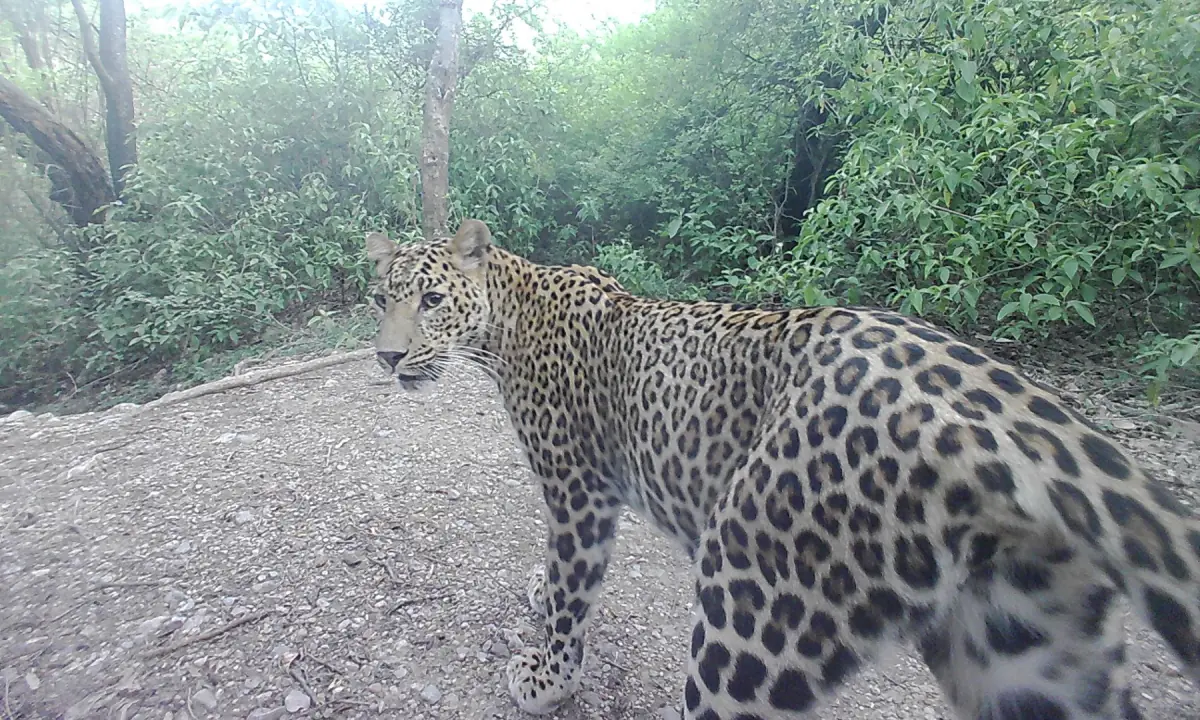
ISLAMABAD: The discovery of leopard remains in the Margallah Hills in 2018 altered long-held assumptions about the presence of big cats in Islamabad, according to a detailed account published by Dawn. Wildlife patrol staff found a skull and claw at the top of Trail 6, behind Faisal Mosque, while the rest of the animal’s body had either decomposed or been eaten by scavengers. Some skin still attached to the claw showed the rosette markings associated with a leopard, and subsequent analysis confirmed it belonged to a fully grown adult that had died naturally.
The skull was later sent to the Pakistan Museum of Natural History, where it has remained in a laboratory rather than being put on public display. Colonial-era gazetteers had documented leopards in areas including Swat, Dir, Murree and the Kala Chitta range west of Islamabad, but made no mention of the Margallah Hills. By contrast, local residents had long insisted that big cats were present in the forests, though in the absence of physical evidence those claims were often treated as folklore rather than established fact.
Earlier sightings and local accounts
Before the 2018 find, one explanation circulating in the area was that leopards from the higher Murree Hills would descend to the warmer Margallah range during winter and return when temperatures rose. Reports also suggested they sometimes came close to settlements, although not usually during daylight hours.
The Dawn account said one notable incident took place in 2005 at Islamabad’s Marghazar Zoo, located at the base of the hills. Staff were alerted to a disturbance in a deer enclosure and found a leopard attacking the animals. Because the zoo had no resident leopard at the time, the animal was identified as having entered from outside. It was eventually subdued, captured and kept at the zoo until it later died a natural death. The attack was seen as unusual because it happened in broad daylight and outside the period when leopards were generally thought to hunt near populated areas.
Over the following decade, hikers continued to report sightings and sounds in the hills. Guards from the Capital Development Authority stationed in villages including Gokina and Kalinjar told hikers they had heard roaring at night, while villagers living inside the Margallah Hills National Park said livestock had gone missing. The park contains 20 villages with a population of about 200,000. As mobile phones and video-sharing platforms became widespread in the 2010s, footage said to show leopards also began appearing online.
Encounters near villages
Dawn also recounted accounts from villagers who said they had seen leopards at close range. In 2014, Zaheer Ahmed and a friend were grazing the family’s goats in the hills of Shah Allah Ditta when his friend shouted after noticing movement among the trees. Zaheer responded by striking his axe against a tree and shouting toward the herd. As the goats scattered, the animal stopped and then moved away.
Around the same period, Muhammad Nawaz of Talhar said he saw a leopard carrying off a calf near the edge of the village. He and others then watched as the calf’s owner ran toward the animal with a stick and managed to recover it.
Wildlife board and search effort
Wildlife management in the national park changed in 2015 with the creation of the Islamabad Wildlife Management Board. Before that, vegetation was handled by the forest department, while the CDA oversaw wildlife and the zoo. Within two years, the board had recruited specialists and wildlife guards for patrol duties.
Among those who joined early was Sakhawat Ali, who was hired in 2017 as an education officer and later became director of wildlife in 2022. Wildlife guards and officials between 2017 and 2018 began trying to gather concrete evidence of leopards after repeated reports from local residents and visitors. Because the department lacked resources for a formal search operation, the guards began going out after completing their regular shifts, with support from Sakhawat, who was then managing operations.
The teams focused on places where sightings were reported most often and searched on foot for pugmarks and scats. Zaheer, who had by then become a wildlife guard, was the first to identify what was described as active leopard evidence in the area when he found droppings containing fur and bone fragments. Laboratory analysis confirmed they belonged to a leopard and were recent.
From 2018 to 2020 such signs became more frequent, including repeated discoveries of paw prints and droppings. The 2018 skull discovery accelerated the search effort, and in 2019 a leopard was recorded on a camera trap for the first time. This was seen by guards as important confirmation of what they and local communities had been saying for years, even as it increased concerns during patrols because signs of leopard activity were becoming more regular.
0 Comments
No comments yet. Be the first to join the discussion!


