June 17, 2026
Trump signals openness to Congress review of Iran accord amid calls for details
US President Donald Trump said he is open to sending the new Iran agreement to Congress for review as lawmakers from both parties demand its full terms. Questions remain over sanctions relief, nuclear restrictions and enforcement.

June 17, 2026
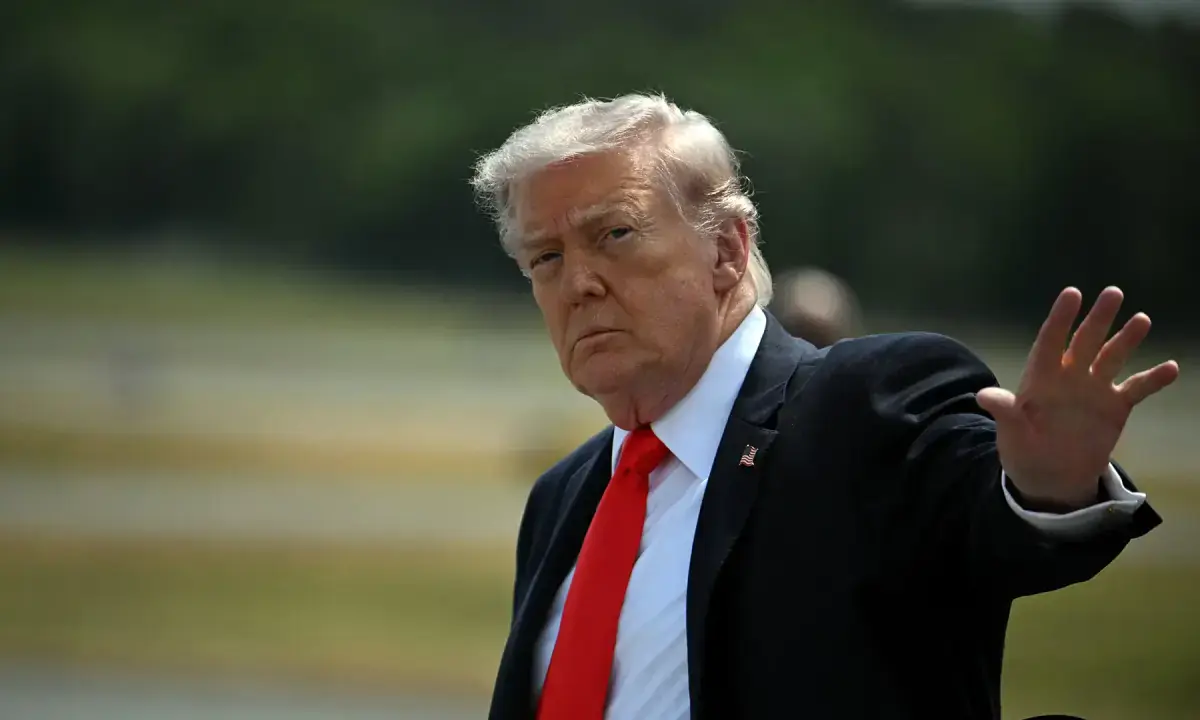
WASHINGTON: US President Donald Trump said Tuesday he would be open to sending the recently announced agreement with Iran to Congress for review, as lawmakers from both parties pressed the administration to disclose the terms of a deal whose text has not yet been made public.
Trump made the remarks during a meeting in France with United Arab Emirates President Mohammed bin Zayed Al Nahyan. Referring to congressional scrutiny, he said:
"What I would like to do is send it to Congress and say, ‘You shouldn’t approve it.’ And they will approve it"
The memorandum of understanding was announced over the weekend and, was signed electronically on Sunday by Trump and Vice President JD Vance. A formal signing is expected in Geneva on Friday, with Vance due to attend. The agreement is intended to halt four months of military confrontation between Washington and Tehran and reopen the Strait of Hormuz, a major global energy route.
However, the administration has not released the text of the understanding, leaving unresolved questions for lawmakers over Iran’s nuclear programme, possible sanctions relief and how compliance would be verified. The lack of detail has prompted demands on Capitol Hill for more transparency, with the debate recalling divisions that surrounded the 2015 Joint Comprehensive Plan of Action negotiated under former president Barack Obama.
Lawmakers seek briefings and text
Senate Majority Leader John Thune said he did not yet have enough information to judge the accord.
"I don’t know enough about it to say"
Thune added “My understanding of what it entails — again, not having seen anything — I think the issues are going to be compliance and, ‘How you’re going to enforce that and what are the financial incentives the Iranians are going to have from our country?”.
Republicans generally welcomed the diplomatic opening, but some said their support would depend on the final contents. Senator Lindsey Graham said he wanted lawmakers to study the memorandum before backing it.
"The MoU, I want to see it myself. The way Iran describes it is awful. The way we describe it makes sense to me. Let’s look at it and see what it actually is"
In a separate statement, Graham said:
"Under our law, any nuclear deal with Iran will be sent to Congress for review and a vote. I look forward to reviewing the final product"
He also said Vance and other negotiators should brief lawmakers in person.
Democrats question war and terms
Democrats said they supported efforts to stop the fighting but criticised the administration’s decision to launch the war. Senate Democratic Leader Chuck Schumer called for a full briefing to Congress and said:
"There are still many unknowns about Trump’s negotiations with Iran. But we know this for certain: we are worse off than before Trump began this foolish war of choice"
Senator Jack Reed, the top Democrat on the Senate Armed Services Committee, said the apparent deal seemed to impose fewer limits on Iran’s nuclear activities than the JCPOA that Trump left during his first term.
"So, we have spent billions of dollars. We’ve lost 14 personnel killed in action, hundreds wounded, and we’ve disrupted the world economy. And we’re getting basically less than what we had under the JCPOA, which President Trump walked away from"
Representative Seth Moulton, also a member of the House Armed Services Committee, offered a harsher assessment of the emerging arrangement.
“$100 billion of taxpayer money already put into this war, 14 Americans dead, and we get a deal that just reopens the strait that was already open before he started the war? How is that a win?”, he added.
Uncertainty over next phase
The administration argues that the agreement is a diplomatic success because it ends hostilities and restores shipping through one of the world’s most important oil transit routes. But several of the most disputed issues, including the future of Iran’s enriched uranium stockpile and the scope of sanctions relief, appear to have been left for follow-on negotiations expected over the next 60 days.
Unease among some Republicans has also been shaped by analysis suggesting the war did not achieve its original aim of fundamentally weakening the Iranian state. In Foreign Affairs, Narges Bajoghli and Vali Nasr wrote that the conflict’s initial objective of dealing a decisive blow to the Islamic Republic had not been achieved and that the war had changed Iran in unexpected ways.
With the text still undisclosed and key provisions yet to be clarified, the agreement is shaping up to face scrutiny in Congress from both supporters and critics before any broader political consensus can emerge.
0 Comments
No comments yet. Be the first to join the discussion!