June 17, 2026
Israel seizes Ibrahimi Mosque in West Bank
Israel has shifted planning and construction powers at the Hebron shrine complex from Palestinian authorities to Israeli bodies, according to Bezalel Smotrich. Palestinian officials said the move violates Hebron’s legal and political status.

June 17, 2026
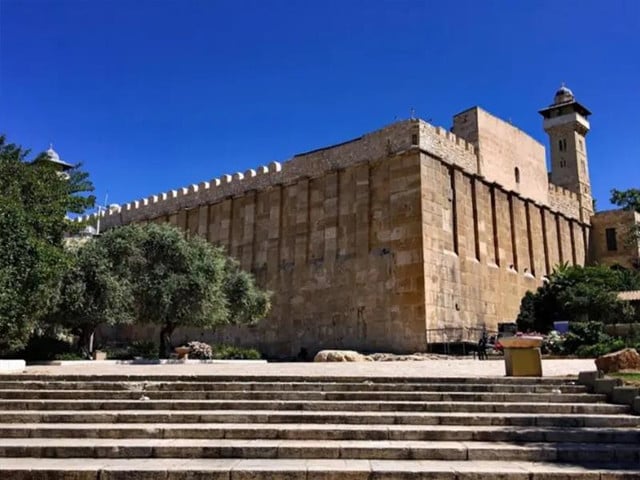
JERUSALEM: Israel has transferred planning and construction authority at a major shrine in Hebron from Palestinian authorities to Israeli bodies, Israeli Finance Minister Bezalel Smotrich said, in a move that alters part of an arrangement in place since the 1990s.
Under the 1997 Hebron Agreement, Palestinians had authority over planning and construction across the city, including the Tomb of the Patriarchs, revered by Jews, and the adjoining Ibrahimi Mosque, a major Muslim holy site. Hebron’s Old City is recognised as a Palestinian World Heritage site. Parts of the city remain under Israeli security control, where hundreds of Jewish settlers live among tens of thousands of Palestinians.
Smotrich, a far-right minister, said he gave final approval late on Monday for the transfer of these powers as they relate to the religious compound and nearby Jewish settlers. Speaking at an event marking the establishment of a new Israeli settlement near Hebron, he described the decision as a historic move that would strengthen Israeli sovereignty in the occupied West Bank, territory Palestinians seek for a future independent state.
Palestinian President Mahmoud Abbas’s office said the measure amounted to an infringement on Hebron’s political and legal status and violated international law. Hebron mayor Yousef Al-Jabari also criticised the step, calling it a racist decision intended to strip the municipality of its powers.
Religious and political significance
Jews believe the Cave of the Patriarchs is the burial place of Abraham, Isaac, Jacob and their wives. Muslims, who also revere Abraham, built the Ibrahimi Mosque, also known as the Sanctuary of Abraham, in the 14th century.
The latest move follows earlier decisions by Prime Minister Benjamin Netanyahu’s security cabinet to ease land purchases by settlers in the West Bank and give Israeli authorities broader enforcement powers there. Smotrich, who has said he wants to end the prospect of Palestinian statehood in the West Bank, has supported rapid settlement growth in the territory.
That expansion has coincided with an increase in settler attacks on Palestinians. United Nations bodies and most countries regard Israeli settlements in the West Bank as illegal and see their expansion as a major barrier to peace and Palestinian statehood. Israel disputes that position, saying the land is disputed territory and that Jews have had a presence there for thousands of years.
Israeli response and broader context
In what appeared to be an effort to limit international criticism of Smotrich’s announcement, Israel’s foreign ministry said the 1997 Hebron Agreement had not been revoked in full. The security cabinet had decided several months earlier to assume control over planning and construction connected to Jewish settler areas and Jewish holy sites in the city, including the shrine revered by Muslims, Jews and Christians. The ministry also accused Hebron’s Palestinian municipality of failing to cooperate on such issues.
Israel is due to call an election by the end of October, with Smotrich performing poorly in opinion polls. A settler himself, he has long advocated annexing the West Bank, and much of his support comes from ideological settlers who regard the territory as their biblical heartland.
Hebron has repeatedly been a flashpoint in Israeli-Palestinian tensions. In 1994, a Jewish settler killed 29 Muslims praying at the shrine. UN data cited 13 Palestinians have been killed by settlers this year.
0 Comments
No comments yet. Be the first to join the discussion!