

June 16, 2026
Study says a third of global coral reefs may withstand climate warming
A study presented in Mombasa says roughly one-third of the world’s coral reefs may be resilient to major warming events. Researchers and conservationists say protection and emissions cuts remain crucial.

June 16, 2026
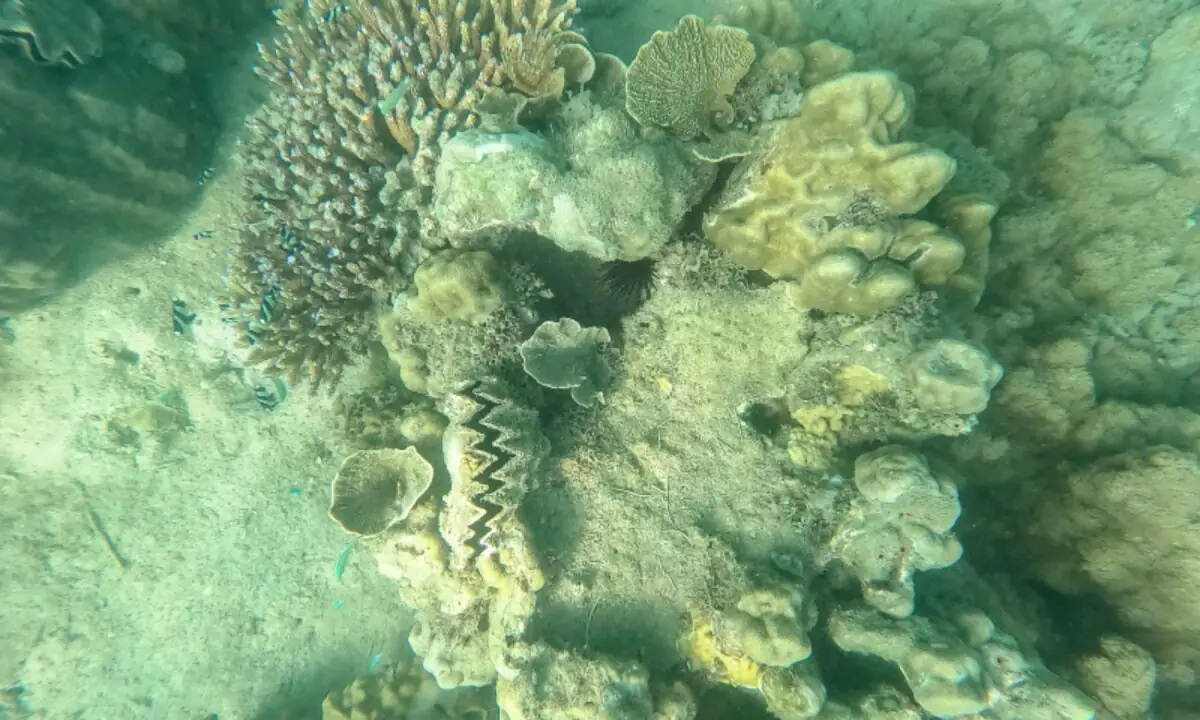
MOMBASA: A new study presented at the Our Ocean Conference in Mombasa says about 166,000 square kilometres of the world’s coral reefs, roughly one-third of the total, are considered climate-resilient and may be able to endure major ocean warming events.
The research was carried out by the Wildlife Conservation Society and Macquarie University in Australia. The findings challenge assessments by the Intergovernmental Panel on Climate Change, which has said that 70 to 90 per cent of coral reefs could die if global warming reaches 1.5 degrees above pre-industrial levels, and that 99 per cent could be lost at 2C.
Stacy Jupiter, executive director for marine conservation at WCS, said the modelling pointed to a more hopeful outlook for reefs than previously thought. She told AFP that many reefs around the world appear capable of persisting over time despite climate stress. The study also found, however, that only 28 per cent of these resilient reefs are currently under active protection.
Along Kenya’s coast, the study points to examples of local conservation efforts already under way. On Wasini-Mkwiro island, south of Mombasa, fishermen bring their catch ashore where it is weighed, measured and recorded by village data collectors. Members of the local beach management unit also patrol nearby waters to curb overfishing and the use of destructive gear, while others plant seaweed and mangroves and remove rubbish.
Edward Karanja, a Kenya Wildlife Service warden for nearby Kisite marine park, said the community wanted to preserve the area because of its value to tourism and fishing. Owing to those efforts, the park became Kenya’s first site to receive a Gold-Level Blue Park Award from the US-based Marine Conservation Institute in 2021.
How the reefs endure
Coral bleaching happens when sea temperatures rise by one or two degrees, placing stress on coral tissues and causing them to expel algae, which turns them white. The new study says many reefs show resilience because they are located in cooler areas, have adapted to withstand heat, or recover faster than most others.
Jupiter said scientists now see coral responses to heat events as more complex than previously understood. Kenya, has a considerable stretch of naturally resilient coral. Around Wasini-Mkwiro, divers encounter coral species including Porites and Acropora, which support marine life such as moray eels, angelfish, crabs, turtles and dolphins.
According to WCS data, the last major bleaching episode in 2024 reduced coral cover in the area from 44 per cent to 27 per cent. Within a year, it had recovered to 40 per cent.
More detailed mapping
The research, funded by the Bloomberg Ocean Initiative and currently under peer review, builds on a 2018 study that had identified 50 resilient reefs worldwide. The latest work uses technology that the report says makes the map 10,000 times more detailed than previous versions, allowing researchers to identify three times more resilient coral than had earlier been known.
More than half of the resilient reefs identified in the study are located in Australia, the Bahamas, Cuba, Indonesia and the Philippines. Lead author Kyle Zawada of Macquarie University said these reefs could serve as living seed banks for broader ecosystem recovery.
The report says mass bleaching events are now becoming almost annual, and a potentially powerful El Nino system this year could bring additional damage. Jesse Kosgei, a WCS marine researcher in Mombasa, said communities cannot directly control global warming but can act urgently on threats such as destructive fishing and water pollution. He said there was now positive news about coral reefs and that resilient areas should be protected. Clint Oakley, a coral scientist at Victoria University in Wellington, described the study as heartening, but said climate-driven warming remained the greatest threat and that cutting carbon emissions was still the most important step if coral reefs are to survive over the next century.
0 Comments
No comments yet. Be the first to join the discussion!


